Post-Budget: The Reality of the Cost of Living Crisis
0 up · 0 down · 0 ratings
Channels and socials
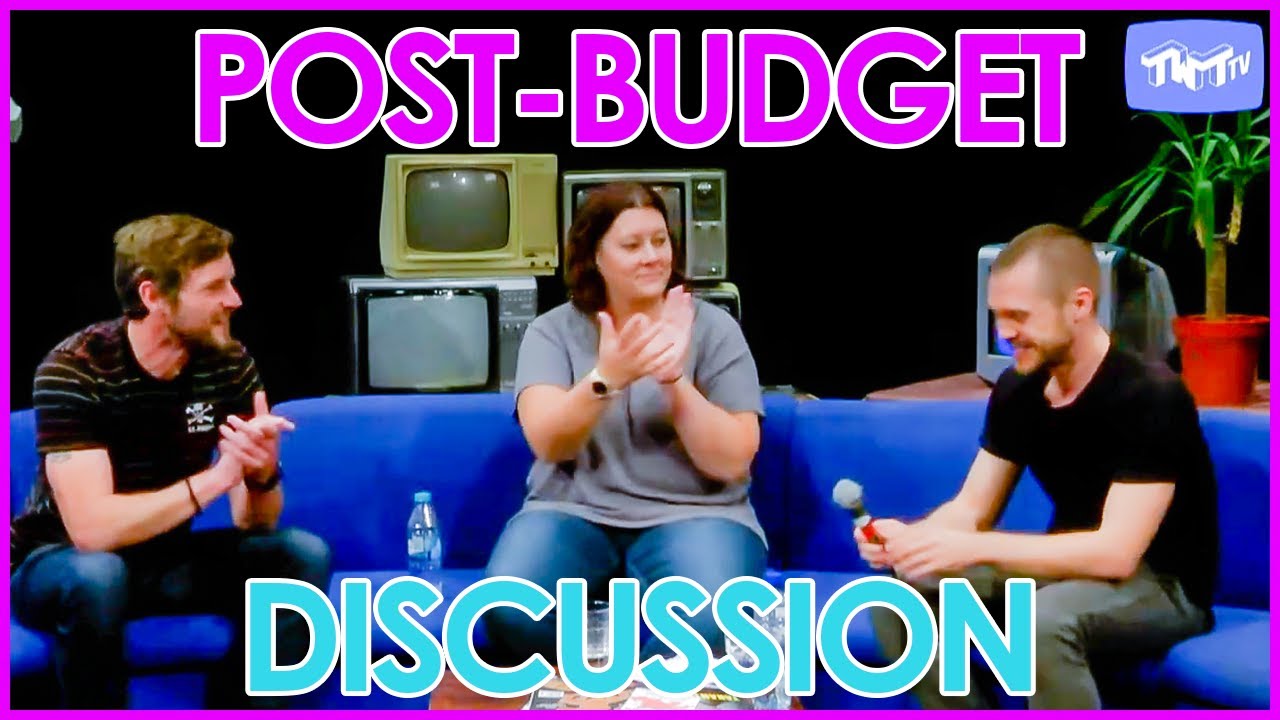
We have not yet been able to film a full response to Friday's "budget". We will try to get that out for next week, in the meantime here is an interview I did yesterday where it is discussed with Paul Daly & Sarah Wooley at the TWT Festival 22 in Liverpool. *Apologies for sound problems which get much better after the first few minutes* Original Video: youtube.com Recorded Live on 24/09/2022 @13:00 Uploaded with permission from The World Transformed theworldtransformed.org twitter.com SUBSCRIBE, SHARE & START A CONVERSATION SOCIAL MEDIA: WEBSITE - wealtheconomics.org TWITTER - @garyseconomics FACEBOOK - @garyseconomics INSTAGRAM - @garyseconomics TIKTOK - @garyseconomics TIMESTAMPS 00:00 - TWT intro with Paul Daly 00:50 - Sarah Wooley Intro 01:55 - Gary Stevenson Intro 03:30 - The Culture of Economics 05:40 - The Cost of Living Crisis 08:05 - Low Skilled or Key Workers? 09:40 - Predicting the Crisis 15:33 - A Broken Economy 17:40 - Taking Action 21:00 - The Mini-Budget 23:00 - Increasing Wealth Inequality 26:40 - Punishing The Poor 30:05 - Will We Accept This? 34:40 - Individualism 37:30 - Fixing The Crisis 40:30 - WE HAVE TO DO IT!
Paragraph 1 (0:00–5:00) sets the frame for the discussion as a response to the budget cycle and the cost of living crisis. The speakers, Paul Daly, Sarah Wooley, and Gary Stevenson, explain that mainstream economic storytelling misses the lived reality of working people. They argue that economic language has become a barrier to understanding for ordinary viewers and that the media often fails to scrutinize policy outcomes. The panel positions itself as a space to dissect what is actually driving rising costs, rather than accepting convenient explanations. The tone is corrective and combative, promising a reality check on tax, wealth, and public services that affect everyday life. They preview the themes of inequality, austerity, and policy design that will run through the conversation. Paragraph 2 (5:00–10:00) focuses on Sarah Wooley’s frontline observations from the cost of living crisis. She cites survey data from her union showing severe food insecurity before recent price hikes, including percentages of members eating less, using food banks, and relying on others to feed families. She emphasizes that these problems existed prior to Ukraine-related energy shocks, challenging the narrative that the war alone explains the crisis. The discussion transitions to how low paid and precarious work amplifies these pressures, with examples of workers taking extra shifts just to eat. The panel also interrogates the language of economics, arguing that complex jargon alienates the public and obscures policy consequences. Paragraph 3 (10:00–15:00) centers on the critique of wealth concentration and the role of policy choices during the pandemic. Gary Stevenson draws on his own experience to argue that the rapid accumulation of wealth by the top percentiles during Covid is central to why the cost of living crisis feels so acute now. He proposes a concrete counterfactual: taxing the wealthiest to fund broad support, such as £13,000 per adult, which would avert the current squeeze. The speakers contend that the energy and inflation costs are not solely external shocks but outcomes of how fiscal relief was distributed, with the rich benefiting disproportionately from Covid-era measures. They label austerity as a political choice rather than an economic inevitability. Paragraph 4 (15:00–20:00) broadens the critique to the structure of the economy and demand-side versus supply-side explanations. The group describes a “broken economy” where wealth is pumped upward and the broader population bears rising bills and debt. They argue that tax policy and deficits have been weaponized to legitimize the idea that deficits are inherently dangerous, while ignoring how public spending in good times supports households and communities. The panel links higher interest rates to government tax giveaways for the wealthy, arguing that ordinary families pay the price through higher debt costs. The conversation underlines that the political economy of wealth distribution is central to understanding day-to-day financial stress. Paragraph 5 (20:00–25:00) returns to the political and organizational dimensions of the crisis. The panel discusses legislative developments and the broader political context, including talk of strikes and union organizing as possible responses. They acknowledge the difficulties of mobilizing workers when a loss of pay directly threatens survival, yet they emphasize collective action as essential. The Bakers Union leadership is highlighted as a beacon for how worker solidarity can translate into practical support for picket lines and organizing drives. The discussion also previews the idea of a broader social movement that crosses traditional divides and focuses on shared economic vulnerability rather than identity-based lines. Paragraph 6 (25:00–30:00) scrutinizes the budget and macroeconomic framing from a left perspective. The speakers criticize tax cuts for the rich and the way wealth transfers are framed as legitimate fiscal prudence, arguing that this approach worsens inequality and erodes public services. They stress that deficits used to defend welfare and services were rebranded as mistakes after the fact, while current policy continues to reward wealth holders. The analysis asserts that the real victims of policy are ordinary people facing higher rents, mortgages, and living costs, while top earners accumulate more cash and capital gains. The panel calls for a public reckoning with who actually benefits from policy choices. Paragraph 7 (30:00–35:00) explores narrative, communication, and cross-partisan engagement. The guests insist that changing minds requires talking to people beyond their own echo chambers and meeting ordinary concerns with clear, evidence-based messages. They discuss the potential for a coalition that includes older voters who feel protected by rising house prices but worry about their children and grandchildren. The group advocates for outreach strategies, including using media and grassroots channels to broaden the audience for anti-inequality arguments. They emphasize storytelling as a tool to connect economic facts to everyday life and to counteract a perceived media bias. Paragraph 8 (35:00–40:00) shifts to policy asks and the role of the next government. The discussion outlines a concrete platform: a £15 per hour minimum wage, a ban on zero hours contracts, 100% sick pay from day one, and universal access to food and school meals up to age 18. These proposals aim to cushion households from price shocks and stabilize demand by ensuring workers can afford basics. The panel notes that the Labour Party and other political actors have been cautious or vague about these reforms, labeling the current moment as a test of political will. They acknowledge the difficulty of turning bold demands into policy but insist that organized public pressure can push major parties toward more expansive support for working people. Paragraph 9 (40:00–43:30) concludes with a call to action and a hopeful but urgent cadence. The speakers argue that without broad-based organizing and a willingness to challenge the wealthier segments of society, living standards will continue to deteriorate for most families. They frame the crisis as fundamentally about inequality and the distribution of resources, not just a temporary inflationary blip. The closing message stresses collaboration across unions and communities, leveraging shared experiences to demand systemic change. The final sentiment is focused on realism about the challenges ahead, paired with determination to mobilize and sustain momentum through upcoming policy battles and public conversations.
Topics · economy · politics · inequality · cost_of_living · labor_unions · austerity · wealth_distribution · public_services
Questions answered
- What is the central critique of the cost of living crisis presented in the video?
- The video argues that the crisis is less about external shocks and more about inequality and the way policies distribute wealth, with wealth concentrating at the top while ordinary people bear rising costs.
- Why do the speakers criticize mainstream economists and media?
- They contend that public-facing economics is intentionally opaque and that media and policy-makers fail to analyze who benefits from policy choices, leading to misleading narratives.
- What policy changes do the panelists advocate for to address the crisis?
- They advocate for a higher minimum wage (£15/hour), an outright ban on zero hours contracts, 100% sick pay from day one, and universal access to food with free school meals up to age 18.
- How do the guests view the role of unions and collective action?
- They see unions as essential for mobilizing workers, providing support on picket lines, and organizing to demand better conditions and policy outcomes.