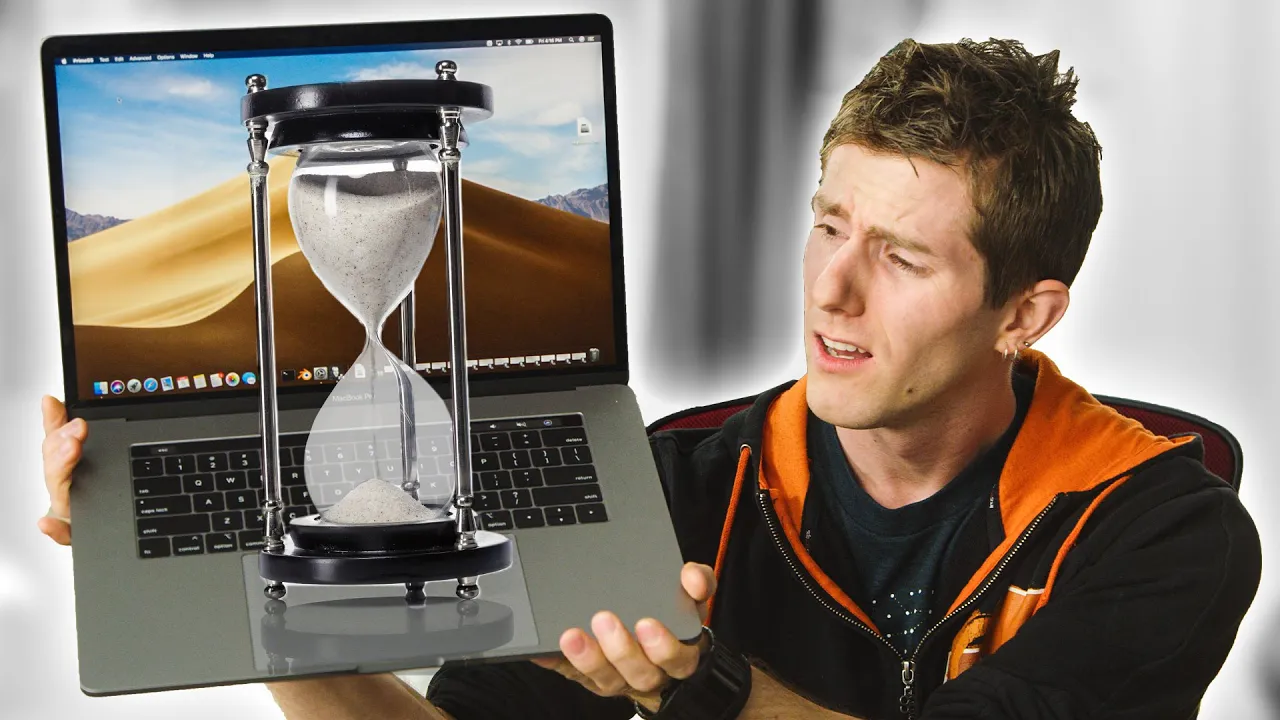
Macs are SLOWER than PCs. Here’s why.
0 up · 0 down · 0 ratings
Promos
Apple's got some great hardware, but lately there's been one major flaw that's held them back from making full use of it... Buy an iMac From Apple: lmg.gg From Best Buy (PAID LINK): shop-links.co Buy a Mac Mini From Apple: lmg.gg From Best Buy (PAID LINK): shop-links.co Buy an Acer Desk Mini: On Amazon: geni.us On Newegg: geni.us Buy the Gigabyte Aero 15 On Amazon: geni.us On Newegg: geni.us On Best Buy (PAID LINK): shop-links.co Discuss on the forum: linustechtips.com Our Affiliates, Referral Programs, and Sponsors: linustechtips.com Get Private Internet Access today at geni.us Displate metal posters: lmg.gg Linus Tech Tips merchandise at lttstore.com Linus Tech Tips posters at crowdmade.com Our Test Benches on Amazon: amazon.com Our production gear: geni.us Twitter - twitter.com Facebook - @LinusTech Instagram - @linustech Twitch - twitch.tv Intro Screen Music Credit: Title: Laszlo - Supernova Video Link: youtube.com iTunes Download Link: itunes.apple.com Artist Link: soundcloud.com Outro Screen Music Credit: Approaching Nirvana - Sugar High youtube.com
The video opens by challenging a common belief that Macs are simply more expensive to compete with Windows PCs. It asserts that, beyond price, Macs often underperform relative to their specifications due to thermal constraints, which can throttle CPU performance. The host explains that Apple designs its own hardware with slim form factors, but aggressive thermals and voltage/fan curve adjustments in macOS can push processors toward higher temperature limits without adequately throttling, leading to snappier but misleading early performance that fades under sustained load. A key experiment pits a 2018 MacBook Pro and a Mac Mini against identical workloads inside a dedicated chillbox to show how cooling dramatically affects performance. The results indicate that Apple’s emphasis on aesthetics and portability can leave meaningful performance on the table, especially under long, heavy workloads where temperature-induced throttling dominates. The video then dives into the broader reasons behind throttling, including Intel’s delayed 10 nm rollout and higher-core-count designs that generate more heat within the same transistors, and how this feeds into a design philosophy that prioritizes market positioning over sustained peak performance. The host notes that Turbo Boost can temporarily boost clock speeds during light bursts but cannot compensate for real-world, all-core workloads without adequate cooling, suggesting a deliberate trade-off by Apple. The discussion shifts toward a critique of marketing claims, such as high advertised CPU speeds, that do not reflect sustained performance once thermal limits are reached, and questions why Apple would balance performance this way in professional-grade machines. The video closes with a candid call for transparency and a reminder that physical laws of heat dissipation cannot be bypassed, while inviting viewers to engage with the content and explore related gear in the description. Overall, the presenter argues that Macs deliver impressive design and battery life but struggle with sustained performance due to thermal throttling, rather than an intrinsic lack of computing power. The takeaway is that potential buyers should weigh cooling capacity and workload type alongside specs, and not rely solely on marketing promises or peak clock speeds.
Topics · technology · hardware · performance · analysis · consumer_electronics · science_and_tech
Questions answered
- Why do Macs throttle performance under heavy workloads, and how is this related to cooling design?
- Macs throttle because higher power draw in tight, slim chassis generates more heat than the cooling system can safely dissipate. Apple’s design choices optimize form factor and look, but in sustained heavy workloads the cooling solution cannot remove heat quickly enough, triggering throttling to protect components.
- What is Turbo Boost and how does it affect real-world performance on Macs?
- Turbo Boost temporarily increases CPU clock speeds during short bursts of activity, making light tasks feel snappy. However, during extended workloads the processor power is limited by cooling, so sustained performance may not match the short-burst speed.
- Is the throttling issue unique to Macs or shared with PCs as well?
- Thermal throttling affects many laptops and desktops when they run hot, including PCs. The video argues Apple’s thinner designs amplify this tendency, but throttling itself is a common consequence of heat in compact systems.
- What should potential buyers consider beyond just CPU clock speeds?
- buyers should consider sustained cooling capability, workload type, whether the system can maintain performance under long tasks, and how marketing clock speeds translate to real-world performance.
- Do the video’s conclusions imply Apple is deliberately compromising performance for aesthetics?
- The video suggests a design philosophy that prioritizes form, lightness, and perceived performance over sustained thermal headroom, implying a trade-off rather than a pure optimization, but it stops short of asserting malicious intent.