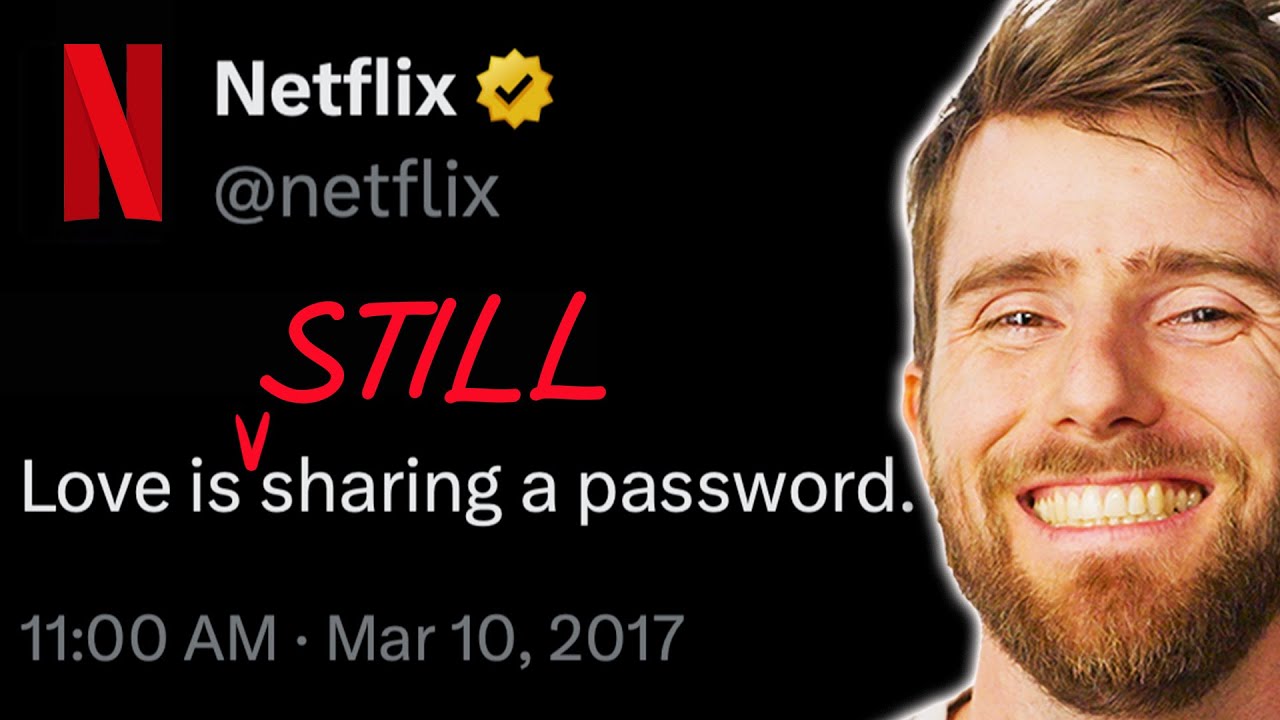
I Beat Netflix’s Password Sharing Crackdown!
0 up · 0 down · 0 ratings
Promos
Get 30% off iFixit’s Marlin Precision Screwdrivers at ifixit.com With Netflix starting to crack down on Password Sharing, we uncover an easy way to keep watching without paying more. Discuss on the forum: linustechtips.com tailscale.com softether.org github.com ► GET MERCH: lttstore.com ► LTX 2023 TICKETS AVAILABLE NOW: lmg.gg ► GET EXCLUSIVE CONTENT ON FLOATPLANE: lmg.gg ► SPONSORS, AFFILIATES, AND PARTNERS: lmg.gg ► OUR WAN PODCAST GEAR: lmg.gg FOLLOW US --------------------------------------------------- Twitter: twitter.com Facebook: @LinusTech Instagram: @linustech TikTok: @linustech Twitch: twitch.tv MUSIC CREDIT --------------------------------------------------- Intro: Laszlo - Supernova Video Link: youtube.com iTunes Download Link: itunes.apple.com Artist Link: soundcloud.com Outro: Approaching Nirvana - Sugar High Video Link: youtube.com Listen on Spotify: spoti.fi Artist Link: youtube.com Intro animation by MBarek Abdelwassaa @mbarek_abdel Monitor And Keyboard by vadimmihalkevich / CC BY 4.0 geni.us Mechanical RGB Keyboard by BigBrotherECE / CC BY 4.0 geni.us Mouse Gamer free Model By Oscar Creativo / CC BY 4.0 geni.us CHAPTERS --------------------------------------------------- 0:00 Intro 1:06 How it's changing 2:06 "Primary Location" 2:57 How to trick Netflix 4:17 Hardware needed 5:16 Settings 7:19 Demo 7:49 Consequences on wifi speed 8:24 How often? 9:47 Alternate methods! 10:22 Security Risks 11:32 Outro
The video opens by addressing Netflix’s password sharing crackdown and immediately frames the host as testing a workaround that keeps watching without paying more. It lays out the core change: Netflix now treats a single account as for a single physical household, with occasional allowances for traveling, and it notes the consequences of staying in a shared setup. The presenter clearly acknowledges that circumventing terms of service could risk account termination, but the tone remains exploratory and practical as they outline a step by step method. The first major section explains primary locations and how Netflix determines them through IPs, device IDs, and account activity, including the potential variability in manual location settings. The host then introduces the VPN workaround concept, emphasizing that this is not about third-party VPN services but about hosting a VPN server at the primary location to maintain consistent appearance of being at home. The explanation continues with the practical setup using Tailscale, including signing up, adding devices, and configuring an exit node on a Windows PC to route traffic. Finally, the host demonstrates testing the setup, showing how Netflix traffic can appear to originate from the primary location, and discusses speed and reliability considerations, as well as the caveats and potential security risks of remote access. The second major section covers alternative approaches and deeper technical options beyond Tailscale, such as SoftEther VPN, WireGuard, PiVPN, and a GitHub-based Windows server guide, highlighting that there are multiple paths to achieve similar results. The presenter walks through the steps of configuring an exit node, renaming devices for clarity, and validating the connection across devices, including a test with a Shield Android TV setup and a laptop. There is a careful exploration of potential performance trade-offs, noting that VPN routing can impact speed but remains sufficient for a smooth Netflix experience. The video reiterates the necessity of trusting those who have access to the network and emphasizes security risks associated with remote connections. Throughout, the host repeatedly cautions viewers about the legal and contractual boundaries while presenting a technically focused workaround for those determined to maintain shared access. The closing segments recap the main ideas, remind viewers about sponsor content, and point to additional VPN-related resources and related videos for deeper exploration. The concluding part of the video emphasizes thinking critically about user experience, value, and the evolving relationship between streaming services and customers. The host underscores that while it is technically feasible to maintain access via a primary location, enforcement strategies could shift, and user behavior will influence Netflix’s response. The video ends with a practical reminder to consider security implications, to evaluate the trade-offs of any workaround, and to rely on trusted configurations and devices. It also reiterates sponsor mentions and points viewers toward further guides for setting up their own VPN, inviting deeper technical engagement for those interested in home networking and privacy minded streaming. Overall, the video blends a candid exploration of a crackdown with actionable, if complex, steps for technically inclined viewers to experiment with local network setups.
Topics · technology · privacy · streaming · networking · cybersecurity · home-office · consumer-tech
Questions answered
- What is the core change Netflix announced regarding password sharing?
- Netflix now treats a single account as for members of a single physical household, with monthly checks and location-based access rules.
- What is the main technical solution demonstrated to maintain access?
- The video demonstrates setting up a VPN exit node using Tailscale to route traffic through the primary location so Netflix perceives the user as being at home.
- What are some alternative methods mentioned for achieving similar results?
- Alternatives include SoftEther VPN, WireGuard, PiVPN, and a Windows-based VPN server guide by a GitHub user.