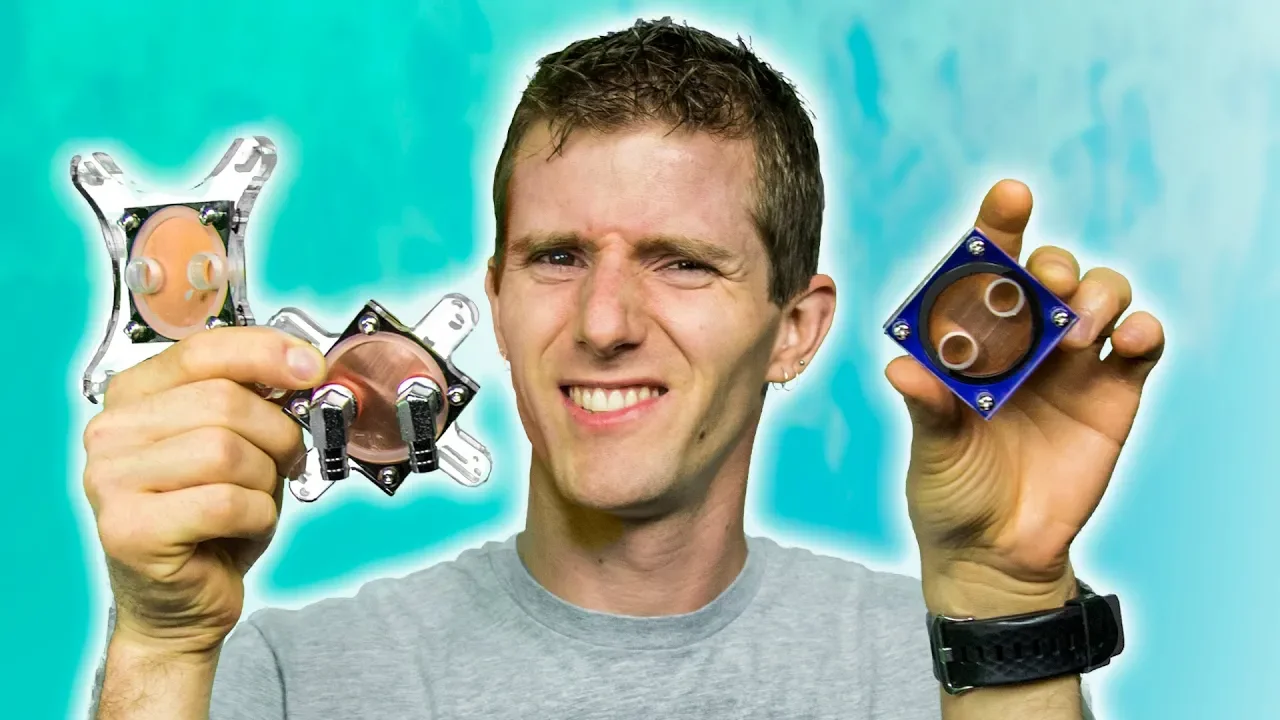
AliExpress Water Cooling DOESN'T Suck?!
0 up · 0 down · 0 ratings
Description
Check out the Massdrop x Sennheiser HD 58X on Massdrop: dro.ps
Promos
Check out ORIGIN PC’s New EVO15-S, powered by NVIDIA GeForce GTX 1070 Max-Q: bit.ly We find out if AliExpress watercooling parts can keep up with an overclocked extreme edition CPU. Buy AliExpress watercooling parts: geni.us Buy Barrow Watercooling Parts: On Amazon: geni.us List of the parts we ordered: pastebin.com Discuss on the forum: linustechtips.com Our Affiliates, Referral Programs, and Sponsors: linustechtips.com Linus Tech Tips merchandise at designbyhumans.com Linus Tech Tips posters at crowdmade.com Our Test Benches on Amazon: amazon.com Our production gear: geni.us Twitter - twitter.com Facebook - @LinusTech Instagram - @linustech Twitch - twitch.tv Intro Screen Music Credit: Title: Laszlo - Supernova Video Link: youtube.com iTunes Download Link: itunes.apple.com Artist Link: soundcloud.com Outro Screen Music Credit: Approaching Nirvana - Sugar High youtube.com Sound effects provided by freesfx.co.uk
The video embarks on an exploration of AliExpress water cooling parts to see whether inexpensive, off-brand components can keep up with more established brands. The hosts describe a deliberate plan to source parts designed for cooling PCs rather than repurposed items from unrelated domains, leveraging the affordability of AliExpress. They open with the reality that shipping from China can take a long time, and the procurement process involved ordering a large quantity of parts with mixed quality, including several blocks, radiators, and pumps. Early on, they discuss identifying brands like Cis cooling and Barrow, and acknowledge that many parts look legitimate while others appear questionable, highlighting the variation that comes with inexpensive, crowd-sourced hardware. The narrative then pivots toward assembling two complete loops: a baseline high-end EK configuration for performance reference, and a full AliExpress loop built entirely from lower-cost parts. This setup is used to evaluate thermal performance under a demanding CPU overclock, with the baseline loop serving as a comparison point for heat transfer and stability. The episode frames the main question as whether low-cost cooling can deliver reasonable performance and reliability when compared to premium, branded systems, while maintaining a sense of humor about the potential pitfalls of cheap hardware. As the test progresses, the team details the journey of testing several AliExpress components, noting variances in materials and design, such as copper plates, aluminum radiators, and unconventional mounting brackets. They observe aluminum and copper should not be mixed due to corrosion risk, and they caution viewers about components that seem low quality, including certain pumps and fittings. The testing strategy emphasizes measuring thermal performance with a standardized EK loop as a control, before evaluating AliExpress blocks and radiators in a dedicated loop that includes inexpensive fittings and a basic reservoir. In the first running phase of the AliExpress loop, the system reaches a stable temperature around mid-60s Celsius for a high-end CPU, which the hosts frame as surprisingly respectable for the price. They then introduce a second, more minimalist AliExpress block designed to have minimal contact area, expecting poor performance, and they find that even this ultra-cheap option performs better than anticipated after about 20 minutes of run time. In the closing analysis, the hosts reflect on the broader implications of their findings, arguing that custom water cooling has evolved far beyond the days of aquarium pumps and makeshift rigs. They acknowledge a wide spectrum of options, from budget-friendly Chinese components to high-end, warranty-backed systems, and note that the price-to-performance ratio can be compelling for many enthusiasts. The video stresses that while premium kits and established brands still offer reliability and warranties, AliExpress components can deliver useful cooling performance at a fraction of the cost, if the user is willing to accept potential variability and perform prudent component selection and testing. The hosts suggest that long-term tests and careful pump selection remain crucial, and they invite viewers to consider building their own loops as an educational and entertaining experiment rather than a guaranteed superior alternative to branded systems. The episode ends with a mix of humor and practical takeaway, encouraging informed purchasing decisions and pointing viewers toward the affiliate links and community discussions for further exploration.
Topics · hardware · technology · pc-building · cooling · diy · consumer electronics · information & education
Questions answered
- Are AliExpress water cooling parts capable of maintaining safe temperatures on an overclocked CPU?
- Yes, the video shows a full AliExpress loop maintaining mid-60s Celsius on an overclocked 5960x in testing, indicating that affordable components can achieve functional cooling, though results vary by part quality and design.
- What are the main risks of using low-cost water cooling components from AliExpress?
- Risks include poor quality construction, questionable design, aluminum-copper corrosion if metals are mixed, unreliable pumps, and potential leaks, which is why the video emphasizes careful component selection and avoiding low-quality fittings and reservoirs.
- How should a viewer approach building an affordable custom loop based on this video?
- Treat it as an educational experiment: start with reputable, cost-effective parts where possible, verify compatibility and materials, avoid mixing dissimilar metals, ensure a reliable pump, and perform thorough testing before relying on the loop for critical workloads.