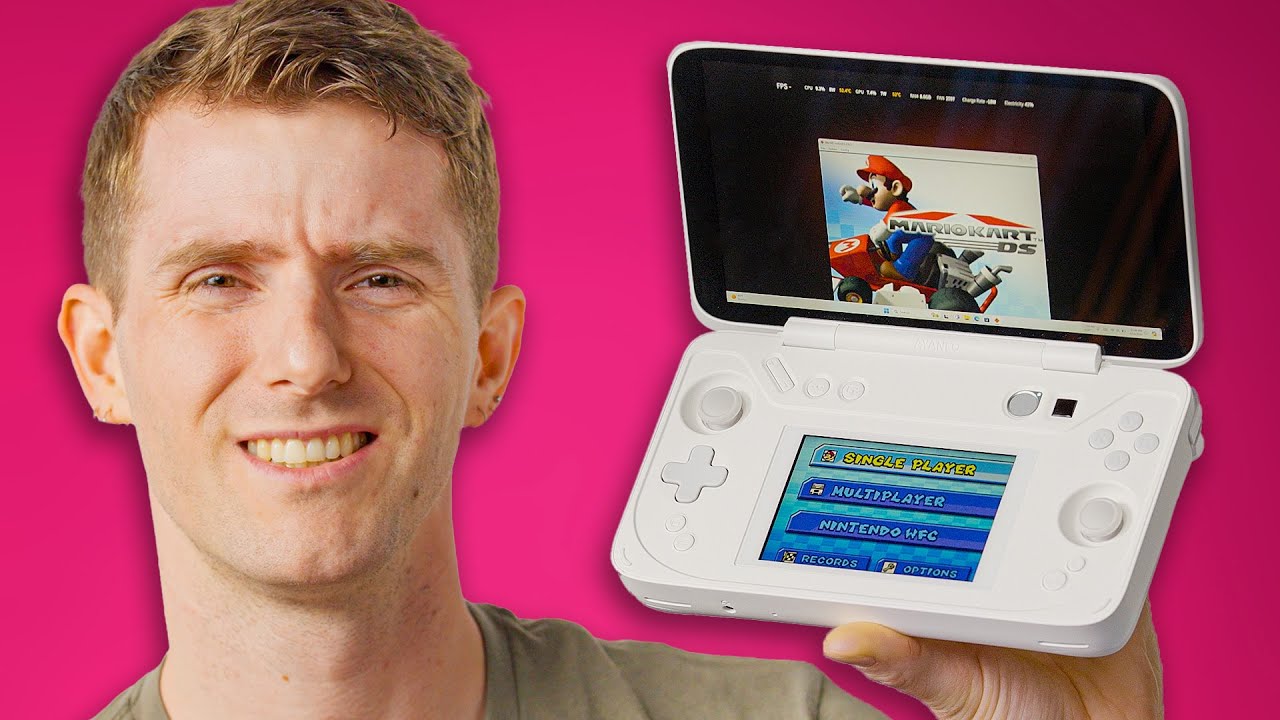
I need to test a theory… - AYANEO Flip DS
0 up · 0 down · 0 ratings
Promos
Get 69% off any of XSplit’s video tools. Use code LINUS at lmg.gg I miss the good ol' days. Listening to Beyonce on my iPod, watching Pirates of the Caribbean in theatres, and playing my trusty old Nintendo DS. Thankfully, AYANEO is here with (another) new handheld, the Flip DS! With two screens and some beefy specs, will Linus be impressed? Buy an AYANEO Flip DS: lmg.gg Buy an ASUS ROG Ally Z1 Extreme: geni.us (Canada: lmg.gg Purchases made through some store links may provide some compensation to Linus Media Group. Want us to unbox something? Make a suggestion at lmg.gg ► GET MERCH: lttstore.com ► GET EXCLUSIVE CONTENT ON FLOATPLANE: lmg.gg ► SPONSORS, AFFILIATES, AND PARTNERS: lmg.gg ► PRODUCTS WE USE ON THE SHORTCIRCUIT SET: lmg.gg FOLLOW US ELSEWHERE --------------------------------------------------- Twitter: twitter.com Instagram: @shortcircuityt TikTok: @linustech Facebook: @ShortCircuitYT CHAPTERS --------------------------------------------------- 0:00 This is nothing to sneeze at 0:35 Initial design thoughts and unboxing 1:38 Ports and buttons 2:56 Specs and LABS display test results 5:03 Ergonomics and face buttons 6:00 Sponsor - XSplit 6:41 Pressing buttons and software features 8:34 Gaming/speaker impressions and LABS performance results 10:02 Playing DS games and LABS battery test results 12:17 Pricing and overall thoughts 13:35 Outro
The AYANEO Flip DS is introduced as a bold attempt to blend modern handheld power with the nostalgic dual-screen form factor associated with the Nintendo DS. The host begins by unboxing and highlighting the device’s thick chassis, replaceable parts, and the mix of two color options, noting the overall heft that comes from a design intended to optimize DS emulation while supporting contemporary hardware features. The initial impressions focus on the build materials, input layout, and the IO array on the top edge, including triggers, shoulder buttons, a microSD slot, and dual USB-C ports that hint at extensibility through Thunderbolt-like connections and an external GPU possibility via OCULINK. The discussion then shifts to the core specification landscape, emphasizing the processor lineage (8000/7000 series Zen 4 cores up to 5.1 GHz) and the shared Radeon graphics, which frame expectations for performance parity with competing handhelds while noting that neural processing units vary by configuration. Throughout, the host evaluates the display’s brightness, color coverage, and grayscale performance, reporting higher-than-expected luminance in LABS tests (over 800 nits) and solid sRGB coverage, while also acknowledging the dual-screen arrangement introduces unique emulation challenges and ergonomics considerations. In the mid section, focus turns to practical usage aspects, such as the dual-screen interaction, task switching, and the Windows-based management of apps across panels, including input nuances, the trackpad quality, and the programmable side buttons, all of which contribute to a highly capable but somewhat bulky device. Finally, the host contextualizes the Flip DS within current market pricing and competing devices, noting a starting price near $1,000 and stepping up to $1,500 with top-tier configurations, and comparing against the ROG Ally Z1 Extreme and Steam Deck. The verdict suggests a rich feature set and innovative form factor, balanced by a premium price point and some tradeoffs in battery life and DS-specific usability, leaving enthusiasts with a compelling, but niche, option for dedicated emulation and handheld PC gaming. The video also integrates a sponsor segment for XSplit, highlighting its broadcasting and video production tools as enhancements for content creators, streamers, and professional calls. Overall, the Flip DS is portrayed as a complete package with strong hardware fundamentals and a distinctive design, yet it remains a high-priced choice in a market that already features capable alternatives. The host closes with a nuanced takeaway: if you love DS and multi-screen ergonomics enough to justify the premium, the Flip DS offers a unique, versatile platform, but bargain seekers might lean toward more affordable rivals while acknowledging the niche appeal of AYANEO’s approach.
Topics · technology · gaming · hardware · emulation · reviews
Questions answered
- What is the AYANEO Flip DS primarily designed to do?
- It is a handheld design intended to optimize Nintendo DS emulation while delivering modern hardware performance and a dual-screen experience, supported by Windows and expandable IO options.
- How does the Flip DS perform in terms of battery life and gaming FPS according to the test results?
- The tests report solid gaming performance comparable to contemporary handhelds, with the DS-focused use case trading some battery life for higher performance, showing endurance roughly around several hours in DS-like scenarios and more demanding workloads pushing lower endurance.
- How does the price of the AYANEO Flip DS compare to competing devices, and what are the implications?
- Pricing starts just under $1,000 and can rise to about $1,500 with top configurations, which is higher than some rivals like the ROG Ally Z1 Extreme at around $700, influencing perceived value and purchase decisions depending on feature priorities.