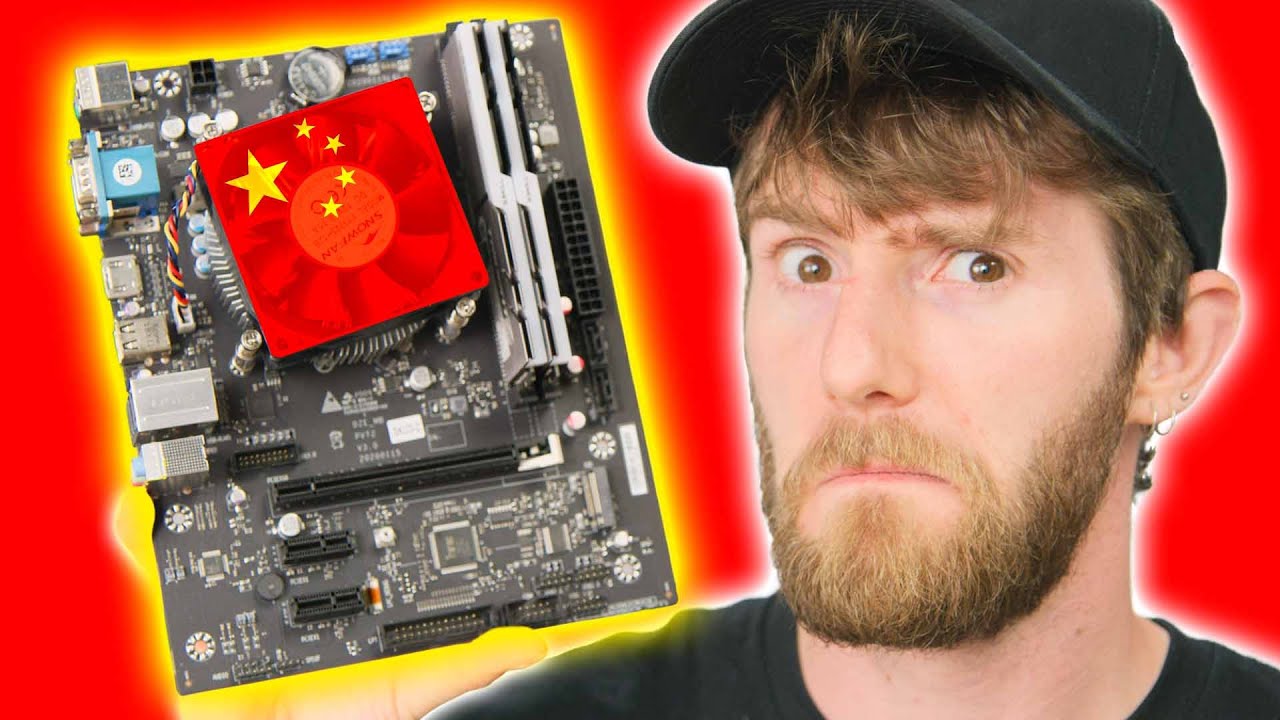
A Chinese Intel competitor?
0 up · 0 down · 0 ratings
Promos
Receive an additional $50 credit for Ting today when you sign up at linus.ting.com China's chip-making prowess has been getting increasingly sophisticated in recent years, and Zhaoxin has been at the forefront for years with its x86 cores. Let's take a look and see what they're like, shall we? Buy G.SKILL Trident Z RGB memory On Amazon (PAID LINK): geni.us On Newegg (PAID LINK): geni.us Purchases made through some store links may provide some compensation to Linus Media Group. Discuss on the forum: linustechtips.com GET MERCH: lttstore.com SUPPORT US ON FLOATPLANE: floatplane.com LTX EXPO: ltxexpo.com AFFILIATES & REFERRALS --------------------------------------------------- Affiliates, Sponsors & Referrals: lmg.gg Get Private Internet Access VPN at lmg.gg Get a Mech Keyboard: geni.us Nerd or Die Stream Overlays & Templates: geni.us NEEDforSEAT Gaming Chairs: geni.us Get a Displate Metal Print at lmg.gg Use code LINUSMEDIAGROUP on Epic Games Store: lmg.gg Get a 30-day free trial of Amazon Prime at lmg.gg Our Gear on Amazon: amazon.com FOLLOW US ELSEWHERE --------------------------------------------------- Twitter: twitter.com Facebook: @LinusTech Instagram: @linustech Twitch: twitch.tv FOLLOW OUR OTHER CHANNELS --------------------------------------------------- Techquickie: lmg.gg TechLinked: lmg.gg ShortCircuit: lmg.gg LMG Clips: lmg.gg Channel Super Fun: lmg.gg Carpool Critics: lmg.gg MUSIC CREDIT --------------------------------------------------- Title: Laszlo - Supernova Video Link: youtube.com iTunes Download Link: itunes.apple.com Artist Link: soundcloud.com Outro Screen Music Credit: Approaching Nirvana - Sugar High youtube.com Monitor And Keyboard by vadimmihalkevich / CC BY 4.0 lmg.gg Mechanical RGB Keyboard by BigBrotherECE / CC BY 4.0 lmg.gg Mouse Gamer free Model By Oscar Creativo / CC BY 4.0 lmg.gg
The video introduces and evaluates the Zhaoxin Kaixin HX002EA CPU, an eight‑core x86 core that Linus and team explain is not an AMD or Intel product, but rather a Chinese architecture built on VIA’s Isaiah design. They highlight the curious nature of the chip as an x86 compatible solution that appears to be surprisingly normal on the outside, with features like a standard IO layout, PCIe lanes, M.2, and even legacy ports, all integrated in a compact motherboard form factor. The hosts dive into the process and graphics capabilities, noting that the CPU houses onboard graphics and that the IO is built into the CPU, creating a highly integrated system. They discuss the backplate mounting, BIOS access, and the various naming quirks and mislabels encountered during early hardware probing, illustrating the challenges of evaluating unfamiliar, non‑commodity silicon. Early in the video they speculate whether this is a plug‑and‑play solution and whether there is a true X86 license through VIA, setting the stage for empirical testing later in Cinebench and game benchmarks. The segment then moves to performance measurements, including Cinebench R20 scores, 8 cores with 8 threads, and preliminary GPU behavior, followed by a practical demonstration of basic gaming and 4K/1080p rendering. The team considers the price and market context, noting the Taobao source and the Chinese push to reduce reliance on Western tech, while acknowledging that the HX002EA is expensive for what it delivers and that price trajectories may improve with time. They conclude with reflections on whether the Kaixin can evolve into a more credible competitor to established x86 cores if the trend of improvement continues, and tease other Chinese hardware efforts, including non‑x86 approaches, to reduce dependence on foreign vendors. The sponsor message and closing tease underscore the video’s balance of curiosity, humor, and hardware curiosity, inviting viewers to explore further Chinese computing initiatives. The overall takeaway is that while the Zhaoxin Kaixin is not a knockoff, its current performance and price position are modest, yet its existence signals a broader movement in China’s domestic processor development and ecosystem experimentation.
Topics · Science & Technology · Computer Hardware · Benchmarking · Technology News & Analysis · Industry Trends
Questions answered
- What is the Zhaoxin Kaixin HX002EA CPU built on, and why is it notable?
- It is eight cores based on VIA's Isaiah core, with X86 compatibility and features like onboard graphics; it represents China’s attempt to develop an indigenous processor ecosystem rather than a knockoff of AMD/Intel.
- Does the Kaixin HX002EA appear to be plug‑and‑play in a standard motherboard?
- Yes, it shows normal IO integration and no obvious external northbridge or southbridge, though practical BIOS and cooler mounting present real‑world challenges.
- Is the Kaixin considered expensive for what it offers, and what is the broader takeaway about its market potential?
- Yes, at the Taobao price point it is pricey for modest performance, but the video notes potential for improvement if the development trajectory continues in line with other legacy Isaish‑based cores.