Analog vs. Digital Cameras
0 up · 0 down · 0 ratings
Description
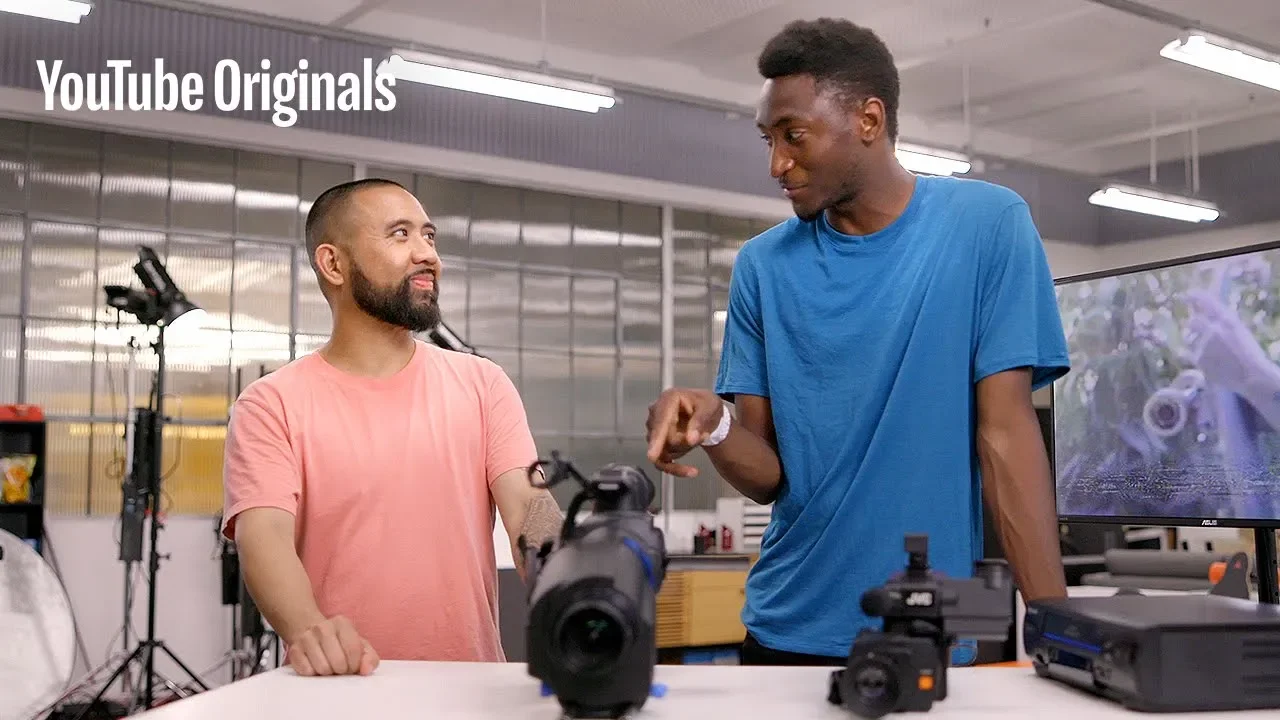
I meet up with Rik Cordero, a filmmaker with a focus on retro camcorder aesthetics. Rik has directed music videos for artists like Jay-Z, Nas, The Roots, Action Bronson, and Q-Tip. In this segment Rik helps me figure out how close we can get to an analog VHS look, using digital camera equipment.
The video analyzes the look and feel of analog versus digital camera systems by staging a side-by-side comparison between a classic early VHS-era JVC camcorder and a modern Panasonic HVX setup. Marques Brownlee and Rik Cordero discuss the practical differences, such as the lack of a screen on the older camcorder, the way a viewfinder helps with framing, and the distinctive motorized sound and image characteristics that define retro footage. They examine how lighting, exposure, and color renderings differ between the two rigs, noting that the Panasonic rig offers better dynamic range and more filmic color while still preserving a VHS-like vibe. The discussion moves from initial impressions to a direct side-by-side playback, where the JVC looks more “found footage” and less controlled, while the Panasonic produces more polished results with richer color and framing, making it the preferred choice for most scenarios. The conclusion emphasizes that while older gear has a unique charm and authenticity, the modern system provides a more reliable and adaptable baseline for achieving a VHS-inspired aesthetic without sacrificing camera handling or image quality. Throughout, the participants reflect on their personal histories with these devices, acknowledging how near-impossible it is to perfectly replicate the old look with post-production alone, and they remark that the legacy gear remains the true grandaddy of the look.
Topics · technology · film-making · cameras · retro-technology · media-arts
Questions answered
- What is the main difference between the JVC camcorder and the Panasonic HVX in the video?
- The JVC camcorder lacks a screen and offers a rugged, spontaneous, analog look with a motorized sound, while the Panasonic HVX provides better dynamic range, more accurate colors, and a filmic look with easier framing through a viewfinder.