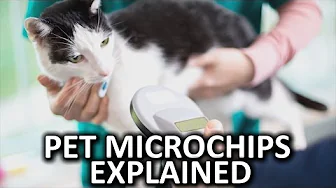
How Do Pet Microchips Work?
0 up · 0 down · 0 ratings
Promos
What kinds of information do pet microchips contain, how can they keep your pet safe, and what are their limitations? Squarespace link: Visit squarespace.com and use offer code TECHQUICKIE to save 10% off your first order. Follow: twitter.com Join the community: linustechtips.com
The video explains what pet microchips are and how they function as a long term, low maintenance form of identification for pets. It describes the physical construction of the chip, which is typically enclosed in inert material like glass, sometimes in a polymer that encourages tissue growth to keep the chip in place under the skin. The chip itself has no moving parts and no internal battery, relying on energy from the scanning device to power its passive RFID-like response. The presenter contrasts microchips with traditional collars, noting that collars can be damaged, lost, or strangled, whereas microchips persist and do not require replacement. It is highlighted that microchips store a unique ID number linked to owner and veterinary contact databases, which can expedite reuniting lost pets with their families when scanned by a shelter or veterinarian. The video also mentions the role of microchip registries and the need for owners to keep contact information up to date, as changes in address or phone numbers do not update automatically. Finally, the segment points out that microchips are meant as a backup to readable owner information on collars, and discusses potential future enhancements like pet doors that use chip recognition to control entry and exit, as well as ongoing questions about standardization and scanner compatibility.
Topics · Science and Technology · Pets · Animal welfare · Veterinary technology
Questions answered
- What materials surround a pet microchip and why is that important?
- Pet microchips are enclosed in inert materials, commonly glass, to prevent negative reactions from the pet’s body and to keep the chip safely in place for the animal’s lifetime.
- Do microchips require power or batteries to function?
- No, microchips are passive devices that draw energy from the scanner to transmit their ID when read.
- Why is it important to keep microchip registry information up to date?
- Because the microchip stores a unique ID linked to owner contact details and veterinary records, which must be current for shelters or veterinarians to reach the right person if the pet is lost.