P67 PCIe Slot Performance Comparison With OCZ Revodrive X2 Linus Tech Tips
0 up · 0 down · 0 ratings
Description
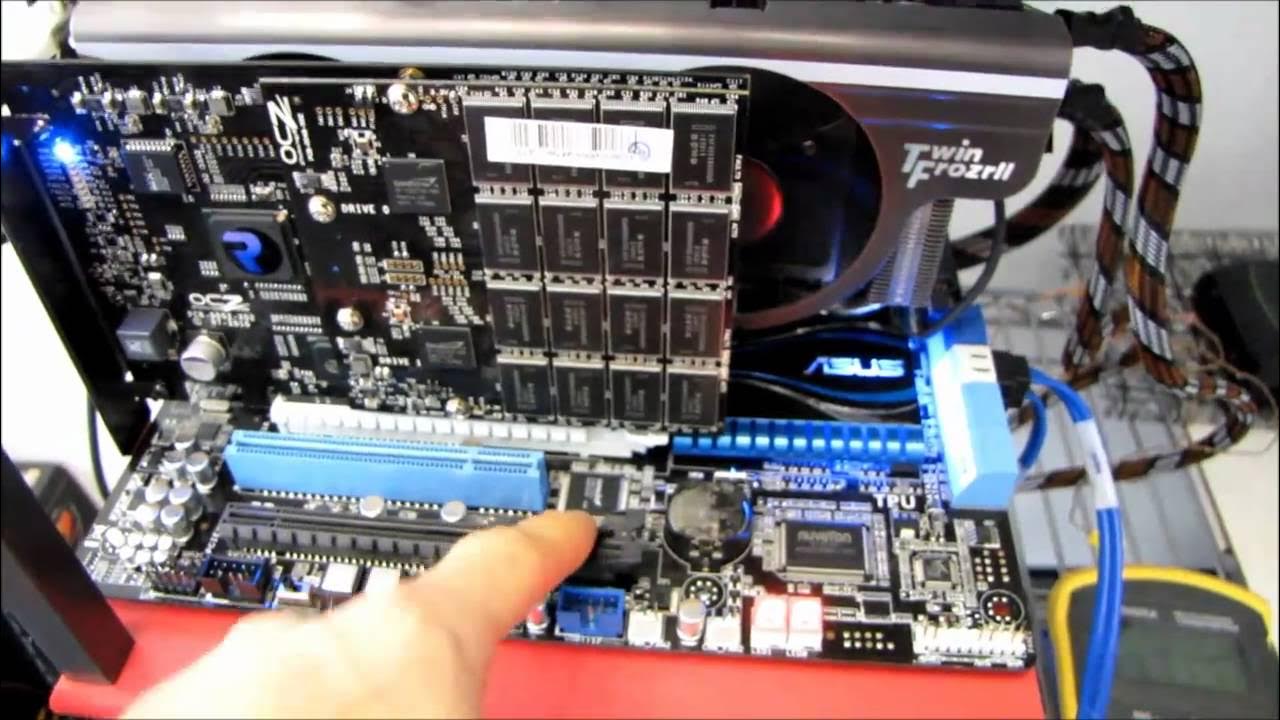
ncix.com I've wanted to do this for a while. I took some time and measured the performance of the Revodrive X2 in the CPU controlled PCIe slot versus the chipset controlled PCIe slot.
This Linus Tech Tips video investigates how OCZ Revodrive X2 performs when connected to the CPU controlled PCIe slots versus a chipset controlled PCIe slot on a P67 platform. Linus explains the PCIe lane situation on Sandy Bridge with the P67 chipset, noting that graphics lanes come from the CPU while an additional PCIe 4x slot is fed by the chipset. He tests the Revodrive X2 by running CrystalDiskMark across a 4 GB span of the drive in both configurations to compare sequential and random read/write performance. The results show that sequential reads are similar in both slots, with slight gains for the chipset slot in some cases, while random reads and random writes tend to prefer the CPU connected PCIe slot, indicating lower latency when the drive is CPU-attached. Linus highlights that storage latencies generally dominate, but the data suggests a measurable performance difference depending on slot affinity, leaning toward the CPU-connected PCIe slot for improved random I/O behavior. The video concludes that for PCIe attached storage like the Revodrive X2, the CPU-attached PCIe path provides the best overall performance, though the differences are nuanced and workload dependent, and invites viewers to subscribe for more hardware testing content.
Topics · computer_hardware · storage · technology_reviews · hardware_suite
Questions answered
- What causes the Revodrive X2 to behave differently when connected to a CPU PCIe slot versus a chipset PCIe slot?
- Differences arise from lane routing: the CPU provides direct PCIe lanes for graphics, while the chipset provides an additional PCIe slot that is not directly tied to the CPU, introducing latency variations that affect storage performance.
- Which configuration yields better random I/O performance for the Revodrive X2 on a P67 board?
- The CPU connected PCIe slot generally delivers better random read and random write performance due to lower latency compared to the chipset connected slot.
- Does the video conclude that chipset-lane PCIe slots are useless for Revodrive X2, or is the impact workload dependent?
- The video shows workload dependent results; while the CPU-attached path often offers better random I/O, sequential performance appears similar, so the impact varies with the workload.