Why Are Progress Bars Wrong So Often?
0 up · 0 down · 0 ratings
Promos
Why do progress bars you see when installing a program or copying a file seem to be inaccurate so often? Squarespace link: Visit squarespace.com and use offer code TECHQUICKIE to save 10% off your first order. Techquickie Merch Store: designbyhumans.com Techquickie Movie Poster: shop.crowdmade.com Follow: twitter.com Leave a reply with your requests for future episodes, or tweet them here: twitter.com Join the community: linustechtips.com Intro Theme: Showdown by F.O.O.L from Monstercat - Best of 2016 Video Link: youtube.com iTunes Download Link: itunes.apple.com Listen on Spotify: open.spotify.com
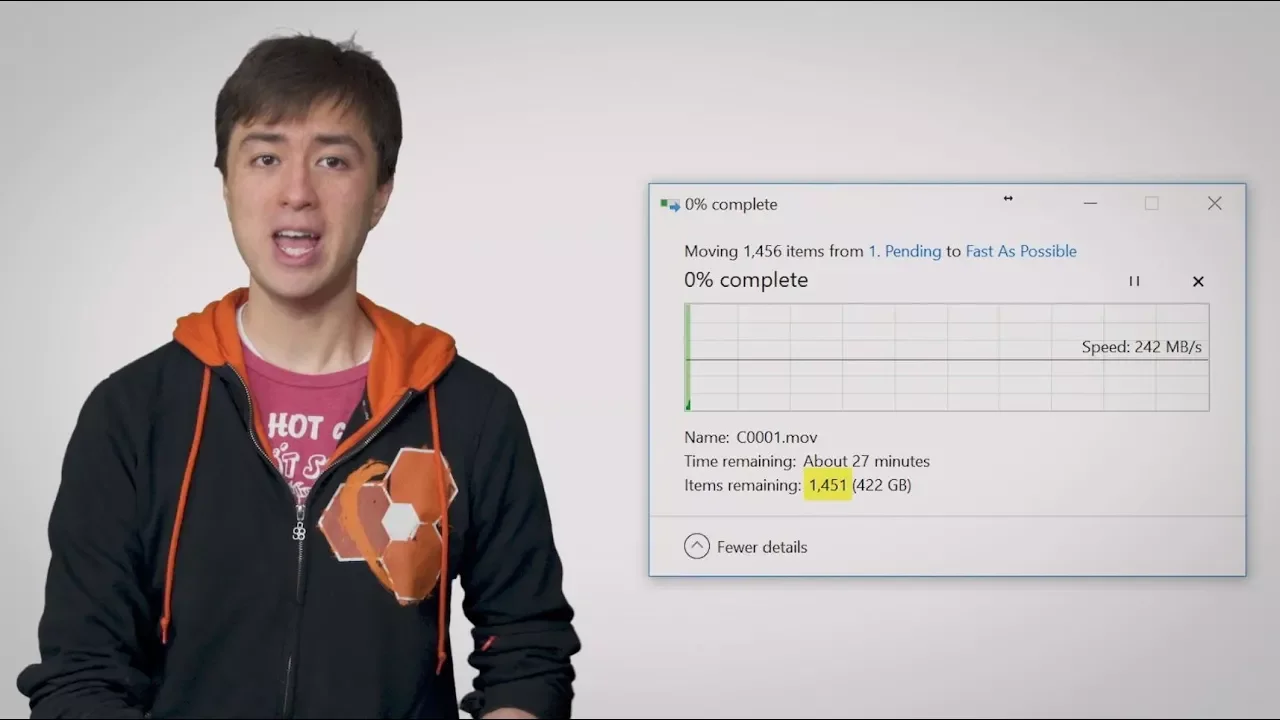
The video explains why progress bars and estimated completion times for tasks like software installations and file transfers often appear to be inaccurate. It begins by noting that these progress indicators jump around and can feel like a game of chance, a phenomenon people have observed for decades. The core reason, the presenter argues, is that progress bars rely on limited data: they can see how many files and how much data are being moved, but they cannot reliably predict how long each unit of work will take. Throughput on a computer system is not constant; it can be affected by other processes, disk caching, fragmentation, and whether data is read from or written to a disk. When background tasks or sudden speed changes occur, the initial estimate becomes quickly out of date. Installers share a similar limitation, treating tasks as linear chunks on a list instead of dynamic processes with varying durations. The video concludes that while more sophisticated progress tracking could improve accuracy, many developers prioritize stability and security over perfect realism in progress indicators, leaving users staring at a value that may not reflect real time. The host also uses light humor and examples to illustrate the frustration of seeing a stubborn 75 percent or a stalled bar, reminding viewers that the root cause is the inherent unpredictability of system throughput rather than a failing interface alone.
Topics · technology · science_and_tech · user_experience · software_development
Questions answered
- Why do progress bars often seem to misrepresent the actual completion time?
- Progress bars rely on limited data such as the number of files and total data, but cannot accurately predict how long each operation will take, especially as system throughput changes due to other processes, caching, or fragmentation.