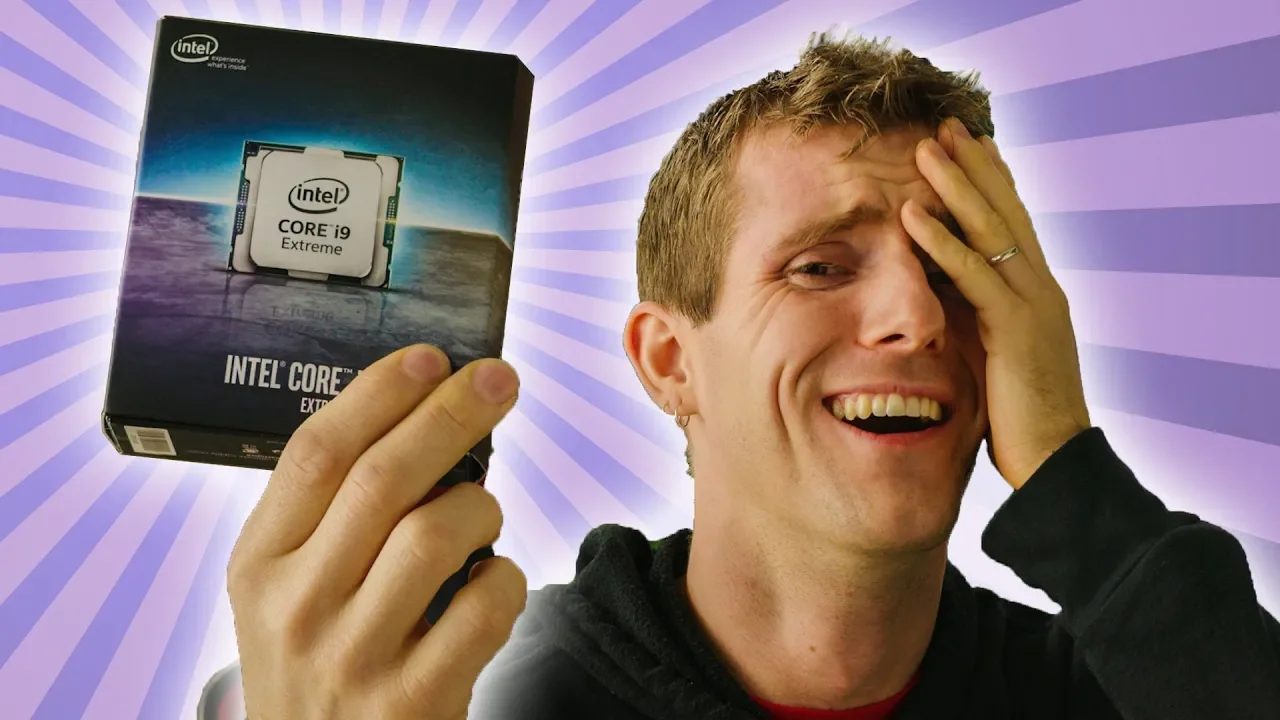
Intel Killed their OWN Product Lineup - Core i9 vs Xeon
0 up · 0 down · 0 ratings
Promos
Receive an additional $25 credit for Ting today when you use code LINUS2018 at linus2018.ting.com
Check out Thursday Boots for high-quality footwear at amazing prices at thursdayboots.com With core counts ever increasing in desktop CPUs, the question has to be asked: Do you even NEED an HEDT CPU anymore? Buy a Threadripper 2990WX: On Amazon: geni.us On Newegg: lmg.gg Buy a Threadripper 2950X: On Amazon: geni.us On Newegg: lmg.gg Buy a Core i9-9900K: On Amazon: geni.us On Newegg: lmg.gg Buy a Core i7-9700K On Amazon: geni.us On Newegg: lmg.gg Discuss on the forum: linustechtips.com Our Affiliates, Referral Programs, and Sponsors: linustechtips.com Get Private Internet Access today at geni.us Linus Tech Tips merchandise at designbyhumans.com Linus Tech Tips posters at crowdmade.com Our Test Benches on Amazon: amazon.com Our production gear: geni.us Twitter - twitter.com Facebook - @LinusTech Instagram - @linustech Twitch - twitch.tv Intro Screen Music Credit: Title: Laszlo - Supernova Video Link: youtube.com iTunes Download Link: itunes.apple.com Artist Link: soundcloud.com Outro Screen Music Credit: Approaching Nirvana - Sugar High youtube.com Sound effects provided by freesfx.co.uk
The video opens by outlining how Intel historically kept HEDT and mainstream CPUs in clearly separated product tiers, with HEDT offering higher core counts, bigger caches, and expanded memory bandwidth for workstation workloads. The host argues that Intel’s strategy under this generation has damaged the value proposition of its entire high-end lineup by not aligning consumer and professional platforms with market needs, especially as competition emerged. He highlights the shift driven by AMD Ryzen and Threadripper, which introduced more cores at lower prices, pressuring Intel to respond with higher core counts in the consumer Core i9 lineup. The discussion then moves into a deeper technical comparison, noting how AMD’s eight-core and later Threadripper introductions changed perceived workloads, and how Intel increased core counts from 10 to 18 with the 7000-series Core i9 to compete, yet still faced a broader gap in single-threaded performance and onboard graphics. The host questions whether the traditional HEDT category remains relevant given real-world tasks, where many workstation duties can be effectively handled by consumer CPUs when combined with GPU acceleration, and where ECC memory support becomes a differentiator. He suggests a proposed lineup shift: expand consumer cores where beneficial, preserve single-threaded performance advantages, and eventually reposition Xeon W as the lower-end workstation line, aligning pricing with Core i9s to simplify marketing and product strategy. The video ultimately argues that the death of the HEDT segment may be near, as the market leans toward value-oriented desktop builds that still meet serious workstation needs, and credits AMD for pushing the industry toward higher core counts and more versatile consumer platforms. The host closes with a call to readers to consider ECC support, price-to-performance, and the broader ecosystems when planning future builds, and notes that the landscape is improving for buyers across both AMD and Intel ecosystems.
Topics · technology · hardware · cpu · processor · desktop · gaming · market-analysis
Questions answered
- Why did Intel's HEDT lineup become less attractive to workstation builders?
- Because AMD introduced higher core counts at lower prices in consumer CPUs, which eroded the relative value of Intel's HEDT offerings and highlighted performance and price shortcomings.
- What change does the presenter propose for Intel and the Xeon line?
- Expand consumer core counts when beneficial, maintain strong single-thread performance, and replace the high-core Xeon line with Xeon W at prices aligned to Core i9s to simplify marketing and product strategy.
- How does ECC memory influence the workstation market according to the video?
- ECC memory remains a key differentiator; Ryzen supports ECC across its range, while Intel’s consumer and HEDT lines lack ECC, reducing their appeal for mission-critical work.