NVIDIA GTX 550 Ti Cyclone II vs NVIDIA Reference Cooler Fan Linus Tech Tips
0 up · 0 down · 0 ratings
Description
ncix.com Trying to decide between a reference cooled card or a Cyclone II card? Look no further!
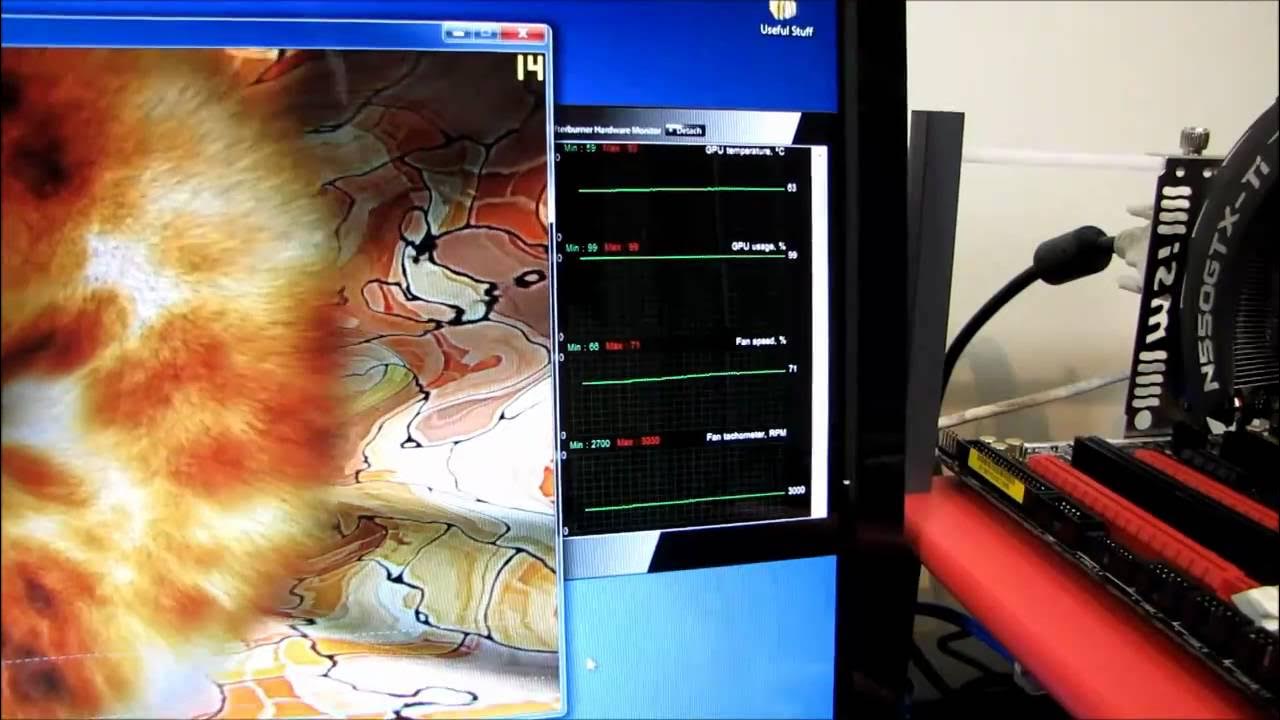
The video compares temperatures and acoustics between two GeForce GTX 550 Ti cooling solutions: MSI Cyclone II and the NVIDIA reference cooler. The presenter starts with the reference design, reporting a maximum GPU temperature around 75°C and a fan speed near 1,950 RPM (about 49%). He notes that this configuration keeps the GPU within a relatively high yet acceptable range, but with a certain level of noise. Switching to the Cyclone II, the maximum observed temperature drops to about 63°C, which is roughly 10°C cooler than the reference card. However, this cooler runs louder at similar load, with fan speeds around 71% and ~3,000 RPM to achieve that temperature. The video highlights that MSI implemented a more aggressive fan profile compared to the stock BIOS, which improves thermals at the cost of increased noise. The presenter also observes that the VRMs are cooled differently between the two cards: the reference has no dedicated VRM cooling, while the Cyclone II includes a metal heatsink covering the VRMs, making it feel significantly hotter to the touch and providing extra cooling. To explore if the Cyclone II’s performance can be maintained at a similar noise level, he manually reduces the Cyclone II fan to about 45% (roughly 1,500 RPM), achieving 75°C under FurMark load with a much quieter operation. The conclusion is that the Cyclone II offers better thermal performance and the option for quieter operation under certain fan settings, though at stock speeds it can be louder than the reference design. The test ends by noting the trade-offs between cooling effectiveness and acoustic output, with the Cyclone II generally outperforming the reference cooler in thermals and offering a more favorable balance when tuned for quieter gaming or demanding loads.
Topics · technology · hardware · graphics_cards · thermals · acoustics