The 1973 Stock Market Crash that Nobody Remembers
0 up · 0 down · 0 ratings
Channels and socials
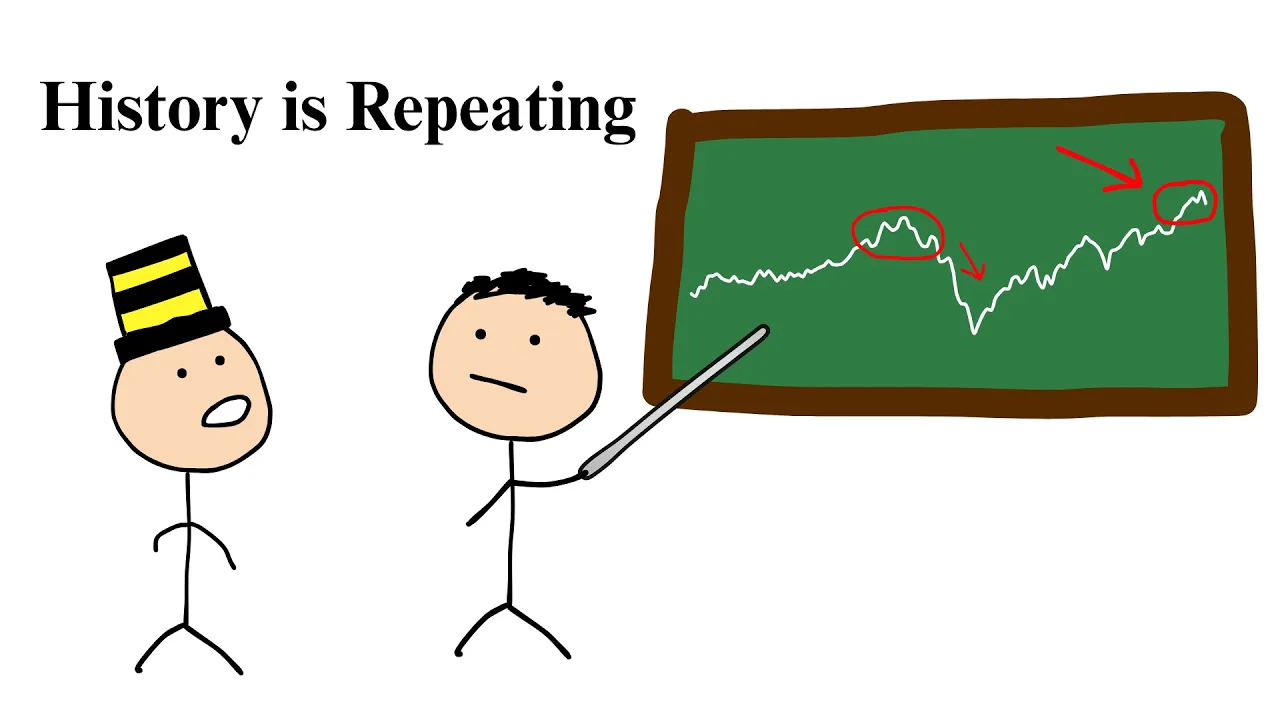
In the early 1970s, we saw the beginning of the end for the Nifty Fifty stocks. And now, history is repeating itself, and nobody is paying attention. At the peak, the stocks in the Nifty Fifty made up nearly 45% of the S&P 500. Fast forward to today, and the Mag 7 stocks make up around 36% of the S&P 500. The Magnificent Seven have become the modern echo of the “one-decision, nifty fifty stocks” that dominated back in the 1970s. In this video we cover: • What was the Nifty Fifty bubble? And how did it play out? • The similarities between the Nifty Fifty bubble from 1972 and the current bubble happening in tech stocks. • Why nobody is paying attention as it unfolds in front of our eyes. Complex topics, simple breakdowns. Join my free weekly newsletter to stay ahead of what's actually happening in markets: casualmarkets.co #finance #stockmarket #investing #stocks #economics Disclaimer: The information provided in this video and on this channel (collectively, the “Content”) is for informational, educational, and entertainment purposes only and does not constitute investment, financial, legal, or tax advice, nor a recommendation to buy, sell, or hold any security or investment strategy. Investing involves risk and you must do your own research. Nothing in the Content should be interpreted as creating a fiduciary relationship, financial advisory relationship, or client relationship of any kind. The host, the channel, and all affiliated entities expressly disclaim any and all liability for any direct or consequential loss or damage arising directly or indirectly from the use of, reliance upon, or interpretation of the Content. By viewing or interacting with the Content, you acknowledge and agree to these terms and release the host and all related parties from any and all claims related to your reliance on the information provided.
The video argues that investors often repeat the same pattern of believing “this time it’s different,” quoting Sir John Templeton and referencing Jesse Livermore’s view that speculation is not new. It frames the topic as a less remembered bubble from the early 1970s, the Nifty 50, and says the damage when it broke was severe. The creator explains that from 1945 to 1970 the US stock market gained over 350%, which helped popularize a strategy of “one decision” stocks where investors only expected to buy. The Nifty 50 is described as blue chip companies with stable cash flows, such as Coca-Cola, American Express, McDonalds, and others, where the “never sell” mentality pushed valuations far higher than the average market P/E of about 15. Around the peak, the video gives examples like Coca-Cola trading at about 46 times earnings, Xerox at 49, McDonalds at 86, and Polaroid at 90, with the overall Nifty 50 averaging about 42 times earnings, and it claims the group reached roughly 45% of the total US stock market. It then traces the breakdown into 1973 to 1974, tying the crash to macroeconomic “dominoes” including oil prices quadrupling, inflation rising above 11%, unemployment doubling from about 4.5% to 9%, and President Nixon ending the gold standard. The video states the stock market plunged about 50% between 1973 and 1974, calling it the worst bear market since the Great Depression, and it emphasizes that overpriced stocks were not just corrected but “obliterated.” Specific declines are cited for Nifty 50 names, including Coca-Cola down over 60%, McDonalds down over 70%, and Polaroid down more than 90%, with the recovery taking about 8 years until 1981. From there, the creator pivots to today, using Mark Twain’s idea that history “rhymes” rather than repeats, and compares the Nifty 50 concentration to the modern tech concentration of the Magnificent Seven. The video claims the Magnificent Seven account for around 36% of the S&P 500 and lists Microsoft, Apple, Google, Amazon, Meta, Tesla, and Nvidia, positioning them as a modern echo of “one decision” stocks. It adds that these stocks are priced with very high earnings multiples, including Google and Meta around 28 times earnings, Amazon around 35, Apple around 37, Microsoft around 38, Nvidia around 50, and Tesla around 247, concluding that investors are again treating them as effectively untouchable and whispering the same “this time it’s different” refrain.
Viewers frequently describe the content as part of a repeating cycle of “history repeats” and note it feels like the same loop every century, with some mocking the claim that nobody is talking about an approaching recession. There is mixed discussion about timing and strategy, with many comments debating whether market crashes are avoidable for long periods, whether buy and hold wins over long horizons, and how much risk comes from concentrating wealth in a few stocks. Several viewers praise the analogy and analogy-driven explanations as fascinating, high quality, and memorable, while others criticize specific details and visuals such as chart accuracy or wording like “allegedly.” Humor appears throughout, including jokes about “this time it’s different,” Tesla and overvaluation, and the idea of needing to time the market, plus some comments that reference personal trades, index funds, and alternative assets like gold, treasuries, and crypto.
Topics · finance · stock market · markets · economics · education
Questions answered
- What was the Nifty Fifty bubble in the early 1970s?
- The Nifty Fifty bubble refers to the early 1970s investing mindset centered on “one decision” blue chip stocks, where investors believed they were bulletproof and largely only planned to buy because selling was seen as unlikely or unnecessary. Those stocks were later shown to be priced at very high earnings multiples despite the assumption of stable, long term growth.
- How much did the US stock market drop in 1973 to 1974 during the Nifty Fifty crash?
- The video states the US stock market fell about 50% between 1973 and 1974.
- What valuation multiples and examples does the video give for Nifty Fifty stocks at the peak?
- The video cites examples such as Coca-Cola at about 46 times earnings, Xerox at about 49, McDonalds at about 86, and Polaroid at about 90. It also says the Nifty Fifty group averaged roughly 42 times earnings at the peak.
- How much of the S&P 500 did the Magnificent Seven represent compared with the Nifty Fifty concentration?
- The video claims the Magnificent Seven make up around 36% of the S&P 500 today, while the Nifty Fifty made up nearly 45% of the total US stock market around 1972.