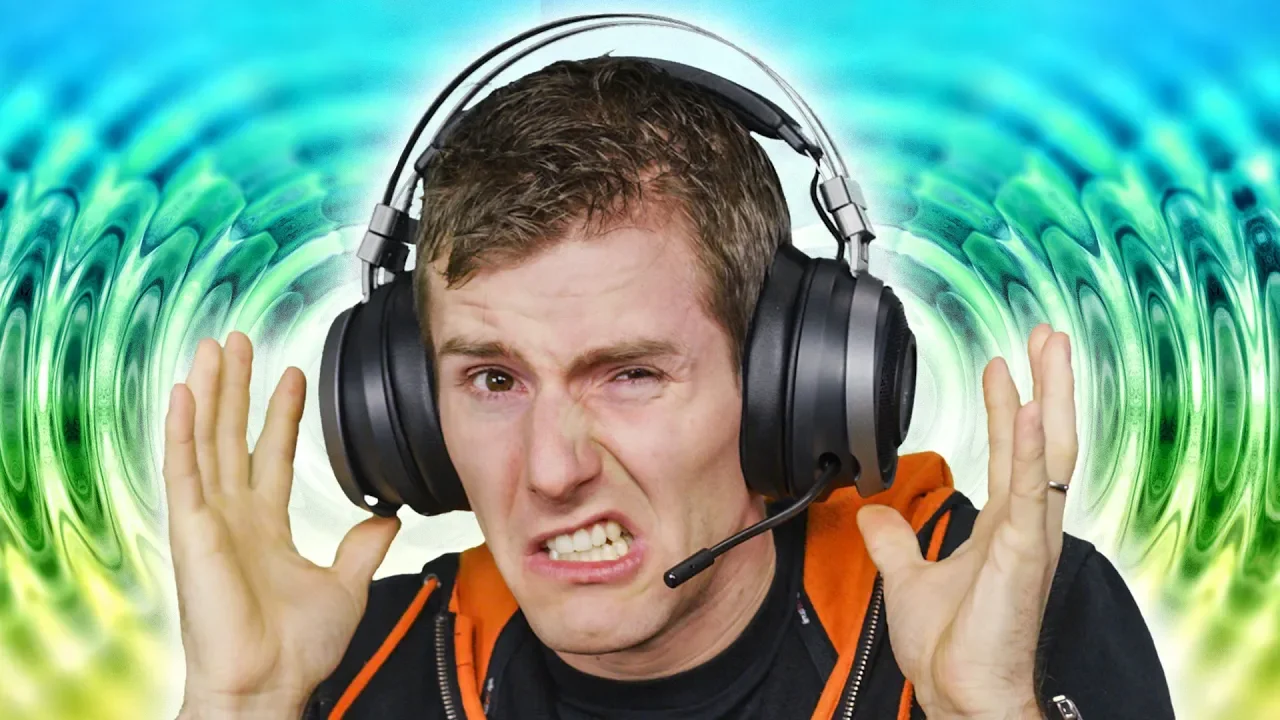
Razer thought this was a good idea??
0 up · 0 down · 0 ratings
Promos
The first 200 people who head to brilliant.org will get 20% off their annual premium subscription of Brilliant. Mack Weldon: Use offer code TECHTIPS20 to get 20% off your next Mack Weldon order at lmg.gg Technically all speaker drivers vibrate but these are different. The Razer Nari Ultimate headphones use technology from Lofelt (the company that brought you Basslet) to TRY and take haptic gaming tech to the next level… Buy Nari Ultimate on Amazon: geni.us Discuss on the forum: linustechtips.com Our Affiliates, Referral Programs, and Sponsors: linustechtips.com Get Private Internet Access today at geni.us Linus Tech Tips merchandise at designbyhumans.com Linus Tech Tips posters at crowdmade.com Our Test Benches on Amazon: amazon.com Our production gear: geni.us Twitter - twitter.com Facebook - @LinusTech Instagram - @linustech Twitch - twitch.tv Intro Screen Music Credit: Title: Laszlo - Supernova Video Link: youtube.com iTunes Download Link: itunes.apple.com Artist Link: soundcloud.com Outro Screen Music Credit: Approaching Nirvana - Sugar High youtube.com
Razer’s Nari Ultimate headset is introduced with a bold claim: it can vibrate your head using intelligent haptic technology to augment the gaming and multimedia experience. The video opens with the host expressing strong skepticism, noting that the idea sounds risky and potentially gimmicky, yet acknowledging the device’s high-profile backing and unique approach. Early discussion centers on how the haptic system works, differentiating Razers hypersense from traditional headphone vibration by using one or more Lofelt actuators in each ear cup, powered by real time signals rather than relying on game software support. The host explains the hardware design, including how the nine-step hypersense intensity is controlled via software, and why the product might be compelling for certain users despite questions about build quality and price. Overall, the segment lays out a nuanced view: the tech is intriguing and can increase immersion for low-frequency content like explosions or bass-heavy scenes, but it comes with caveats around consistency across content, difficulty in use on consoles or mobile, and the trade-off between enhanced experience and potential distractions or discomfort. As the review unfolds, the host provides practical observations about performance and usability. Sound and haptics are described as complementary rather than a replacement for traditional audio, with hypersense designed to augment low-frequency sensations rather than solely drive the audio output. The video discusses how the drivers interact with music, movies, and games, highlighting that the effect is strongest with content containing steady bass or rumble, such as action scenes or shooters, while it can be less effective or even distracting during more intermittent or complex soundscapes like Starcraft 2 or certain music genres. The on-device controls and the associated software are noted, including the convenience of wireless operation via a 2.4 GHz dongle and the ability to customize intensity, but also the limitation that hypersense adjustments must be made through desktop software rather than on-device controls for many use cases. The host weighs the value proposition, concluding that while the hypersense feature adds a memorable, unique experience for specific users, the overall package may not justify the cost for everyone, particularly given microphone quality concerns and the existence of more traditional gaming headsets at lower prices. In the final assessment, the video argues that the Razers belong to a rare subset of peripherals that offer a transformative but polarizing experience. For the right buyer,someone curious about neuromorphic-like feedback, a gamer who wants heightened physical sensation during gameplay, or a person who enjoys experimenting with tech,the Nari Ultimate presents a distinct, attention-grabbing option that can justify its premium. However, for general users or those prioritizing microphone quality, long-term comfort, and overall value, the headset remains a tough sell. The review ends with a balanced verdict: the idea is clever and the execution is ambitious, but potential buyers should weigh the premium against alternatives and be prepared for mixed results depending on their content and platform. The video also briefly plugs related Gear and community channels, inviting viewers to engage further with Linus Tech Tips content and current deals.
Topics · technology · consumer electronics · gaming peripherals
Questions answered
- What is hypersense in the Razers Nari Ultimate and how does it differ from regular headphone vibration?
- Hypersense uses one or more Lofelt actuators in each ear cup to create real-time head vibrations that augment the low-frequency content, rather than relying on the headphone’s drivers to move a diaphragm. It does not require game software support and operates over a 20 to 200 Hz range that overlaps with the driver’s frequency response, providing a tactile sensation in addition to sound.
- Are there usability concerns with hypersense on different platforms like PC, console, or mobile?
- Yes, hypersense adjustments are desktop-software based, which can limit quick changes on consoles or mobile devices, and some users may find the feature too strong or too subtle depending on content and genre.