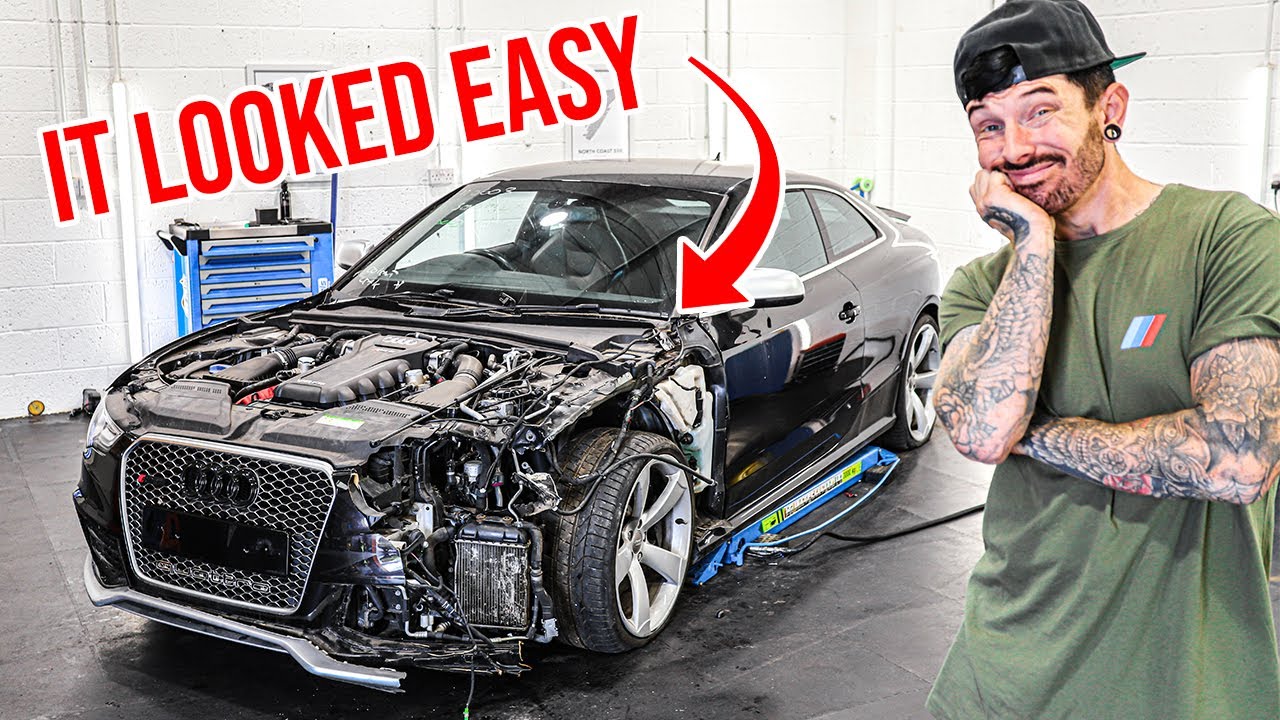
HOW BADLY DAMAGED IS THE CHEAPEST AUDI RS5
0 up · 0 down · 0 ratings
Description
NEW BMW TEES & HOODIES
Promos
Grab a YFood Taster Pack Here USE CODE MAT10 bit.ly I bought my girlfriend the cheapest Audi RS5 that i could find, but now its time to find out how badly damaged it actually is. The Audi 2012 Rs5 is categorised as a CAT S which means it has some form of structural damage. Ive never attempted to repair a chassis before but theres a first time for everything. The problem is some of the jobs i thought would be straight forward turn out to be alot harder than first anticipated.
ALL MA MERCHANDISE
Channels and socials
Follow Me Here Aswell
@matarmstrongbmx @matarmstrongbmx HANNAHS (MY GIRLFRIEND) CHANNEL HERE @HannahSmith #AUDIRS5 #EP1 #SALVAGEREBUILD Audi rs5, rebuilding a car in 10 mins, buying a crash damaged car, cheapest in the UK, buying my girlfriend a car, modified audi rs5, audi rs5 exhaust
Notes
This video follows a hands-on project where the host purchases the cheapest Audi RS5, a 2012 model categorized as CAT S due to structural damage, and sets out to assess how badly damaged it really is. The opening segment establishes the objective: determine the depth of damage, confirm what can be salvaged, and plan a path to getting the car back on the road for the owner, Hannah. Early on, the car arrives with obvious exterior damage including a missing bonnet, smashed bumper, taillights, and a coolant-leaking radiator, while the interior remains impressively clean for a 2012 model with about 39,000 miles. The host quickly prioritizes addressing the exhaust and headlight configurations, then proceeds to remove damaged front-end components to expose the frame, suspension, and cooling system. As the work progresses, the video delves into the complexity of the repair, revealing that replacing the front-end assembly requires disassembly of multiple subsystems, including radiators, oil coolers, and crash bars, before reassembly with second-hand parts. The narrator emphasizes the graft involved, the decision to replace a full suspension leg on one side, and the importance of verifying fitment by aligning the chassis against a straight reference point. The second half of the video shifts to systems verification: installing driver and passenger headlights, testing indicators and daytime running lights, and attempting to top up coolant to ensure there are no leaks. The host notes an emerging fault with the adaptive headlight system and the missing ballast, and discusses how wiring issues and sensor plugs may complicate final assembly. The video closes with a candid assessment of the remaining parts, a plan to source additional components from Audi for alignment accuracy, and a call to viewers to stay tuned for the next installment to see the RS5 take shape. Overall, the content blends salvage workflow, problem solving, and a cautious optimism about transforming a damaged wreck into a functioning high-end car, while inviting audience participation for troubleshooting tips and part sourcing. The host maintains a practical, no-nonsense tone, punctuated by moments of humor and a steady stream of technical detail that appeals to DIY enthusiasts and car rehabs alike. A final caveat is the revelation of a coolant leak, reminding viewers that the road to a rebuild is iterative and might involve unexpected setbacks. The video ends with a teaser for the next episode and a reminder to subscribe for ongoing progress.
Topics · car_repair · salvage_car_rebuild · auto_repair_projects · vehicle_modification · engine_and_dynamics · electrical_systems · audi · high_performance_cars
Questions answered
- What does CAT S mean for the Audi RS5 and how does it affect the rebuild plan?
- CAT S indicates structural damage that may affect the chassis, frame, or structural components. It requires careful assessment to determine which parts are repairable, which must be replaced, and how alignment and safety-critical elements will be restored to factory standards.
- What is the first major repair step after identifying front-end damage?
- The first major step is to strip the damaged front end, remove the bonnet, bumper, and headlights, and then access the radiator and crash bar. This allows inspection of the chassis and suspension components and sets up for replacing damaged radiators, fans, and associated hardware.
- Why is the adaptive headlight system a concern in this build and how might it be resolved?
- The adaptive headlight system relies on a ballast and wiring from sensors to adjust light distribution. Missing ballast and wiring plugs can trigger faults and prevent proper operation. Resolution involves sourcing the correct ballast and wiring harness, ensuring compatibility with the RS5 headlight assemblies, and recalibrating the system after installation.