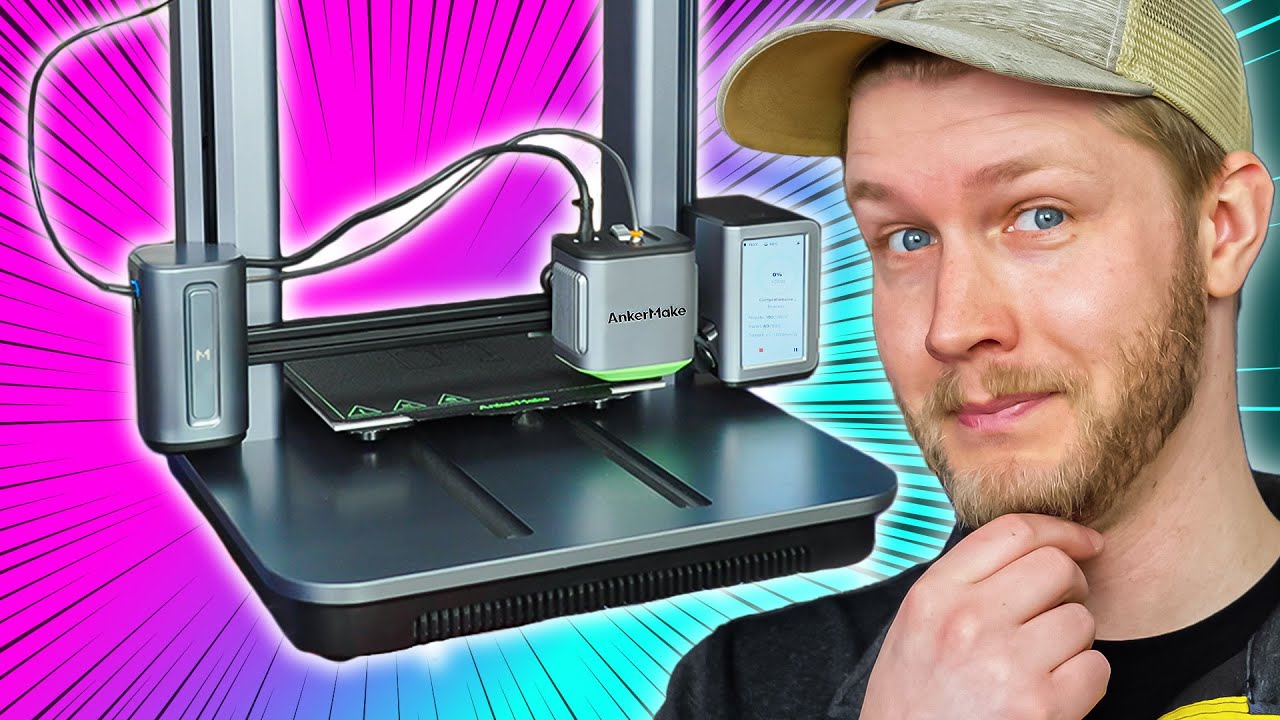
Much BETTER than Expected - AnkerMake M5 3D Printer
0 up · 0 down · 0 ratings
Description
Thanks to AnkerMake for sponsoring today's video!
Promos
Check out their M5 3D printer on Kickstarter at bit.ly 3D Printers are daunting when you first get into the hobby/industry. The setup isn't too bad, but AnkerMaker wants to get you started as quickly and efficiently as possible with the M5 3D printer, and honestly, it's surprisingly pretty good! Purchases made through some store links may provide some compensation to Linus Media Group. ► GET MERCH: lttstore.com ► AFFILIATES, SPONSORS & REFERRALS: lmg.gg ► PODCAST GEAR: lmg.gg ► SUPPORT US ON FLOATPLANE: floatplane.com FOLLOW US ELSEWHERE --------------------------------------------------- Twitter: twitter.com Instagram: @shortcircuityt TikTok: @linustech Facebook: @ShortCircuitYT CHAPTERS --------------------------------------------------- 0:00 - Why won't you stop? 0:10 - Please just work 0:20 - Unboxing 1:50 - Baseplate disassembly 4:36 - Assembly 6:18 - Filament holder thoughts 6:51 - Auto-leveling overview 8:21 - Loading the filament 8:55 - Anker App 9:37 - Starting the print 10:58 - 3D Printing Timelapse 11:17 - Results impressions 13:43 - Anker Smartphone app impressions 14:32 - Beta disclaimer 14:45 - What is a slicer? 15:08 - Will it stop? 16:20 - Final thoughts
The video presents an in-depth hands-on look at the AnkerMake M5 3D printer, focusing on setup, assembly, and initial performance. It starts with expectations that the device should simply work, highlighting the promise of a beginner-friendly experience, and notes that the beta build aims to minimize the typical trial-and-error phase of 3D printing. The unboxing and build process are captured in a casual, humorous tone as the hosts assess the hardware quality, including the aluminum components and the plastic base, and critique the packaging and included toolkit. The hosts then explore the auto-leveling system, discussing its 49-point approach and how it improves first-layer reliability, while also inspecting the filament loading workflow and the ongoing firmware/app integration. The first prints are run via the AnkerMake app, showing file transfer from a smartphone, real-time feed, and the ability to adjust speed and other parameters, followed by a successful print the next day with minimal stringing and surprisingly robust results for a first-out-of-the-box experience. The reviewers conclude that for a Kickstarter price around $430, the M5 delivers strong value with easy setup, strong feature set, and practical smartphone integration, while acknowledging there is still uncertainty about long-term reliability and final production pricing. They close with thanks to AnkerMake, a call to like and subscribe, and an invitation for further maker-focused content.
Topics · 3d printing · consumer electronics · product review · kickstarter · technology overview
Questions answered
- What are the standout features of the AnkerMake M5 highlighted in the review?
- Key standout features include 49-point auto leveling for consistent first layers, a smartphone app for file transfer and print management, fast assembly, and a build with aluminum components on the top and a plastic base. The reviewer also notes strong out-of-the-box print speed and reliability for initial prints, plus a promising Kickstarter price point.
- How does the auto leveling system impact print results according to the video?
- The auto leveling system uses multiple sensing points to ensure even bed calibration, which helps keep the first layer consistent across prints. This reduces common failure modes where one side of the bed might not adhere properly, leading to failed prints or warping, and the reviewer emphasizes that this makes prints “just work” more often.
- Is the AnkerMake M5 considered a good value during the Kickstarter period, and what is the price expectation?
- Yes, during the Kickstarter period the device is advertised at a discounted price around 430, which the reviewers consider a strong value given the feature set and build quality. They also note a higher conventional price around 760, suggesting potential savings, but acknowledge final pricing and long-term reliability will determine overall value.