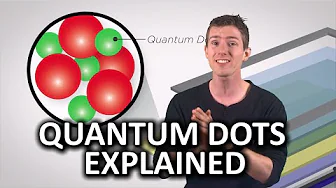
Quantum Dots as Fast As Possible
0 up · 0 down · 0 ratings
Description
As if determining the price to performance ratio of a TV wasn't hard enough, some manufacturers have started using a new rating system, quantum dots... Freshbooks message: Head over to freshbooks.com and don’t forget to enter Tech Quickie in the “How Did You Hear About Us” section when signing up for your free trial.
Quantum Dots as Fast As Possible explains how quantum dot technology fits into LCD displays and why it has become a popular intermediate step between traditional LCDs and OLEDs. The video starts by outlining the challenge of choosing a display type based on price to performance, then describes how blue LED backlights with a yellow phosphorus layer create white light that is filtered by red, green, and blue subpixels to form an image. It then introduces quantum dots, which are red and green fluorescent nanocrystals that emit light when excited by the blue backlight, producing a purer white light and enabling more efficient light passage through subpixel filters. This efficiency can translate into brighter colors and lower energy consumption while expanding the color range relative to standard LCDs. The host notes that although QD LCDs offer color benefits and potential power savings, OLEDs remain favored by some viewers for their superior black levels and contrast, highlighting ongoing debates about motion handling and image quality at higher refresh rates. The discussion pivots to economic factors, explaining that quantum dot LCD panels can potentially reduce production costs to a fraction of OLEDs, which makes them attractive to manufacturers and budget-conscious consumers alike. The speaker emphasizes that QD LCD is not a guaranteed replacement for OLED but rather a compelling stopgap technology until manufacturing and pricing dynamics favor broader OLED adoption. The segment then shifts to practical considerations for consumers, including energy efficiency, battery life implications for mobile devices, and the broader market context of how display technologies compete on price, performance, and production costs. The video closes with a light promotional aside about related content channels and a call to action to subscribe, while underscoring that evolving display tech continues to be driven by the tradeoffs between brightness, color fidelity, motion handling, and total cost of ownership.
Topics · display technology · science and technology · consumer electronics · energy efficiency · product design · manufacturing economics · television technology
Questions answered
- What makes quantum dot LCDs more color accurate or vibrant than traditional LCDs?
- Quantum dots emit specific wavelengths when excited by blue backlight, producing purer red and green light that passes more efficiently through color filters, which improves color reproduction and can enhance perceived brightness without increasing overall power use.
- Why would manufacturers choose QD LCD over OLED in some cases?
- QD LCD can offer lower production costs and better energy efficiency while delivering a wide color gamut, making it attractive for budget-conscious products and devices that require long battery life, though OLED may still dominate in contrast and deep blacks.