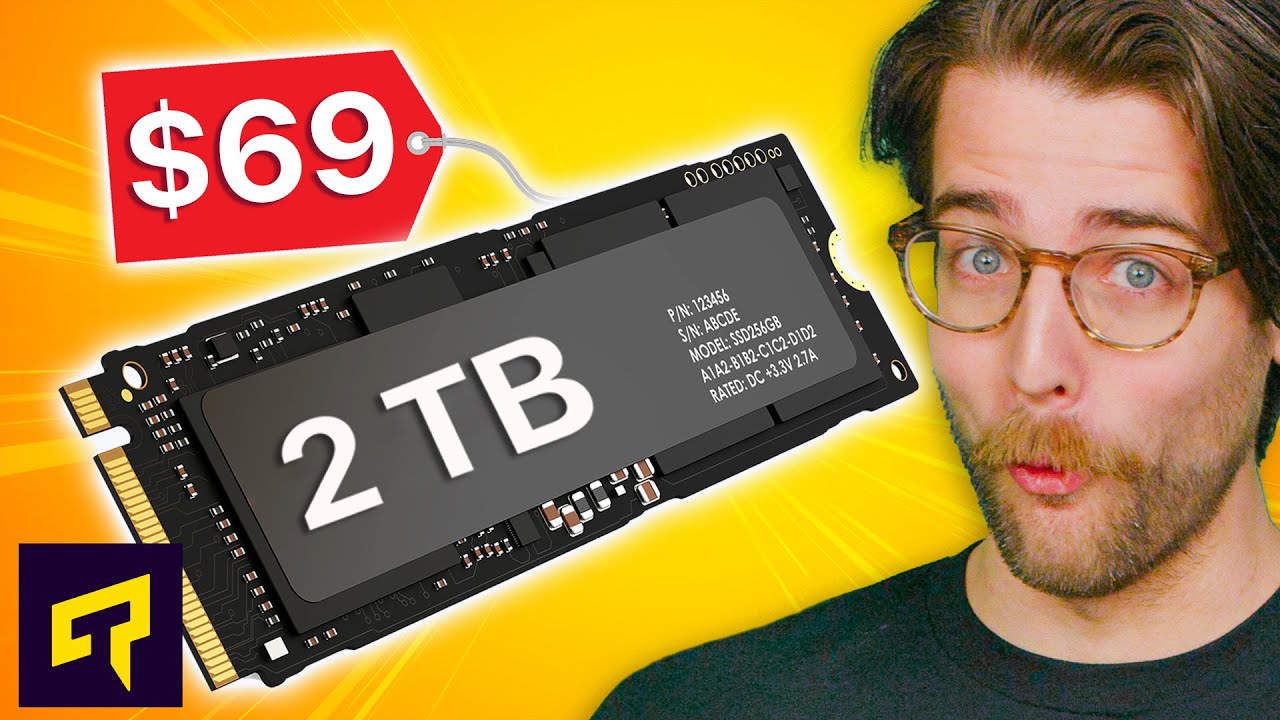
Why SSDs Are Big And Cheap
0 up · 0 down · 0 ratings
Promos
Remove your personal information from the web at joindeleteme.com and use code Techquickie for 20% off. Learn about how SSD capacities have increased, and the new PLC technology coming soon. Leave a reply with your requests for future episodes. ► GET MERCH: lttstore.com ► LTX 2023 TICKETS AVAILABLE NOW: lmg.gg ► GET EXCLUSIVE CONTENT ON FLOATPLANE: lmg.gg ► SPONSORS, AFFILIATES, AND PARTNERS: lmg.gg FOLLOW US ELSEWHERE --------------------------------------------------- Twitter: twitter.com Facebook: @LinusTech Instagram: @linustech TikTok: @linustech Twitch: twitch.tv
The video explains why solid state drives have dramatically increased in capacity while decreasing in price, focusing on NAND flash memory and how its fundamental properties drive both cost and performance. It starts by contrasting 8 terabytes for under $500 today with the 2009 reality of paying a similar price for just 32 gigabytes, highlighting that this massive price-to-capacity improvement is driven by how many bits each NAND cell can store. The host then dives into the concept of cells, noting that each cell can hold between one and five bits, and that higher bits per cell enable larger drive capacities at the same cost, albeit with trade-offs in longevity and speed. The discussion moves through how more bits per cell increase data density but also raise error rates and wear, which the controller must mitigate with more complex error correction, thereby impacting performance. To compensate for slower speeds associated with higher density, the video covers caching strategies in SSDs, including the use of fast DRAM caches, SLC caching, and even some drives using a portion of PC RAM as cache. It also explains why lower-end NAND types like MLC, TLC, and QLC require larger controller effort to maintain throughput, and how cache and tiering help preserve higher transfer rates during bursts. Finally, the host looks ahead to newer technologies like V-NAND and PLC, noting that while increased cell bits promise more storage, they bring diminishing returns in performance and require new controllers, which may delay PLC-based SSDs, potentially making them less suitable for frequent writes by gamers or content creators. The sponsor segment outlines DeleteMe’s service for removing personal information from the web, tying the episode to practical applications of privacy alongside storage technology topics. The conclusion reinforces that PLC storage could dramatically increase capacity at low cost, but with caveats around longevity and write-heavy usage, making it a long-term shift rather than an immediate revolution for all users.
Topics · storage technology · hardware · technology · computing
Questions answered
- What is the fundamental reason SSD capacity has grown so much while prices dropped?
- The fundamental reason is that NAND cells can hold more bits per cell, increasing data density and capacity at the same price. However, more bits per cell reduce longevity and speed, requiring more complex error correction and caching strategies to maintain performance.
- What are the trade-offs when using higher bit-per-cell technologies like V-NAND or PLC?
- Higher bit-per-cell technologies increase storage density and lower cost per capacity, but they bring diminishing returns in performance, higher complexity in controller design, potential longevity issues, and delays in bringing new technologies to market. PLC may offer large capacity gains but could be less favorable for write-heavy use cases without further advances.