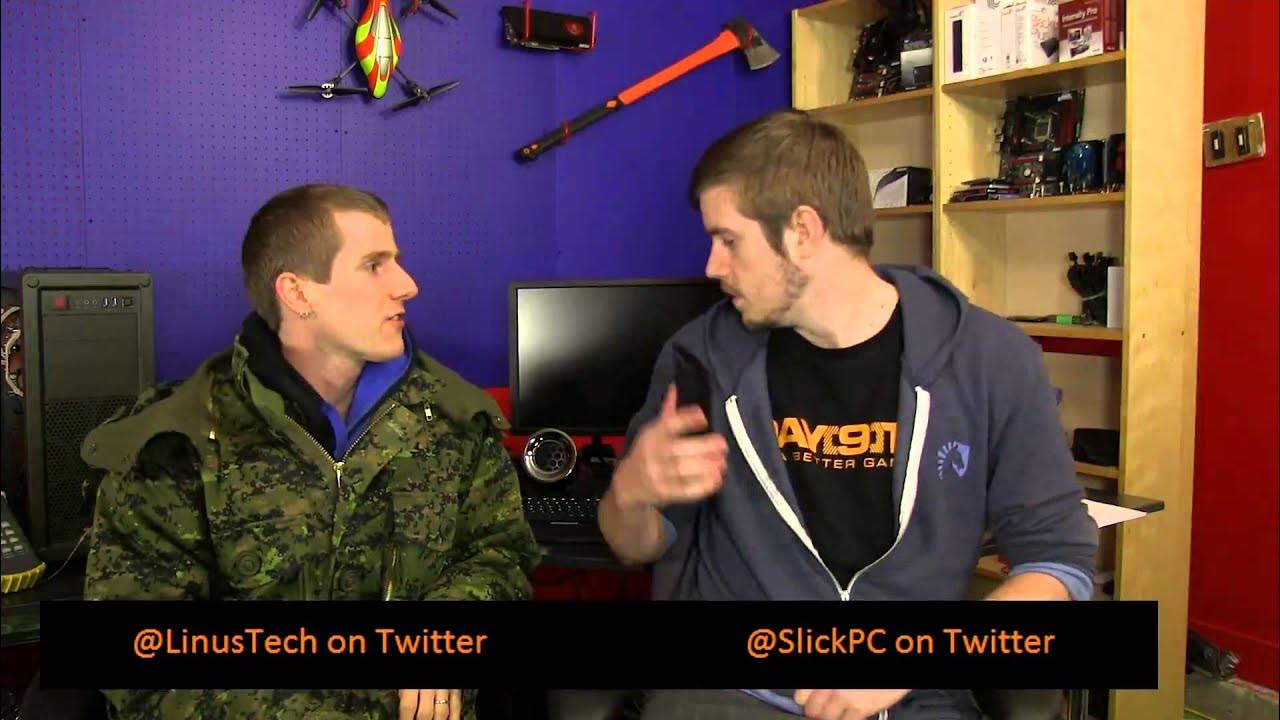
Linus Tech Tips Live Show Archive - January 5, 2013
0 up · 0 down · 0 ratings
Description
1:10 Actual live stream start 3:21 Current Forum Status 15:12 CES 17:06 ultimate M-atx gaming machine 22:35 samsung CES teaser 30:20 AMD at CES 33:55 Farcry 3 and sandbox gaming 35:55 Slick's epic Morrowind story (a continuation of sandbox gaming) 40:00 Why do certain appliactions bother update their software 40:35 Different archiving methods 48:44 Windows 8 giveaway 53:34 Surround sound headphones 57:31 Nvidia announcement at CES 1:02:00 Case fan debate 1:06:35 Samsung Evolution Kit 1:12:13 Value and Price per Performance
Linus Tech Tips Live Show Archive for January 5, 2013 opens with an honest acknowledgment of technical troubles that plague the pre-show setup. The host discusses camera audio issues, interlaced with reflections on the difficulties of capturing multi-camera footage while streaming live. They dig into the challenges of routing audio through capture devices, and the ripple effect this has on production quality. The conversation pivots from the immediate technical woes to the broader setup for the live forum, acknowledging that the forum is currently down due to a server relocation and DNS propagation, but reassuring viewers that posts and accounts remain intact. The team shares gratitude for the dedicated community backing the forum, while outlining the steps being taken to restore access and performance. This segment sets the stage for a day of on-air problem solving and transparent communication with the audience. The moderators and backend team are introduced, with a clear message that one admin will oversee operations while the team continues to troubleshoot remotely. The discussion then turns to VBulletin 5 and the beta status of the forum software, acknowledging that some features are still rough around the edges and that speed remains a bottleneck. The crew explains the hardware migration to increase bandwidth, including the potential of off-site hosting or a load-balanced on-site solution, highlighting the constraints of their current 5 Mbps uplink. The hosts pivot to CES plans, outlining the strategy for meetings, hotel suites, and a dense schedule of vendor demonstrations. They describe a notable build project featuring a dual GTX 680 MATX machine and a high-end cooler, which becomes a centerpiece for the CES content they hope to capture. The conversation touches on recording challenges, including issues with local capture and stream encoding, and the benefit of documenting real-world hardware builds under pressure. A lively live Q&A segment ensues, addressing questions about mechanical keyboards, CPU upgrades, and the relative performance of AMD versus Intel processors. The team debates the relative value of older hardware against current silicon, offering direct guidance on when a user should upgrade a CPU to an i5 3570K for noticeable gains. The dialogue then broadens to discuss graphics cards, Open World sandbox games like Far Cry, and personal experiences with Morowind and Oblivion, weaving nostalgia with practical gaming performance. The hosts recount their CES expectations for AMD, the Nvidia-Intel rumor, and the value of GeForce ecosystems to developers, while weighing the risk and reward of new hardware introductions. The episode closes with a candid look at the practicalities of backing up data, a critique of Blu-ray archiving economics, and a humorous aside about the banter around S Note and other Samsung software. Throughout the show, the hosts balance technical detail with humor and openness about the challenges of live content creation, inviting viewer feedback, forum participation, and ongoing discussion about the evolving tech landscape. The overall arc combines live production realities, hardware deep-dives, CES hype, and community-forward problem solving that characterizes Linus Tech Tips’ early 2013 live show approach.
Topics · technology · live_stream · pc_hardware · community · event_coverage
Questions answered
- What caused the initial audio and video issues during the live stream prep?
- The team suspects the combination of using XSplit to record multi-camera angles, routing audio through capture devices, and streaming online created a chain of instability that produced pops and noise.
- Why was the forum temporarily down and what assurances were given?
- The forum was down due to a physical server relocation causing DNS propagation delays, but viewers were assured that posts and accounts would not be lost and would return as soon as the DNS refresh completed.
- What is the plan for improving the forum's performance?
- They discussed moving to off-site hosting or implementing a load-balanced on-site solution, with a goal of higher bandwidth to reduce bottlenecks and speed up navigation.