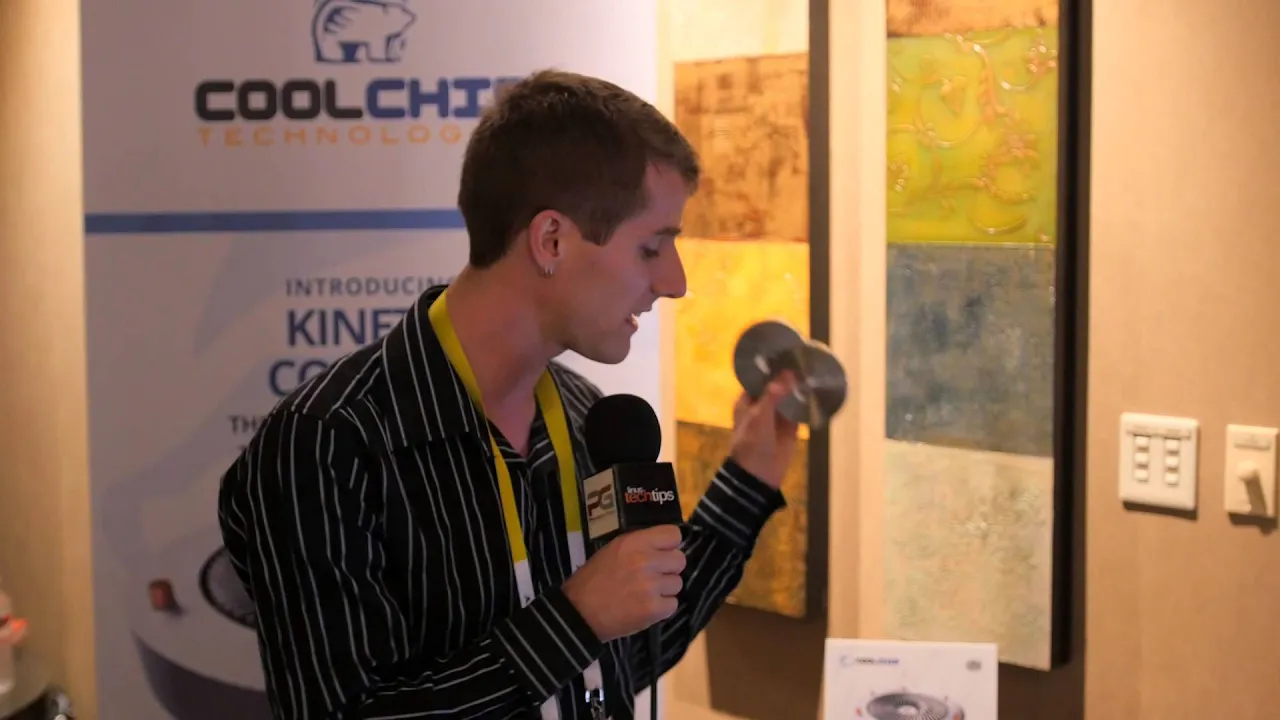
CoolerChip Kinetic (Sandia) Cooler & Cooler Master 3D Vapor Chambers - CES 2015
0 up · 0 down · 0 ratings
Channels and socials
Our CES 2015 Sponsors: Phantom Glass: store.phantom.glass HyperX YouTube Channel: youtube.com Forum thread: linustechtips.com twitter.com twitter.com @LinusTech Join our community forum: bit.ly
The video provides a CES 2015 overview of Cooler Master’s 3D Vapor Chamber technology and the CoolerChip Kinetic cooler developed with Sandia. Initially, the hosts describe how the 3D Vapor Chambers differ from traditional flat vapor chambers by integrating heat pipe structures into the chamber itself, enabling heat transfer through interlocking grooves even as components spin. They discuss prototypes that combine kinetic cooling in the center with conventional heatsink fins around the outside to maximize heat removal, and they explain why spinning air flow can replace a traditional fan in certain designs. The presenters also show live demos and discuss potential performance ranges, suggesting a target of roughly 90 to 100 watts for some configurations and noting that other variants still require a fan. They acknowledge skepticism about manufacturability and retail viability while highlighting the potential for compact, low-profile solutions in server or enthusiast builds. The segment closes by framing the technology within a broader CES showcase, with sponsor shoutouts and a nod to future Computex context, and by underscoring the ongoing curiosity about how spinning chambers will translate to real-world cooling efficiency.
Topics · science and technology · consumer electronics · engineering and design
Questions answered
- What is a 3D Vapor Chamber and how does it differ from traditional vapor chambers?
- A 3D Vapor Chamber integrates the heat pipe structure into the chamber itself, allowing interlocking grooves between spinning plates to transfer heat efficiently, potentially eliminating the need for a separate fan in certain designs.
- What are the design goals of the CoolerChip Kinetic cooler shown at CES 2015?
- The CoolerChip Kinetic cooler aims to use spinning top plates to generate air flow for cooling without a traditional fan, while combining a central kinetic cooling element with surrounding heat sink fins to improve heat removal.