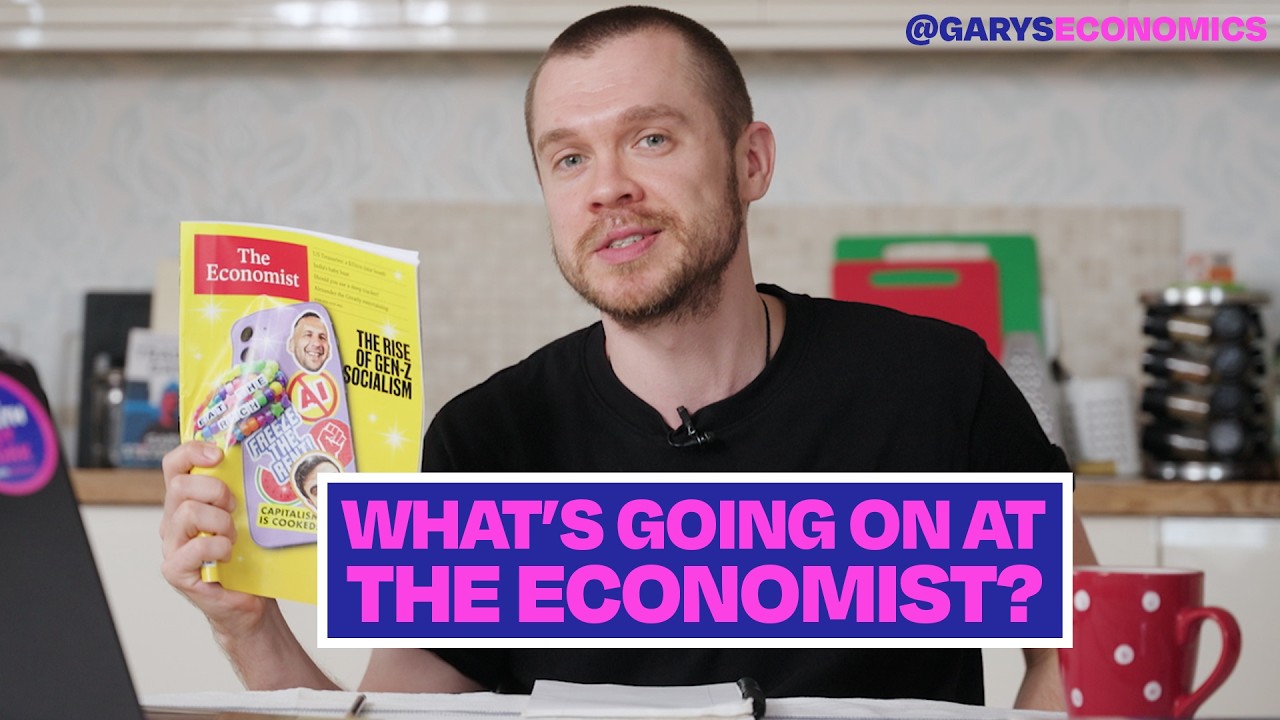
Why The Economist hates wealth taxes.
0 up · 0 down · 0 ratings
Promos
The intelligentsia are going all-in against wealth taxes. Are they just trying to mislead us, or do they have valid criticisms? Get TAX WEALTH NOT WORK t-shirt and stickers – shop.garyseconomics.org 00:00 Intro 00:55 Are we a meritocracy or an inheritocracy? 06:53 Inheritance tax vs wealth tax 12:27 Would it deter innovation? 18:52 Taxing the most productive people 21:07 The Economist’s integrity 22:21 What our intellectual elites think 25:40 Confused or misleading? 27:30 They are trying to distract you 28:42 Why journalists bat for billionaires 30:26 Message to the wealthy 34:47 Wealth taxes are NOT far-left 36:56 We need the intellectual classes 38:45 They are scared we’re going to WIN ––––––––––– JOIN OUR PATREON – patreon.com DONATE – buy.stripe.com JOIN GARY'S MAILING LIST – subscribepage.io GET THE TRADING GAME – penguin.co.uk ––––––––––– Follow Gary on other channels: LINKEDIN – linkedin.com SPOTIFY – open.spotify.com INSTAGRAM – @garyseconomics TIKTOK – @garyseconomics BLUESKY – bsky.app X – twitter.com FACEBOOK – @garyseconomics DISCORD – discord.gg WEBSITE – garyseconomics.org
The video opens with Gary explaining that The Economist magazine, a long standing publication, appears to be drafting arguments against wealth taxes while simultaneously acknowledging their potential to address inequality. He frames the core tension as a clash between an inheritance based approach and a tax on accumulated wealth, arguing that wealth taxes specifically target hoarded assets rather than earned income. He contrasts income taxation, which heavily taxes work, with wealth taxation, which would levy on stock of wealth, and he uses this distinction to argue that wealth taxes are necessary to rebalance a tax system that currently punishes work more than wealth accumulation. The presenter introduces the claim that the conventional economic narrative minimizes the role of inherited wealth and asset hoarding in driving inequality, while suggesting wealth taxes could restore meritocracy by reducing inheritances that perpetuate inequality. He stresses that The Economist’s stance,favoring inheritance taxes over wealth taxes,reveals a broader elite consensus about who should bear the tax burden, and why. The discussion moves into how productivity and innovation are framed as being threatened by wealth taxes, and Gary challenges that assertion by comparing it to the far more burdensome costs of debt, education, and high marginal rates faced by ordinary earners. He argues that wealth taxes do not suppress innovation, because the wealth they target is not tied to ongoing work, but to stored capital that would otherwise accumulate unchecked. The analysis suggests that the status quo disproportionately taxes labour while allowing a vast accumulation of unproductive wealth, and Gary contends this undermines living standards for the middle and lower classes. The video then pivots to a close reading of The Economist’s argument that maintaining meritocracy requires avoiding wealth taxes, a stance Gary contends is inconsistent with the policy’s stated goals, given that inheritance taxes would still affect the same wealth stock over time. Gary reframes the debate by detailing how life cycle saving and intergenerational wealth transfer create a structural advantage for the very rich, and why merely increasing taxes on income fails to prevent wealth from concentrating across generations. He uses concrete UK figures to illustrate passive income levels for ultra-high-net-worth individuals and demonstrates how wealth can compound across decades, pushing more wealth into the hands of the few. The host argues that the only viable mechanism to extract wealth from the top is a tax on the stock of wealth, not on annual income, and he emphasizes that wealth taxes are the most direct way to reallocate assets back to ordinary families. The discussion then returns to The Economist’s framing, exposing the irony that opposing wealth taxes while supporting inheritance taxes yields a logically inconsistent stance, which Gary attributes to motivated reasoning and the influence of wealthy funders on public discourse. The video includes personal anecdotes about meetings with influential economists and policymakers, highlighting how the elite class may resist wealth taxes while accepting inheritance taxes for rhetorical purposes. In closing, Gary underscores the political reality that wealth taxes are gaining visibility and argue that ultimately society will require stronger taxation of the ultra-rich to preserve the welfare state, fund public services, and sustain broad-based prosperity. He ends with a call for intellectual honesty from major outlets like The Economist and a broader appeal to the middle class to recognise that taxing wealth is essential to prevent asset monopolies from eroding social mobility and democratic norms.
Topics · economics · tax policy · public policy · wealth inequality · media influence
Questions answered
- What is the fundamental difference between wealth tax and income tax?
- Wealth tax taxes the stock of wealth you own, while income tax taxes the money you earn in a given year.
- Why does the speaker argue wealth taxes are necessary?
- Because income taxes alone do not effectively tax the very rich who accumulate vast wealth, wealth taxes can target asset hoarding and restore relative fairness in the tax system.