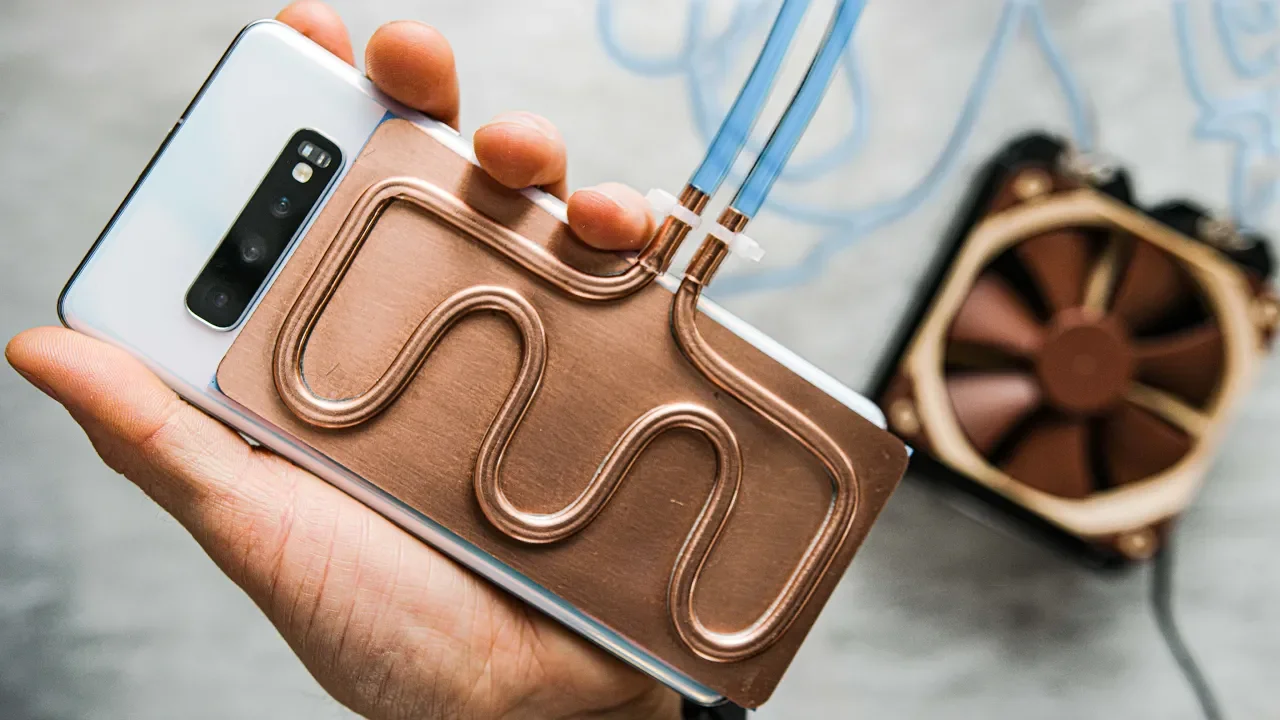
Phone Water Cooling is REAL! But does it work?
0 up · 0 down · 0 ratings
Promos
Sign up for Private Internet Access VPN at lmg.gg Monitor and manage your PC in real-time with Pulseway! Create your free account today at lmg.gg Should YOU try water cooling your phone? Why would anyone even want to do this? Let's find out... Buy phone cooler on Aliexpress: lmg.gg Buy other liquid coolers on Amazon: lmg.gg Discuss on the forum: linustechtips.com Our Affiliates, Referral Programs, and Sponsors: linustechtips.com Get Private Internet Access today at geni.us Displate metal posters: lmg.gg Linus Tech Tips merchandise at lttstore.com Linus Tech Tips posters at crowdmade.com Our Test Benches on Amazon: amazon.com Our production gear: geni.us Twitter - twitter.com Facebook - @LinusTech Instagram - @linustech Twitch - twitch.tv Intro Screen Music Credit: Title: Laszlo - Supernova Video Link: youtube.com iTunes Download Link: itunes.apple.com Artist Link: soundcloud.com Outro Screen Music Credit: Approaching Nirvana - Sugar High youtube.com
Paragraph 1: The video takes a practical approach to a quirky hardware idea by evaluating if a water cooling accessory for smartphones can actually reduce thermal throttling during gaming. The host begins by establishing a baseline test on a Galaxy S10 Plus with a Snapdragon 855, watching the CPU temperature climb under load and then running a series of benchmarks to map throttling behavior over time. Several candidate water cooling modules shown on AliExpress are inspected for design and practicality, including how they attach to the phone, what accessories are included, and how the tubing and fittings would interface with a compact mobile device. The overall goal is framed as not just a product review but a test of whether cooling the phone with liquid achieves a meaningful performance benefit in a realistic gaming scenario. Paragraph 2: After briefly comparing configurations, the host assembles a more elaborate cooling loop that includes tubing, a small pump, a reservoir, and a radiator borrowed from an older project to maximize surface area for heat dissipation. He documents the constraints of usingPhone-sized components, such as the small inner diameters and the need for adapters, and demonstrates the incremental impact of added mass and water circulation on throttle behavior. The results show that with the larger cooling loop, the device maintains higher performance levels for longer periods, with some benchmarks showing little to no degradation during sustained tests, which suggests real-world effectiveness of the concept. Paragraph 3: The video concludes with a nuanced verdict: while the setup is admittedly bulky and somewhat impractical for everyday use, the experiment confirms that water cooling can meaningfully reduce thermal throttling on a smartphone during gaming. The presenter notes that heat transfer benefits are contingent on adequate heat dissipation and circulation, and that the best results come from a properly engineered loop rather than ad hoc adjustments. A brief discussion follows about the limits of this approach, acknowledging risk factors like potential leaks and the lack of a clean, consumer-ready solution. The host closes by highlighting the sponsor integration and inviting viewers to explore the linked products and community, while reinforcing that the core takeaway is the demonstrated feasibility of water cooling for phones under load. Paragraph 4: Throughout the video, the host provides concrete data points from multiple test runs, including initial temperatures, throttle thresholds, and comparative scores across OpenGL and Vulkan benchmarks. Visuals include a thermal camera snapshot showing hot spots on the phone and zeitgeist moments of the test rig in action, which helps ground the narrative in observable evidence rather than anecdote. The dialogue emphasizes methodical testing, transparent discussion of hardware bottlenecks, and practical observations about the quirks of micro-scale cooling networks. Finally, the takeaway is reinforced with a balanced perspective on utility, risk, and the boundary between novelty experiments and robust, long-term solutions for thermal management in mobile devices.
Topics · technology review · hardware experimentation · thermal management · mobile devices · benchmarks · product testing
Questions answered
- What is the main goal of the phone water cooling experiment?
- To determine whether a phone water cooling accessory can meaningfully reduce thermal throttling and maintain higher performance during gaming benchmarks.
- What hardware was used to test the cooling setup?
- A Galaxy S10 Plus with a Snapdragon 855 processor, multiple cooling candidates, and a custom loop including tubing, a pump, a reservoir, and a radiator.
- What were the key findings from the final tests?
- With an active cooling loop, many benchmarks did not throttle as quickly, and temperatures stayed closer to ambient, indicating the concept can work in practice, though the setup is bulky and not consumer-friendly.