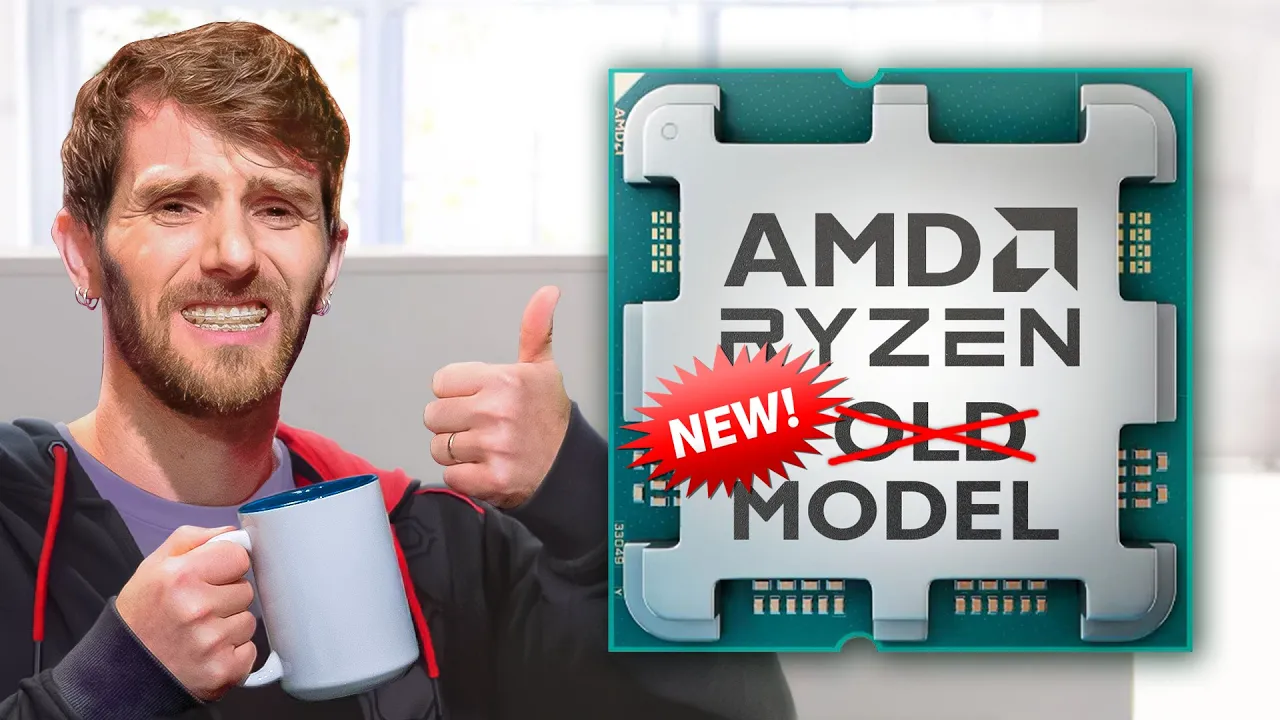
AMD is In Danger
0 up · 0 down · 0 ratings
Description
Get Grammarly today! grammarly.com AMD, what are ya doing buddy? You gave us so many good CPUs the last few years, but THIS is what you're showing off at CES this year? "AI" CPUs that are only marginally better than the previous ones, a better binned refresh of the 9800X3D called the 9850X3D, and then they talk about an AI agent to feed your paystubs... Discuss on the forum: linustechtips.com
Promos
Check out our Channel Partners: Secretlab - Get great chairs at: lmg.gg PIA - Get the VPN of our choice: piavpn.com dbrand - Buy a "Circuit" series skin for your device: dbrand.com ► GET OUR MERCH: lttstore.com ► GET EXCLUSIVE CONTENT ON FLOATPLANE: lmg.gg ► SPONSORS, AFFILIATES, AND PARTNERS: lmg.gg Purchases made through some store links may provide some compensation to Linus Media Group. Affiliate links powered in part by affilimate.com Linus Sebastian is an investor in Framework Computer, Inc and HexOS by Eshtek. CHAPTERS --------------------------------------------------- 0:00 Intro 1:48 Ryzen AI 400 Series 3:43 Ryzen 7 9850X3D 5:00 Ryzen AI Max+ 6:00 Local AI Models 6:35 Uh, AMD, why? 7:18 AMD ROCm 10:02 Outro
AMD is In Danger dives into the company’s CES 2026 presentations and asks whether AMD is losing its edge or simply recalibrating its strategy for a new computing era. The video opens by recalling Intel’s long stagnation and frames AMD as having closed the gap in the past, then shifts to a critical read on AMD’s latest reveals. The host walks through Ryzen AI 400 Series and the Ryzen 7 9850X3D, noting impressive clock speeds and certain core improvements, but highlighting that gains appear uneven across the lineup. The analysis stresses that the top SKUs show real progress, while mid-to-lower tiers seem to lag behind expectations, suggesting a potential generational downgrade in practice rather than a clean upgrade across the board. The video questions pricing transparency, especially in light of rumored consumer GPU price hikes, and argues that without clear pricing the perceived value of these AI-oriented features remains murky. Throughout, there is skepticism about how much of the AI branding translates to tangible performance gains for gamers and power users, contrasted with the hype around Strix Halo endpoints and localized AI capabilities. The presenter also critiques the marketing emphasis on AI, arguing that real consumer needs,raw performance, efficiency, and value,should drive purchasing decisions, not a branding wave. In closing, the host acknowledges the improvements in ROCm and Windows compatibility but reiterates that the AI-centric narrative might be overshadowing traditional performance metrics, and urges viewers to scrutinize the actual impact on pricing, availability, and real-world gaming benchmarks. The deeper takeaway centers on balancing innovation with practicality. While AMD demonstrates credible progress in some areas like local AI model deployment and modest boosts in GPU cores, the overall messaging feels more promotional than transformative for many buyers. The discussion about AI payoffs,whether for financial planning tools or on-device AI agents,serves as a case study in privacy concerns and the importance of vetting AI advice, especially when it touches sensitive financial data. The host emphasizes the need for clarity around hardware upgrades that meaningfully affect gaming and compute performance, rather than flashy but narrow gains. By contrasting AMD’s strategy with Intel’s rumored 50% GPU performance uplift in Panther Lake, the narrative highlights market dynamics where headline features may outpace actual end-user benefits. The conclusion is cautiously critical: AMD can be a strong competitor, but the current CES reveal set raises questions about pricing, value, and the practical effects of AI branding on mainstream adoption.
Topics · technology · hardware · consumer_electronics · ai · cpu · gpu
Questions answered
- What are the main concerns about AMD's CES 2026 announcements?
- The video questions the overall value of the AI branding, notes uneven generational upgrades across Ryzen lines, highlights high priced Strix Halo products, and points to lack of clear pricing for GPUs.
- How does AMD's Ryzen AI 400 Series compare to previous generations according to the video?
- The presenter notes that top SKUs show meaningful gains, such as higher boost clocks and faster RAM, but mid-range models show declines or minimal improvements, implying uneven upgrades.
- What is said about local AI models and privacy in the video?
- The video discusses local AI models and the privacy benefits of running workloads locally, while cautioning that general financial advice from AI should be vetted and not solely trusted.