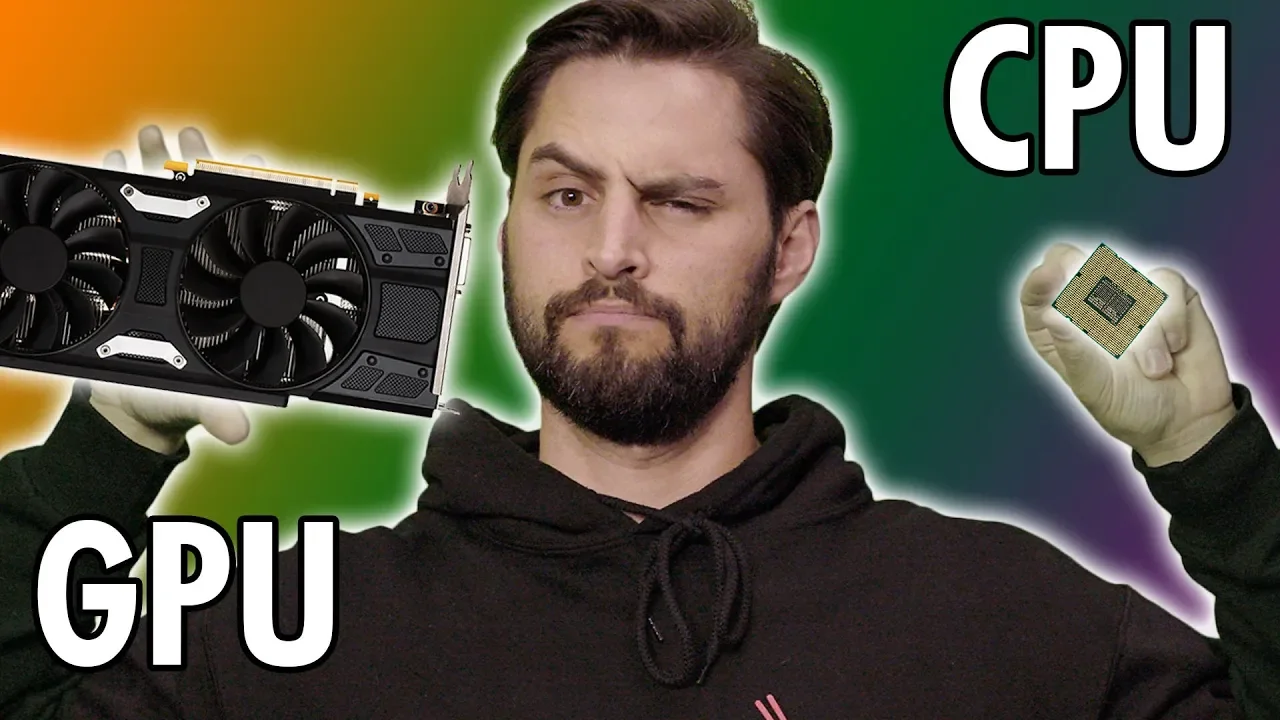
Why Do Integrated Graphics SUCK?
0 up · 0 down · 0 ratings
Promos
Visit squarespace.com and use offer code TECHQUICKIE to save 10% off your first order. Why aren't integrated graphics as good as a discrete GPU? Techquickie Merch Store: lttstore.com Follow: twitter.com Leave a reply with your requests for future episodes, or tweet them here: twitter.com License for image used: creativecommons.org
This episode explains why integrated graphics, also known as iGPUs, historically fall short of discrete graphics cards. It starts by comparing space requirements on a CPU package, noting that a dedicated GPU simply takes up more die area and generates more heat, which makes it impractical to pack a high-performance GPU onto a CPU. The host then discusses memory bandwidth and architecture differences, emphasizing that iGPUs must share system memory with the CPU rather than having their own fast VRAM like discrete cards, which can bottleneck higher resolutions and more demanding textures. Despite these limitations, the video argues that integrated graphics have improved over time thanks to smaller transistor sizes and better power efficiency, enabling playable experiences at 720p or 1080p for popular titles and especially esports games like CS:GO, provided players are willing to lower graphical quality. The conclusion suggests that for casual gamers or those on a budget, using the CPU’s integrated graphics first can be a sensible, cost-effective choice before purchasing a separate GPU. The episode also promotes a typical TechQuickie structure of balancing performance, thermals, and cost while recommending evaluating your needs before upgrading, with a light plug for Squarespace sponsorship and viewer engagement prompts at the end.
Topics · technology · hardware · gaming-pcs · cpu-architecture
Questions answered
- Are integrated graphics always weaker than discrete GPUs?
- Not always. Some integrated solutions, such as certain Ryzen APUs or newer Intel iGPUs, can run many games at 720p to 1080p with reduced settings, especially esports titles, but generally they have less memory bandwidth and share system RAM with the CPU, limiting high-end textures and resolutions.
- What factors prevent iGPUs from matching discrete GPUs in performance?
- Key factors include die space constraints on the CPU, heat generation, lack of dedicated video memory, and shared system memory bandwidth which reduces available resources for graphics tasks compared to discrete GPUs with their own VRAM and optimized memory access.
- Should a budget gamer start with integrated graphics before buying a discrete card?
- For casual or esports-focused play at lower resolutions, testing with integrated graphics can be reasonable. If you want higher settings, higher frame rates, or newer titles, upgrading to a discrete GPU is typically the more effective long-term solution.