Everyone is Cooling Their PC Wrong
0 up · 0 down · 0 ratings
Promos
Check out the powerful, quiet, and drainage-free AC516S, along with the rest of DREO's lineup, and use code LTT to get 17% off: DREO Smart Air Conditioner AC516S: bit.ly DREO TurboPoly Fan 508S: bit.ly Also available on Amazon: bit.ly *Exclusive discount code valid on DREO's website* What if we told you the BEST PC cooling solution might already be in your house? All you need is some dryer ducting, a bunch of 3D printed parts, a standard air conditioner, and... on second thought, maybe this isn’t our greatest idea after all. Discuss on the forum: linustechtips.com
Check out the 3D prints from the video: printables.com ► GET OUR MERCH: lttstore.com ► GET EXCLUSIVE CONTENT ON FLOATPLANE: lmg.gg ► GET A VPN: piavpn.com ► SPONSORS, AFFILIATES, AND PARTNERS: lmg.gg Purchases made through some store links may provide some compensation to Linus Media Group. CHAPTERS --------------------------------------------------- 0:00 Intro 1:15 Outfitting the AC 2:45 AC/PC Proof of Concept 4:27 Test 1 5:27 Time for Less Jank 9:43 Test 2 12:35 Results 13:53 Outro
Channels and socials
Thank you youtube.com/@UCePZ-v6YOhmyax4Li2sRZAA for sponsoring this video! From air purifiers to heaters and fans, DREO's got your comfort covered.
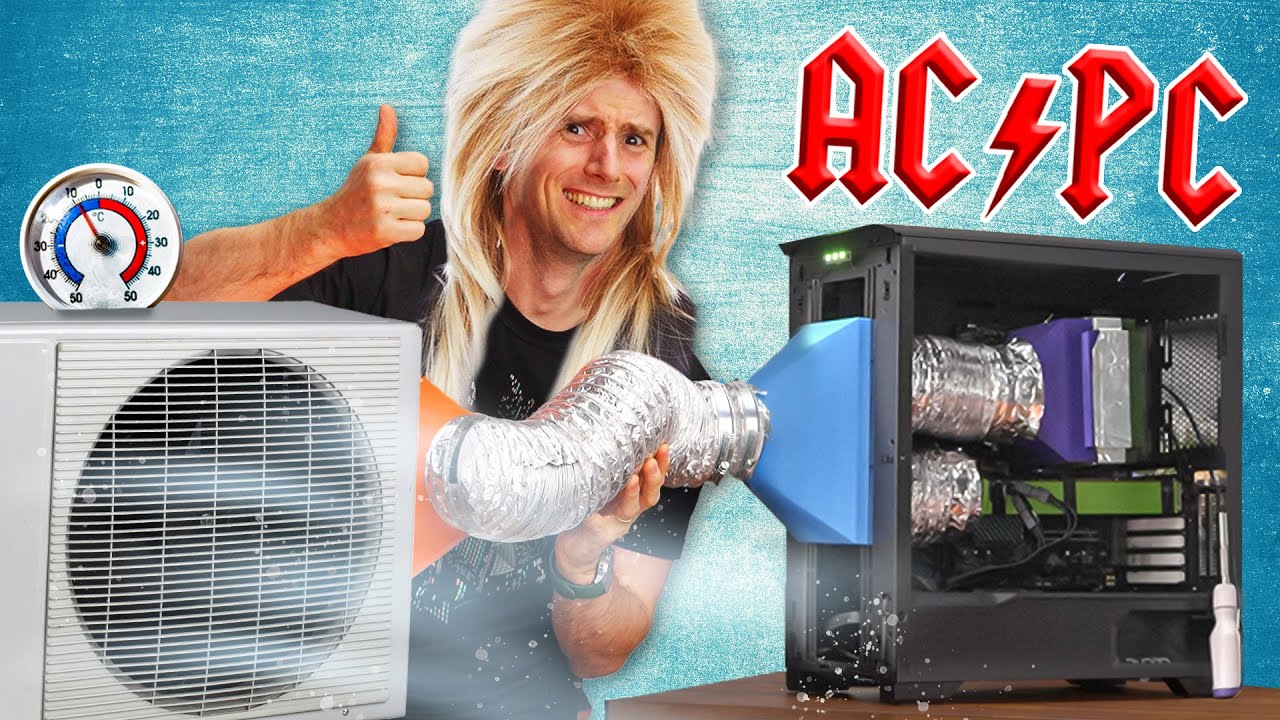
Everyone is Cooling Their PC Wrong explores an extreme and unconventional approach to PC cooling by repurposing a high BTU portable air conditioner to actively cool a gaming PC and the surrounding room. The video starts with the team attempting to mount an air conditioning unit to direct cold air toward a PC, discussing feasibility, safety, and the concept of a fully ducted cooling path. They acknowledge that this is a proof of concept rather than a recommended everyday setup, and they experiment with a shroud, ducts, and 3D printed parts to create a seal and optimize airflow. Early tests show that while the idea is noisy and imperfect, there is immediate cold air at the CPU and progressively cooler GPU temperatures as they refine the ducting and baffle arrangement. The segment concludes with the realization that condensation, insulation needs, and proper airflow management are critical for longer-term viability, while the team remains intrigued by the potential of room cooling to bolster PC performance without traditional fans. In the midsection the team iterates on the cooling path by introducing a second AC unit, additional shrouds, and a thermistor relocation to prevent the compressor from shutting off prematurely. They observe dramatic changes in component temps and clock speeds when cold air is directed closer to the GPU, and they discuss the tradeoffs of back pressure, airflow distribution, and the risk of condensation. The presenters talk through practical improvements like insulating ducts, using mid-path accelerators, and possibly separating the cooling loop from room cooling to balance performance and noise. They also reflect on the economics of using existing household AC versus purpose-built PC cooling solutions, underscoring that this approach is more about exploration and demonstration than a strict recommendation. By the end of this section they demonstrate a cooled GPU and CPU under load, discuss the importance of containment to prevent moisture and ice buildup, and acknowledge that real-world adoption would require more robust insulation and airflow control while noting the surprising effectiveness of the basic idea under controlled conditions. In the final stretch the presenters summarize the outcomes, highlighting that CPU temps can drop to single digits while GPUs still run hot if airflow is misdirected, and that with optimized baffling and insulation the setup can both cool the PC and the surrounding room. They emphasize that the concept is accessible to hobbyists who already have an AC unit, though they caution that condensation is a major risk without proper insulation and monitoring. The video closes with encouragement to consider alternative cooling ideas, a nod to the sponsor, and an invitation to viewers to explore related experiments in the janky cooling playlist. Overall, the episode blends hands-on engineering, humor, and candid commentary on the limits and possibilities of improvised PC cooling, leaving the door open for future refinements and community feedback.
Topics · hardware engineering · cooling solutions · computer hardware · maker projects · science and tech