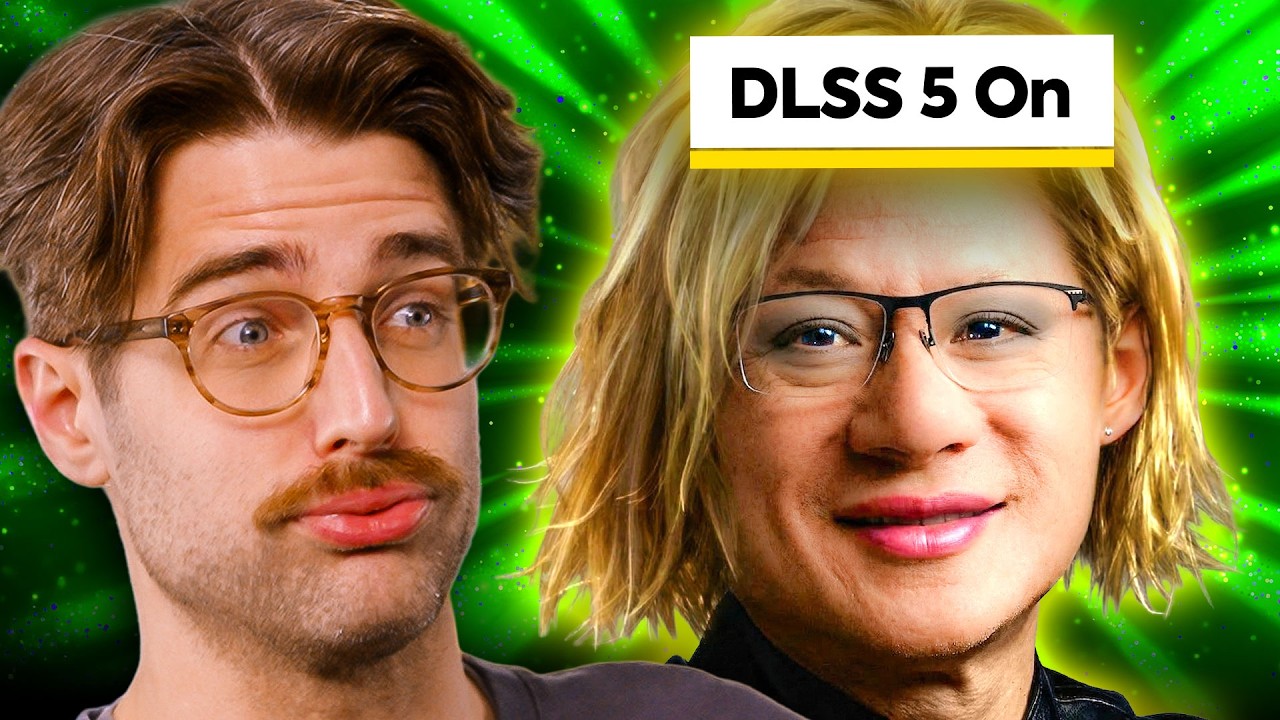
Everyone's Wrong About DLSS 5
0 up · 0 down · 0 ratings
Description
If you want to skip the hassle of researching, buying, and building a gaming PC for yourself, buy one from one of Jawa’s Verified Sellers! Visit jawa.link to get started. NEWS SOURCES: lmg.gg ► SHOP OUR PRODUCTS: lttstore.com ► GET EXCLUSIVE CONTENT ON FLOATPLANE: lmg.gg ► GET A VPN: piavpn.com ► LISTEN TO THE TECH NEWS: lmg.gg ► DIVE DEEPER ON THE LTT LABS WEBSITE: lmg.gg ► SPONSORS, AFFILIATES, AND PARTNERS: lmg.gg ► OUR PODCAST GEAR: lmg.gg --------------------------------------------------- Timestamps: 0:00 DLSS 5 haters are 'completely wrong' - Jensen 3:02 AMD responds to Ryzen mislabeling 5:43 QUICK BITS INTRO 5:51 Intel Core Ultra 200HX Plus, precompiled shaders 6:25 Mozilla Firefox VPN 7:05 free Gemini Personal Intelligence 7:40 Samsung discontinues Galaxy Z Trifold 8:42 3D-printed shoulder-mounted launcher
The video critically examines Nvidia's DLSS 5, addressing the initial backlash from gamers and industry commentators and arguing that the technology should not be dismissed as merely an AI slop filter. It references Jensen Huang’s statements and contrasts them with the sentiment around the feature, suggesting that while some criticism has been heated or misinformed, there are legitimate questions about how DLSS 5 reshapes visuals and game design. The host also notes that mainstream coverage varied, with outlets like The Verge offering a nuanced view that DLSS 5 functions more like a lighting enhancement than a pure image generator, while Digital Foundry faced pushback for their demonstration choices. Throughout, the analysis emphasizes the difference between post-processing effects and genuine geometric control, arguing that DLSS 5 represents a more complex approach to rendering than simple upscaling. The discussion then broadens to related tech news items, including AMD responses to mislabeling issues and Mozilla’s VPN-enabled Firefox, framing these as part of a wider conversation about AI, hardware labeling, and user privacy in modern tech ecosystems. The overall takeaway is that while DLSS 5 might not align with everyone’s taste, dismissing it outright overlooks the technical intentions and potential benefits in lighting, shading, and performance, warranting further consideration rather than a wholesale rejection. The video uses a balanced, debate-oriented structure to critique the hype around DLSS 5 while acknowledging the legitimate concerns about homogenization and artistic direction in games. It traces the timeline from initial reactions to more measured assessments, noting that some detractors may have misunderstood the scope of the feature. By citing diverse perspectives from gaming artists and tech outlets, the host positions DLSS 5 as part of a broader trend in AI-assisted rendering and real-time graphics, not just a consumer gimmick. The author closes with a call for critical evaluation, encouraging viewers to separate sensational headlines from the underlying technical details and to watch for real-world impact on games, performance, and production pipelines as more DLSS 5 implementations appear in the wild.
Topics · technology · gaming · ai · hardware
Questions answered
- What is the core claim about DLSS 5's function beyond simple upscaling?
- DLSS 5 involves generative control at the geometry level, not just post-processing, influencing how lighting and shading contribute to the final visuals.
- Why did some outlets push back on their DLSS 5 coverage?
- Some outlets faced criticism for their demo choices and hype, which led to debates about whether the presentation overemphasized the technology or misrepresented its capabilities.