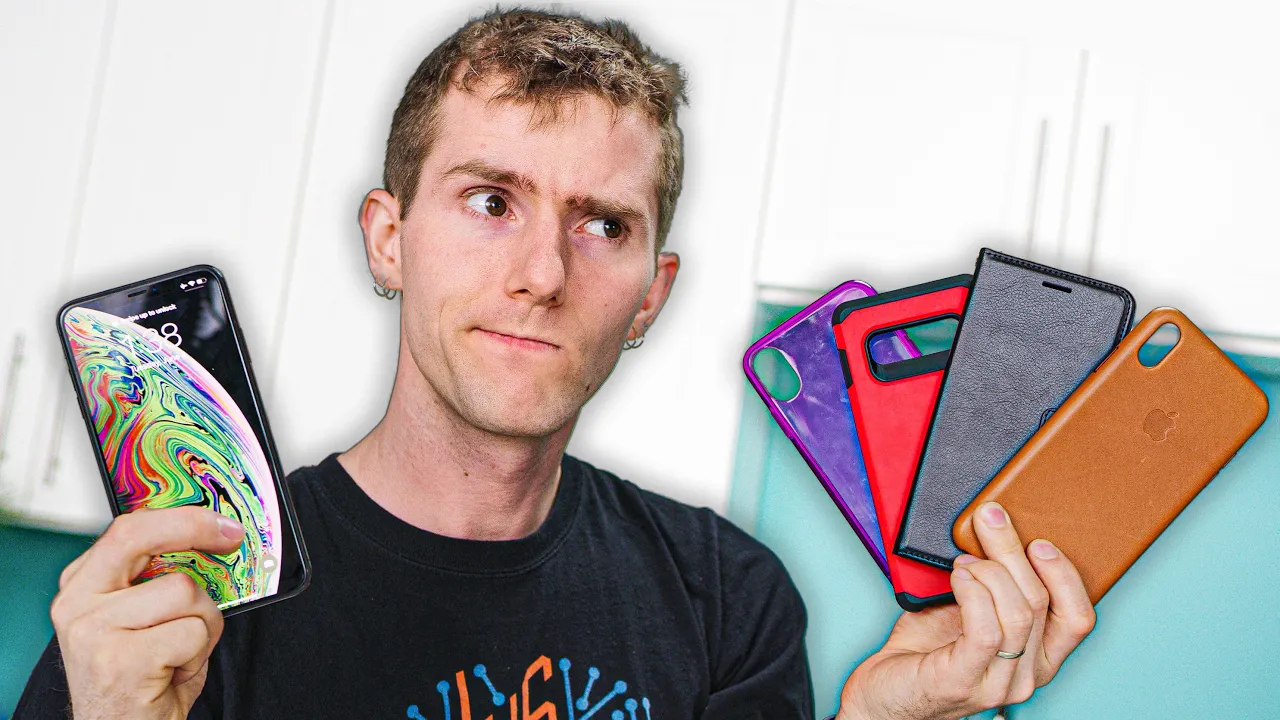
Does a Case Make Your Phone Slower?
0 up · 0 down · 0 ratings
Promos
We test an iPhone Xs Max and a Samsung Galaxy S10+ with a variety of phone cases – including the Apple leather case – to see if a case can make your phone slower by affecting its thermal performance. Buy phone cases on Amazon: geni.us Discuss on the forum: linustechtips.com Our Affiliates, Referral Programs, and Sponsors: linustechtips.com Get Private Internet Access today at geni.us Displate metal posters: lmg.gg Linus Tech Tips merchandise at lttstore.com Linus Tech Tips posters at crowdmade.com Our Test Benches on Amazon: amazon.com Our production gear: geni.us Twitter - twitter.com Facebook - @LinusTech Instagram - @linustech Twitch - twitch.tv Intro Screen Music Credit: Title: Laszlo - Supernova Video Link: youtube.com iTunes Download Link: itunes.apple.com Artist Link: soundcloud.com Outro Screen Music Credit: Approaching Nirvana - Sugar High youtube.com
The video investigates whether putting a case on a phone can alter its thermal throttling behavior. It starts by establishing a baseline: both an Android Galaxy S10 Plus and an iPhone XS Max are tested with no case, using Geekbench runs to observe how performance changes as the device heats up over time. The host discusses typical expectations, noting that most cases are designed for ruggedness, looks, or cost rather than thermal conduction, and questions whether a case acts as a big insulator. He elaborates on the testing methodology, including multiple runs, preheating, and considerations like screen brightness, which can influence thermal performance. The initial results show that with no case, both devices thermal throttle in line with expectations, and the team explores whether a battery-stress test or longer preheating might reveal different patterns. The segment ends with the realization that basic conclusions may be elusive because temperature behavior is highly workload dependent and not easily swayed by modest case changes. In the middle section, the testers try a range of cases from basic plastic shells to rugged wallets and leather options, including the official Apple leather case. They document the shopping and testing process, reiterating that covering the phone with a non-breathable material would be a misstep if one hoped to reduce throttling. They compare how the iPhone XS Max and Galaxy S10 Plus respond when cases are closed versus open, observing that some cases appear to influence the rate at which the device cools, particularly the iPhone where the screen seems to be a major heat sink. The leather Apple case is tested last, with observers noting the high price and pondering whether leather actually insulates more than plastic. Across multiple test runs, the results generally show minimal difference between cases, reinforcing the idea that the presence of a case does not substantially slow a device under typical usage patterns. The conclusion synthesizes the data: thermal throttling on modern phones depends largely on workload, not accessories, and the impact of common cases is small unless a user deliberately traps heat. The host emphasizes that avoiding non-breathable, insulating materials is the only practical way to avoid throttling, and even then the effect on real-world performance is limited. The video reiterates that it is possible to protect a phone with a case while keeping performance intact, highlighting that design choices like a phone's display can play a significant role in cooling. In a lighthearted wrap-up, the presenters acknowledge the outcome, joke about the price of leather cases, and invite viewers to explore the linked sources for case recommendations. The overall takeaway is that users can have both protection and performance without needing to rely on an extreme or nonexistent shortcut to speed up theirphones.
Topics · Science & Technology · Mobile Technology · Hardware & Devices · Performance & Benchmarks
Questions answered
- Do phone cases ever meaningfully affect thermal throttling in modern smartphones?
- No, the testing shows that common cases have little to no impact on thermal throttling under typical workloads; avoiding non breathable insulation is the main precaution.
- Which device showed the most heat concentration and how did the cases influence its cooling?
- The iPhone XS Max exhibited notable heat behavior, with the screen acting as a major heat sink; cases largely did not change the outcome, though some closed cases could alter cooling dynamics slightly.
- Did the leather Apple case improve or worsen performance compared to a bare phone?
- The leather case did not worsen performance and in some tests appeared to perform similarly to or slightly better than no case, though the difference was not large and could be within margin of error.