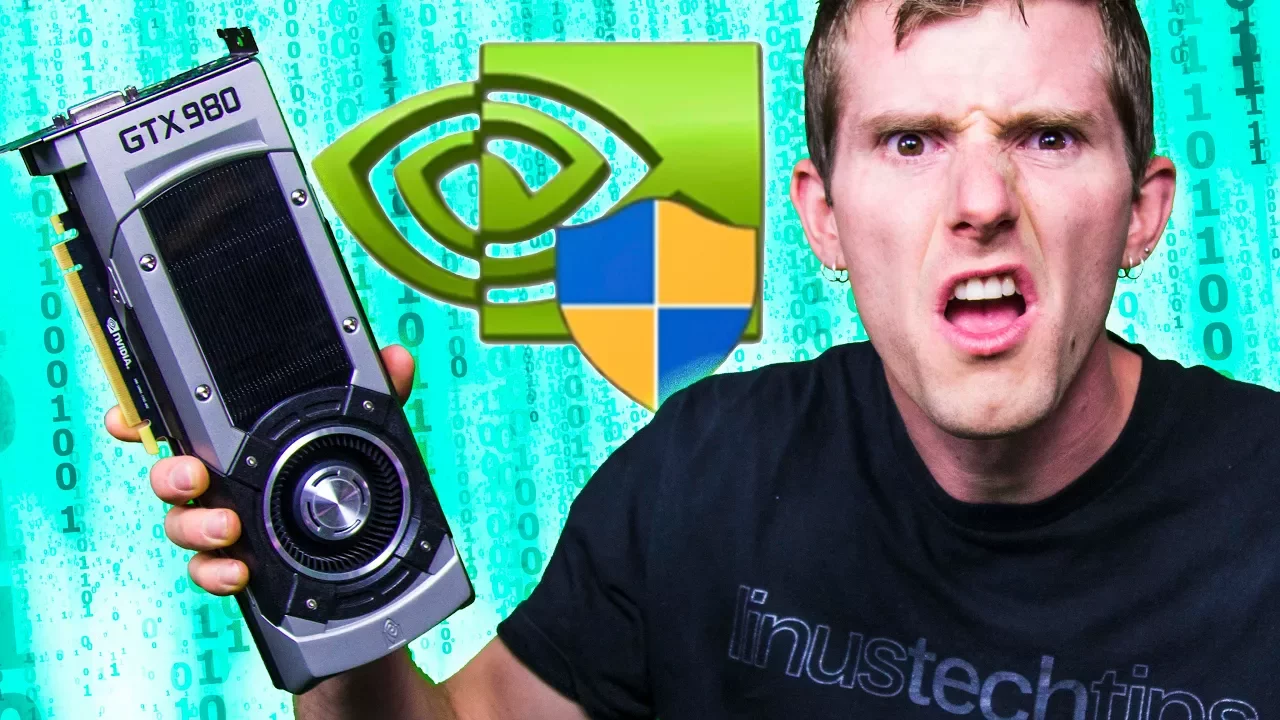
IS NVIDIA RUINING YOUR PERFORMANCE?
0 up · 0 down · 0 ratings
Promos
Rumors of NVIDIA's planned obsolescence have been around forever, but now we finally investigate. Squarespace sponsor link: Visit squarespace.com and use offer code LTT for 10% off Tunnelbear sponsor link: Visit tunnelbear.com and start your 7-day free trial today! Buy NVIDIA Graphics Cards: Amazon: geni.us Newegg: geni.us Discuss on the forum: linustechtips.com
Check out the Techspot and Anandtech articles featured in the video: Project Cars: techspot.com Battlefield 1: techspot.com Anandtech Benchmarks: anandtech.com Our Affiliates, Referral Programs, and Sponsors: linustechtips.com Linus Tech Tips merchandise at designbyhumans.com Linus Tech Tips posters at crowdmade.com Our production gear: geni.us Twitter - twitter.com Facebook - @LinusTech Instagram - @linustech Twitch - twitch.tv Intro Screen Music Credit: Title: Laszlo - Supernova Video Link: youtube.com iTunes Download Link: itunes.apple.com Artist Link: soundcloud.com Outro Screen Music Credit: Approaching Nirvana - Sugar High youtube.com Sound effects provided by freesfx.co.uk
The video investigates a long-standing rumor that NVIDIA intentionally slows down older GPUs through driver updates to force hardware upgrades. The host explains their methodology: selecting flagship GPUs from multiple generations, choosing a mix of DirectX-only titles and titles using Nvidia GameWorks, and testing with driver versions released after each card’s launch plus the most recent one at the time. They run nearly 200 benchmark rounds across a broad set of configurations to observe progression in performance over time. The initial finding is that newer drivers do not demonstrably slow down older cards; in fact, there are small, often barely noticeable performance gains in many scenarios, making any claim of deliberate obsolescence difficult to substantiate. The video then analyzes factors like game engine optimizations, the advent of new features, and how older silicon may struggle to keep up with modern rendering techniques, which can create the perception that upgrades are necessary even when older hardware remains capable. In conclusion, the data suggests NVIDIA has not pursued a policy of slowing down older GPUs, and any perceived decline is more likely due to newer games emphasizing features that older GPUs were not designed to support, rather than a deliberate strategy to force upgrades. The presenters acknowledge that while older cards may not receive the full optimization for every new feature, claiming an intentional sandbag seems unsupported, and the real takeaway is that bleeding edge performance typically requires newer hardware. The discussion closes with a reminder that hardware choices should balance budget and desire for the latest features, and that drivers have both positives and occasional regressions, without proving a conspiratorial downgrading scheme. The sponsors and outro segments are noted, but the core message remains: upgrade decisions should be grounded in demonstrated needs and measurable gains rather than conspiracy theories.
Topics · technology · hardware · benchmarks · gaming
Questions answered
- Do NVIDIA drivers intentionally slow down older GPUs to push upgrades?
- The testing conducted shows no general pattern of deliberate slowdown across driver generations; while some drivers may introduce minor performance variances or issues in specific setups, the overall trend does not support a policy of planned obsolescence.
- What reasons cause older GPUs to appear slower with new games?
- New game features and newer engines optimize for newer hardware, and certain advanced rendering techniques may not be fully optimized for very old GPUs, leading to perceived or real gaps in performance when running modern titles.