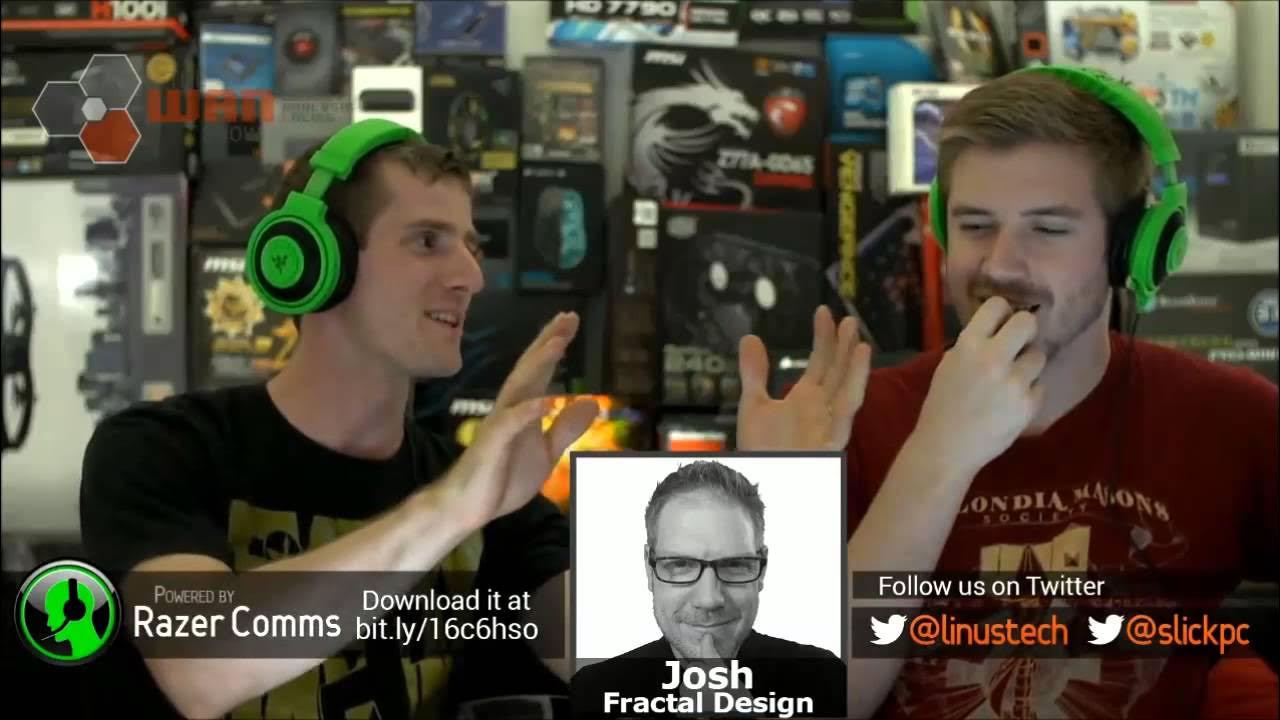
The WAN Show : Canadian Telcos are Whining, AMD Hawaii Rumours, and GUEST Josh - August 9, 2013
0 up · 0 down · 0 ratings
Description
After party : Sorry no afterparty this week Razer Comms Link: bit.ly Live Stream Doc: linustechtips.com 4:58 Fair for Canada? Canadian Telco's band together against competition 20:59 Amazon working on a new screen tech called "Paperwhite" 23:55 Amazon moving into more markets 30:00 Josh from Fractal Design joins us! 32:50 There really isn't that much mark-up on custom computers 49:16 AMD Possibly abandoning FX processors 57:00 Core 1000 refresher? 1:01:09 Josh destroys Linus - 1:03:20 EA shuts down servers prematurely - gets sued 1:09:48 EA sucks ever so slightly less 1:12:02 Lab grown burger tastes horrible 1:14:25 John Carmack joins Oculus as the CEO! 1:16:57 Old ideas being resurrected into realistic devices 1:19:48 The stream fails 3 times... starts up again with minor hysterics 1:21:00 The Jobs movie and Ashton... 1:23:46 Console optimizations will just make PC even stronger 1:26:20 CUDA is doomed says Roy Taylor of AMD 1:29:38 Samsung in mass production of 3D Vertical NAND Flash 1:31:29 Nvidia dives into tablets 1:34:19 HD9970 Rumours are nothing short of beast 1:37:22 Microsoft digs a deeper hole for its console 1:42:50 CBS blocks online subscribers from watching their content if they use Time Warner 1:45:38 Build logs of the week
The WAN Show episode from August 9, 2013 presents Linus and the crew tackling a broad slate of topics that sit at the intersection of telecom policy, hardware rumors, and PC enthusiast culture, all anchored by the guest appearance of Josh from Fractal Design. The show opens with a lighthearted banter about sports and locker room camaraderie, quickly setting a casual and humorous tone that remains throughout the broadcast. The hosts frame the central geopolitical discussion around Canadian cellular carriers, government policy, and the entry of large US operators like Verizon into Canada, arguing that the landscape is skewed in favor of incumbents. They reference a provocative video from a Canadian forum that depicts how the big local players present themselves as defenders of fairness, while critics claim the market is manipulated to exclude competition and protect entrenched interests. The conversation expands to the potential social and economic consequences for smaller Canadian markets, including rural areas where access to high-speed internet is limited, and where the community perspective emphasizes fairness, infrastructure investment, and local employment. The crew argues that public policy should focus on universal access to modern telecom services, rather than subsidizing the expansion plans of a multinational incumbent that may not deliver benefits to remote communities. The discussion emphasizes practical outcomes like improved speeds for rural users, better customer service, and more aggressive pricing by incumbents to spur genuine competition. The segment also critiques the idea of “fair for Canadians” as a political slogan, noting that the current market structure already leaves many Canadians with subpar service and high costs relative to urban centers. The hosts stress that any government intervention should be aimed at modernizing infrastructure across the country and preventing discriminatory practices by large players who can otherwise influence spectrum auctions in ways that hinder smaller competitors. Across these themes, the show maintains a practical, solution-oriented tilt, encouraging readers to consider how policy, infrastructure investment, and market dynamics intersect to shape everyday internet access. The discussion then pivots to technology hardware and industry rumors, beginning with AMD Hawaii rumors, and the broader context of GPU development and market competition. The hosts reflect on how rumor cycles can influence consumer expectations and how next-generation hardware often arrives with aggressive marketing from multiple sides, sometimes before solid specs or performance data are available. They contrast AMD’s potential strategy with Nvidia’s positioning, and discuss the implications for enthusiasts who hot-rod PCs with overclocking, cooling, and bespoke chassis work. The conversation naturally leads to Josh from Fractal Design joining the show, bringing a guest perspective from a boutique PC builder who specializes in high-end cooling, custom cases, and performance tuning. Josh shares anecdotes from his career at BioHazard Computers and his current role at Fractal Design North America, highlighting the demand for cooling efficiency, aesthetic customization, and reliability in premium builds. The hosts and Josh explore the economics of boutique PC systems, including margins, labor intensity, and the balance between overclocking, warranty, and customer expectations. The conversation delves into the realities of supply chains, bulk purchasing of CPUs, and the margin structures that separate boutique integrators from mass-market PC vendors, with Josh offering insight into the industry’s pricing dynamics and the true costs behind custom machines. The panel touches on the ethics and practicality of crowdfunding boutique hardware projects, critiquing an IndieGoGo campaign that promises a high-end gaming PC build at an eye-catching price point. The discussion turns into a lively debate about market speculation, the viability of new hardware startups, and the risk of overpromising in crowdfunding campaigns, all while Linus and Josh trade quips and test each other’s reputations as industry insiders. The show occasionally returns to the live production hiccups, including a temporary stream disruption that becomes a running joke and a reminder of the challenges of live broadcasting in a busy studio environment with multiple camera feeds and software overlays. The hardware focus returns with a deeper dive into processor generations, overclocking margins, and the reality that boutique builders often operate at thinner margins than mass manufacturers, due in part to the high labor and testing costs involved. Josh recounts practical lessons from building extreme overclocked systems, including the value of bespoke cooling loops, the price sensitivity of high-end components, and the intricate logistics of maintaining reliability under aggressive performance targets. The show then shifts toward broader tech industry trends, including discussions about the evolving role of Android-based consoles, the potential of a new type of reading technology from Amazon with Paperwhite, and the implications of such innovations for traditional devices like e-readers and tablets. The crew explains the concept of a light-guided LCD backlight system used by Amazon in Paperwhite prototypes, detailing how horizontal LED placement and light guides can improve readability, color depth, and power efficiency while reducing eye strain for long-form reading. They also touch on Amazon’s strategic expansion into tablets beyond e-readers and the broader market dynamics that encourage device diversification in the wake of shifting consumer preferences. A speculative thread explores Amazon’s rumored Android-based game console, comparing it to the Ouya and Nvidia Shield, and debating how developer ecosystems and speed-to-market influence the success or failure of new gaming hardware. The hosts discuss the importance of timing, component availability, and the challenges of delivering a polished product when crowdfunding is involved, highlighting how such factors can determine whether a project ever reaches a market-ready state. Throughout the broadcast, Linus, Luke, and the guest banter with a mix of humor, critical analysis, and practical observations about PC hardware, market strategy, and consumer expectations. The episode closes with a rapid-fire set of topics that touch on industry news, such as console strategy shifts from major players, streaming and content delivery considerations, and the continuing evolution of PC gaming hardware, leaving the audience with a sense of momentum and ongoing anticipation for future WAN Shows. The overall takeaway is that a confluence of policy, market dynamics, and innovative hardware ideas continues to shape the experiences of PC enthusiasts, gamers, and tech consumers alike, with a strong emphasis on transparency, competition, and the relentless pursuit of better, faster, and more affordable technology for all audiences.
Topics · science_and_technology · gaming · consumer_tech · telecommunications
Questions answered
- What is the central theme of the Canadian telcos segment in The WAN Show August 9 2013?
- The central theme is the concern that Canadian incumbents and government policy limit competition and favor large US entrants, potentially harming rural Canadians through higher prices and slower upgrades.
- What hardware topics were discussed besides telcos?
- AMD Hawaii rumors, Nvidia, GPU and processor performance, overclocking practices, and the dynamics of boutique PC building with Fractal Design were discussed.
- Who joined the show as a guest, and what is their background?
- Josh from Fractal Design North America joined the show, bringing expertise in boutique PC builds, water cooling, and high-end case design.