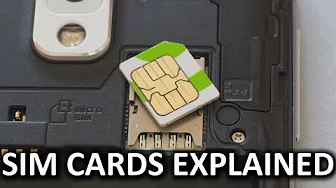
How Do SIM Cards Work?
0 up · 0 down · 0 ratings
Promos
SIM cards allow you to make calls and use data on your mobile network, but how do they work, and how can they restrict what you can do with your phone? Squarespace link: Visit squarespace.com and use offer code TECHQUICKIE to save 10% off your first order. Follow: twitter.com Join the community: linustechtips.com
The video explains the role of SIM cards in mobile networks by detailing what they store and how devices connect to carrier systems. It begins by clarifying that SIM stands for subscriber identity module and identifies which mobile subscriber is using a given phone, whether it’s an iPhone, Galaxy, or Windows phone. Although SIM cards hold very little data, the stored information is crucial for network access, such as a 64-bit unique identifier and an authentication key. When a phone first connects to a carrier, it sends the SIM’s ID and the authentication key to the network, which then generates a random challenge and derives a response to verify the device. If the response numbers match, the provider authenticates the user and grants network access, enabling calls and data services while also allowing the carrier to enforce billing controls. In addition to authentication, SIM cards can store contact information, a feature that proved especially useful for older mobile plans when phones did not sync contacts with cloud services. The video then discusses practical aspects like SIM form factors, noting that phones vary in whether they require a physical SIM or have internal memory-based authentication. It explains SIM locking, a practice used by many carriers to keep a device on their network for the duration of a contract, and it mentions legal developments that make unlocking a phone more accessible. The speaker concludes by highlighting that while SIMs are essential for authenticating users and enabling service, advances in cloud storage and phone memory have reduced a phone’s dependence on the SIM for contact storage, though the SIM still plays a central role in network access and device provisioning.
Topics · telecommunications · technology · mobile networks · network security
Questions answered
- What does SIM stand for and why is it important for your phone to connect to the network?
- SIM stands for subscriber identity module, and it provides a unique identifier and an authentication key that the carrier uses to verify your device and grant access to calls and data on the network.
- How does the network verify a device when you turn on your phone?
- Your phone sends the SIM ID and authentication data to the carrier, which generates a random challenge and a corresponding response; if the responses match, the network authenticates the device and connects it.