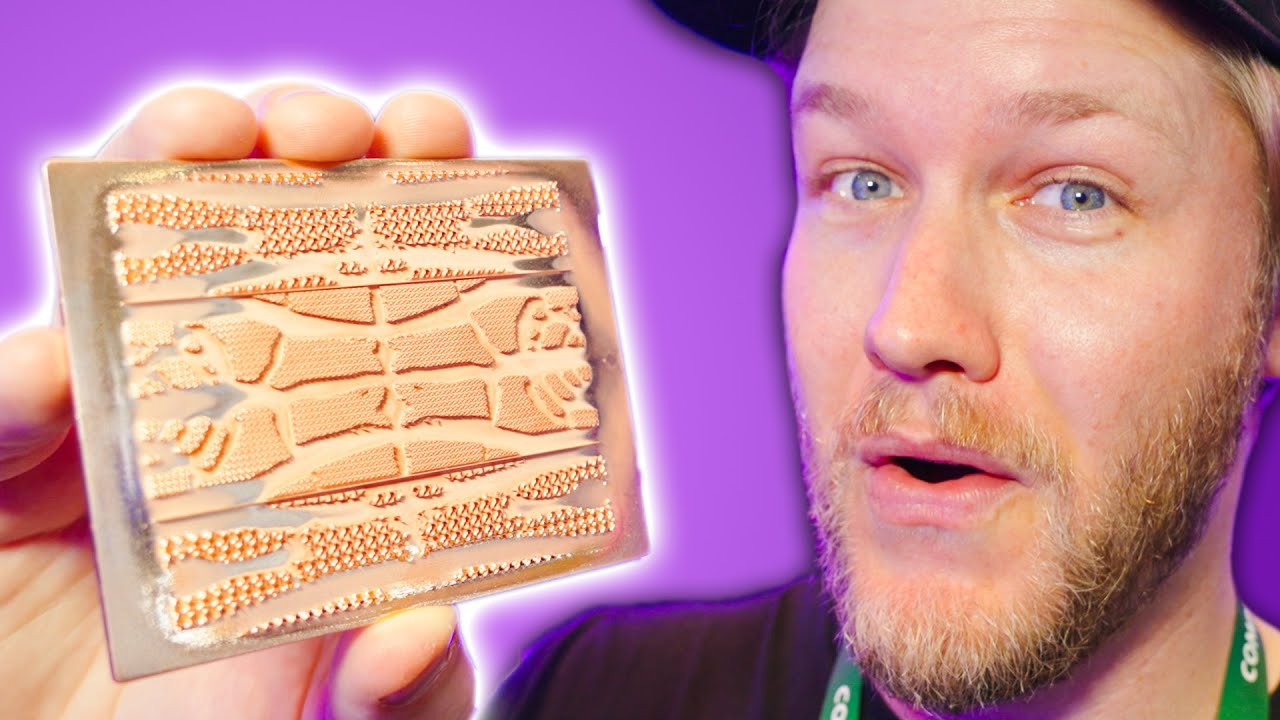
This could change water cooling forever... - Fabric8 Labs @ Computex 2024
0 up · 0 down · 0 ratings
Promos
Get a special deal on Private Internet Access VPN today at lmg.gg 3D printing a metal cold plate using AI sounds like a pipe dream, but Fabric8 has made it a reality. Alex is here to break down the new process and teach you why skiving is soooo yesterday. Want us to unbox something? Make a suggestion at lmg.gg ► GET MERCH: lttstore.com ► GET EXCLUSIVE CONTENT ON FLOATPLANE: lmg.gg ► SPONSORS, AFFILIATES, AND PARTNERS: lmg.gg ► PRODUCTS WE USE ON THE SHORTCIRCUIT SET: lmg.gg FOLLOW US ELSEWHERE --------------------------------------------------- Twitter: twitter.com Instagram: @shortcircuityt TikTok: @linustech Facebook: @ShortCircuitYT CHAPTERS --------------------------------------------------- 0:00 What is a cold plate? 0:42 The old vs new process 2:19 Sponsor - PIA 2:57 Showing off the accuracy and improvements 4:18 How does this work? 6:12 Release dates/pricing and other uses 7:35 Outro
This Computex 2024 coverage dives into Fabric8 Labs' revolutionary metal 3D printed cold plate for water cooling, showing how complete freedom in geometry changes the flow path of the coolant. The host explains that rather than traditional skived fins, the new design uses AI-optimized flow paths to maximize surface area and direct coolant across the hottest regions of a CPU die. Notably, the cold plate is built with electrochemical additive manufacturing, allowing for intricate, high-density copper features that were previously impractical with conventional machining. The video demonstrates how the flow can be tuned for different CPUs, such as the Threadripper, to minimize hotspots and balance pressure and velocity across the fins. The presenters highlight that this process enables a scalable, room-temperature production method that could dramatically improve cooling efficiency for high-wattage processors. A sponsor segment with Private Internet Access is integrated, framing privacy as a parallel value proposition in the technology-forward Computex coverage. The discussion then covers practical implications, including how variable fin spacing can reduce pump demand while preserving cooling performance, and how the technology might extend to other applications like radar sensors and wider communications hardware. The overall takeaway is that 3D printed copper cold plates, guided by AI-driven design, could shift the economics and capabilities of high-performance liquid cooling in consumer and industrial PCs alike.
Topics · science and technology · manufacturing · 3d printing · computer hardware · water cooling
Questions answered
- What is ECAM and why is it important for 3D printed copper cold plates?
- ECAM stands for electrochemical additive manufacturing, a process that combines electroplating with 3D printing to deposit copper onto a build plate. It enables very high-density features with micron-scale precision, allowing complex flow channels and fine control over geometry without expensive laser or high-temperature processes.
- How does AI influence the design of the coolant flow in Fabric8 Labs' cold plate?
- AI is used to map heat distribution across the CPU die and generate multiple flow-path options. The optimal design is selected to maximize cooling where the hotspots are while reducing flow in cooler areas, improving overall thermal performance and allowing customization for different CPUs.