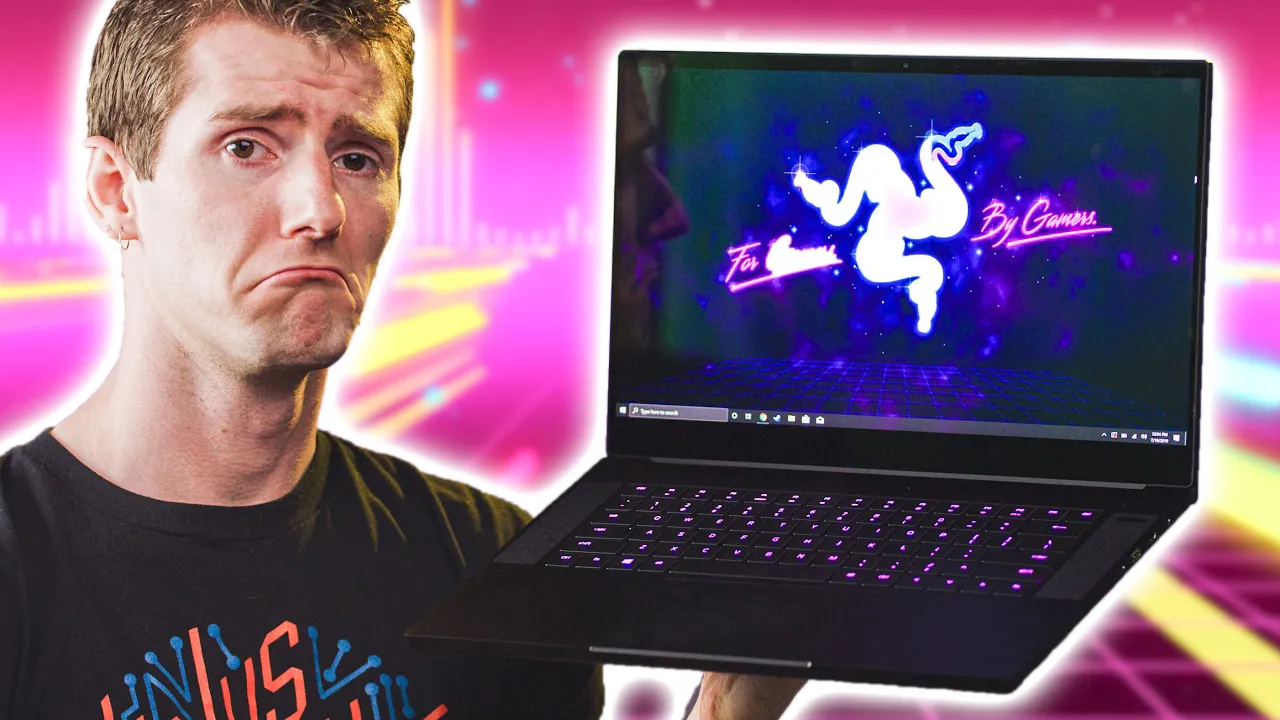
The PROBLEM with OLED Laptops... Razer Blade 15 2019 Review
0 up · 0 down · 0 ratings
Promos
Check out the Massdrop Object 2 Headphone Amp Desktop Edition at dro.ps Use code LINUS and get 25% off GlassWire at lmg.gg OLED on TV's is basically the best thing ever. The colours, the deep black, the insane contrast.... oh yeeeaaahhh. But is it still that good on a laptop? Buy Razer Blade On Amazon: geni.us On Newegg: geni.us Discuss on the forum: linustechtips.com Our Affiliates, Referral Programs, and Sponsors: linustechtips.com Get Private Internet Access today at geni.us Displate metal posters: lmg.gg Linus Tech Tips merchandise at lttstore.com Linus Tech Tips posters at crowdmade.com Our Test Benches on Amazon: amazon.com Our production gear: geni.us Twitter - twitter.com Facebook - @LinusTech Instagram - @linustech Twitch - twitch.tv Intro Screen Music Credit: Title: Laszlo - Supernova Video Link: youtube.com iTunes Download Link: itunes.apple.com Artist Link: soundcloud.com Outro Screen Music Credit: Approaching Nirvana - Sugar High youtube.com Videos used during A-roll and B-Roll are from: RoyaltyFreeTube and MG1010 youtube.com youtube.com
The review centers on the Razer Blade 15 2019, weighing the strengths of its build quality, design, and performance against the compromises introduced by the first OLED gaming laptop option in years. The host highlights the OLED panel as a visual treat with superb brightness, deep blacks, and high contrast, noting that the factory calibration and color richness create an exceptionally satisfying viewing experience for media consumption. However, the discussion quickly pivots to practical gaming and creator use, explaining that the 4K OLED version is capped at 60 Hz and lacks G-Sync, which limits its appeal for high-frame-rate gaming even though it delivers stunning imagery. The price premium and burn-in risks are emphasized as major considerations, particularly for color-critical tasks and long-term use, where stability and predictability matter more than cinematic contrast alone. The reviewer then contrasts OLED with the alternative 240 Hz 1080p IPS option, which delivers far smoother gameplay and substantially lower cost, making it a more compelling choice for most gamers. Beyond display tech, the Blade 15 is praised for its chassis, keyboard layout, and trackpad, while criticisms target the keyboard feel, battery life, and the audio subsystem, which misses the low-end punch that enthusiasts expect. The verdict is nuanced: for pure gaming with top-tier frame rates, the non-OLED variant is the smarter buy, whereas the OLED configuration remains appealing for fans who prioritize image quality and Netflix-like media experiences, provided they can tolerate the power trade-offs and higher price. The video closes with reflections on the balance between display marketing and practical consumer needs, and a candid note that while the Blade 15 remains a premium, capable machine, OLED on laptops is not the universal best choice for all users.
Topics · technology · hardware · display technology · laptops · consumer electronics
Questions answered
- Is the OLED version of the Razer Blade 15 2019 worth it for gaming enthusiasts?
- Not for most gamers, because the OLED model is limited to 60 Hz and lacks G-Sync, which compromises smoothness in fast-paced games; the 240 Hz IPS variant offers substantially better gaming performance and value.
- How does the OLED panel perform in terms of power and color accuracy?
- Power draw varies with content; very dark scenes consume little power, while bright content can draw more, around 15 watts. Color accuracy can degrade when brightness is high to preserve overall power, making it less trustworthy for professional color-critical work.
- What is a practical alternative to the OLED display in this laptop?
- The 240 Hz 1080p IPS panel is a practical alternative that provides smoother gameplay, competitive performance, and lower cost while avoiding the burn-in risks associated with OLED.