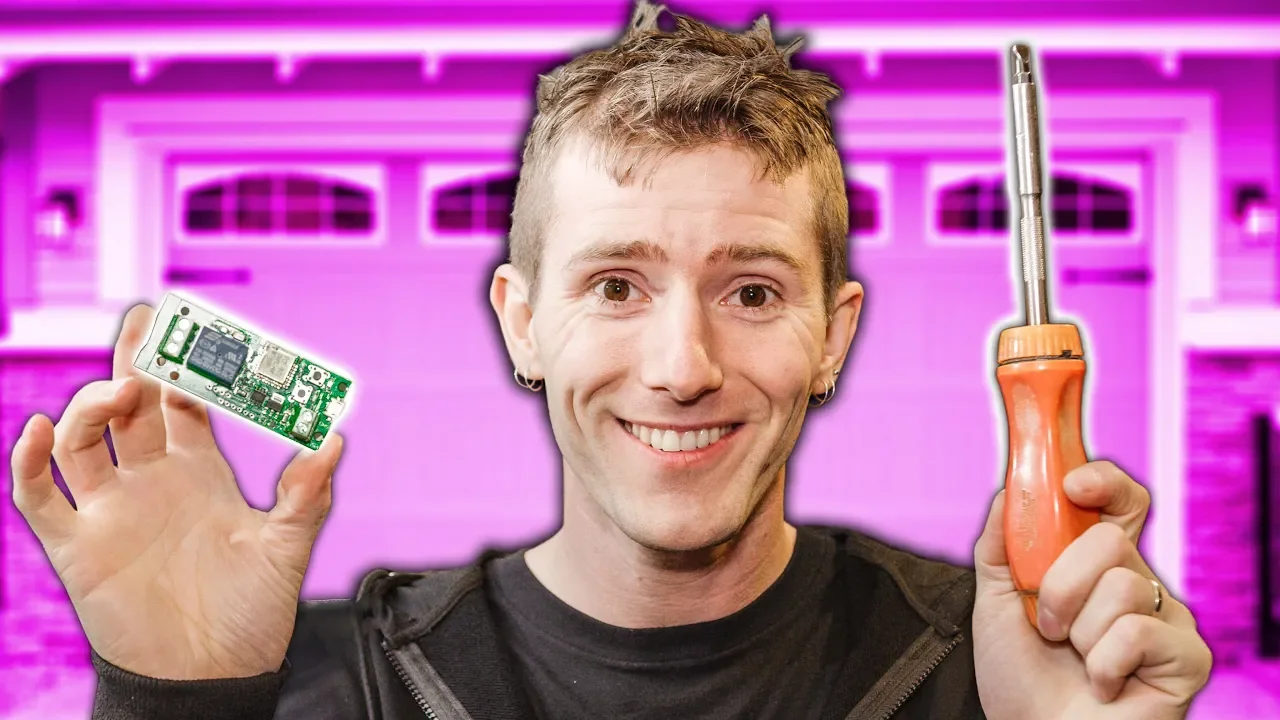
Making my 1980's Garage Door Smart!
0 up · 0 down · 0 ratings
Promos
Check out the Massdrop x Sennheiser HD 6XX Headphones at dro.ps Use offer code LINUS to save 40% on Madrinas Coffee at madrinascoffee.com After getting IMO ripped off by Chamberlain, I decided to take smart-ifying my garage door into my own hands. Buy the Garage Door Opener: On Amazon: lmg.gg Buy the Roost Garage Door Sensor: On Their Site: lmg.gg Discuss on the forum: linustechtips.com Our Affiliates, Referral Programs, and Sponsors: linustechtips.com Get Private Internet Access today at geni.us Linus Tech Tips merchandise at lttstore.com Linus Tech Tips posters at crowdmade.com Our Test Benches on Amazon: amazon.com Our production gear: geni.us Twitter - twitter.com Facebook - @LinusTech Instagram - @linustech Twitch - twitch.tv Intro Screen Music Credit: Title: Laszlo - Supernova Video Link: youtube.com iTunes Download Link: itunes.apple.com Artist Link: soundcloud.com Outro Screen Music Credit: Approaching Nirvana - Sugar High youtube.com
Making my 1980's Garage Door Smart is a hands-on exploration of retrofitting an aging two-door setup with modern smart tech. The presenter begins by explaining why he ditched an expensive Chamberlain upgrade in favor of a DIY approach, highlighting the outdated original opener and the desire to add internet-enabled control without a costly subscription. He walks through the initial assessment of the garage hardware, noting the limitations of the existing wall switches and safety features, and then outlines the plan to build a DIY smart garage system using affordable relays and a Wi-Fi enabled controller. The setup includes a Roost sensor to track open or closed state and a secondary, cheaper module that can drive a second door or be used for other devices, all powered by a 5V supply. The narrative stays practical, focusing on wiring, safety, and the sequence of steps needed to power up the devices, pair them with the app, and verify the system by opening and closing the door from a phone. The video closes with usage tips, a quick overview of the gear, and a plug for related gear and community resources, along with a lighthearted tone about hardware tinkering and the enjoyable chaos of the build. The overall takeaway is that with careful budgeting, open hardware, and community-tested components, an older garage door can become a connected device without relying on proprietary subscriptions or manufacturer lock-in.
Topics · Technology · DIY · Home Automation · Internet of Things
Questions answered
- What motivated the DIY retrofit of the 1980s garage door opener?
- The creator wanted to avoid a paid subscription and upgrade an aging system by using affordable, off-the-shelf components to add smart functionality.
- What hardware components are used to make the door smart?
- Relays wired to a Wi-Fi switch, a Roost door sensor to detect open/closed state, and a cheaper 4-channel device as an optional multiplier, all powered by a 5V supply.
- Does the setup require high voltage work?
- No, the project uses low voltage wiring for the relays and standard power supplies, with emphasis on safe handling and testing.