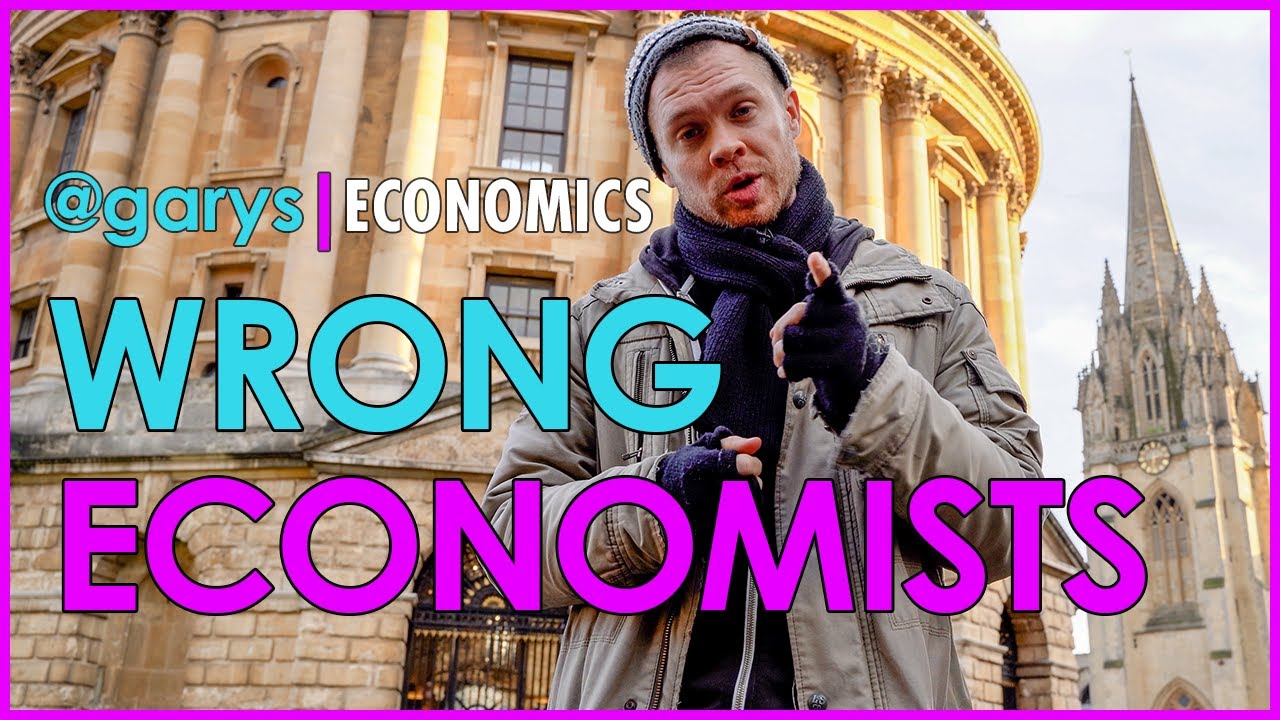
Why Are Economists Always Wrong?
0 up · 0 down · 0 ratings
Channels and socials
"ordinary families are not spending more money because they are not getting any more money because that money is flowing to the rich these guys here wearing their bow ties and teaching in castles are not going to help us a chancellor who is a billionaire is not going to help us a prime minister who is a multi-millionaire is not going to help us we have to help us, we have to make it happen the way we do that is by educating ourselves and each other about economics by teaching each other that the key thing we need to fix is wealth inequality by teaching each other that if we don't fix wealth inequality things are not going to get better but will get worse but if we do fix it things can get so much better for all of us" SUBSCRIBE, SHARE & START A CONVERSATION SOCIAL MEDIA: WEBSITE - wealtheconomics.org TWITTER - @garyseconomics FACEBOOK - @garyseconomics INSTAGRAM - @garyseconomics Performed by Gary Stevenson GARYSECONOMICS Produced by Simran Mohan MOHAN MEDIA
Gary Stephenson, a former trader and self-described People's Economist, travels to Oxford to challenge the discipline of economics and its track record of predicting economic downturns and recoveries. He argues that economists, including those at top universities and central banks, have repeatedly predicted a recovery that did not materialize, citing his own experience during and after the 2008 financial crisis and ongoing forecasts through 2020. He contends that the failure stems from a disconnect between theoretical models and the lived realities of ordinary people, particularly surrounding housing, wages, and wealth inequality. The video features a contrast between algebra-heavy academic training and real-world observations from the high street, highlighting the emotions and frustrations of aspiring economists who feel out of touch with everyday economic hardship. It culminates in a call to action: educate ourselves about economics, discuss wealth inequality openly, and empower communities to push for change rather than rely on elite economists who benefit from the status quo. The message is not to abandon economic study, but to shift its focus toward practical understanding of how money circulates in society and how policy affects ordinary families, with an emphasis on collective action to fix inequality. The video ends with an appeal to viewers to spread awareness and engage in dialogue about economic realities outside the ivory tower of academia.
Topics · economy · education · public policy · criticism
Questions answered
- What is the central critique Gary Stevenson makes about economists and their predictions?
- He argues that economists consistently predict recoveries that do not materialize, largely because their work is disconnected from the lived experiences of ordinary people and from real-world economic conditions.
- What anecdote illustrates the disconnect between academia and real life in the video?
- An Oxford lecturer asserts predictions about low interest rates and long recoveries, which Gary had data to dispute, illustrating how professors can misinterpret or ignore practical, everyday economic conditions.
- What solution does the video advocate for viewers?
- Educate themselves about economics, discuss wealth inequality with friends and family, and engage in collective action to reduce inequality rather than relying solely on elite economists.