This TINY desktop makes me nervous.... - Framework Desktop
0 up · 0 down · 0 ratings
Promos
Get 20% off DeleteMe US consumer plans when you go to joindeleteme.com and use promo code ShortCircuit at checkout. DeleteMe International Plans: international.joindeleteme.com Elijah unboxes Framework’s tiny new desktop PC, exploring its modular tiles, fan kit, and impressive Ryzen AI Max Plus performance. While gaming and AI benchmarks are surprisingly solid for such a small box, the soldered RAM and pricey add-ons raise questions about Framework’s direction.
Check out the Framework Desktop: lmg.gg Want us to unbox something? Make a suggestion at lmg.gg ► GET MERCH: lttstore.com ► GET A VPN: piavpn.com ► GET EXCLUSIVE CONTENT ON FLOATPLANE: lmg.gg ► SPONSORS, AFFILIATES, AND PARTNERS: lmg.gg Purchases made through some store links may provide some compensation to Linus Media Group. Affiliate links powered in part by affilimate.com Linus Sebastian is an investor in Framework Computer, Inc CHAPTERS --------------------------------------------------- 0:00 Elijah needs a portable PC 0:18 Unboxing, accessories, and the tile packs 3:04 Hardware specs, teardown, and installing the fan/tiles 9:28 Sponsor - DeleteMe 9:59 Starting it up and installing the drive 11:07 Playing games 13:04 LABS gaming, AI, and Thermal test results 15:57 Pricing and overall thoughts 16:36 Outro
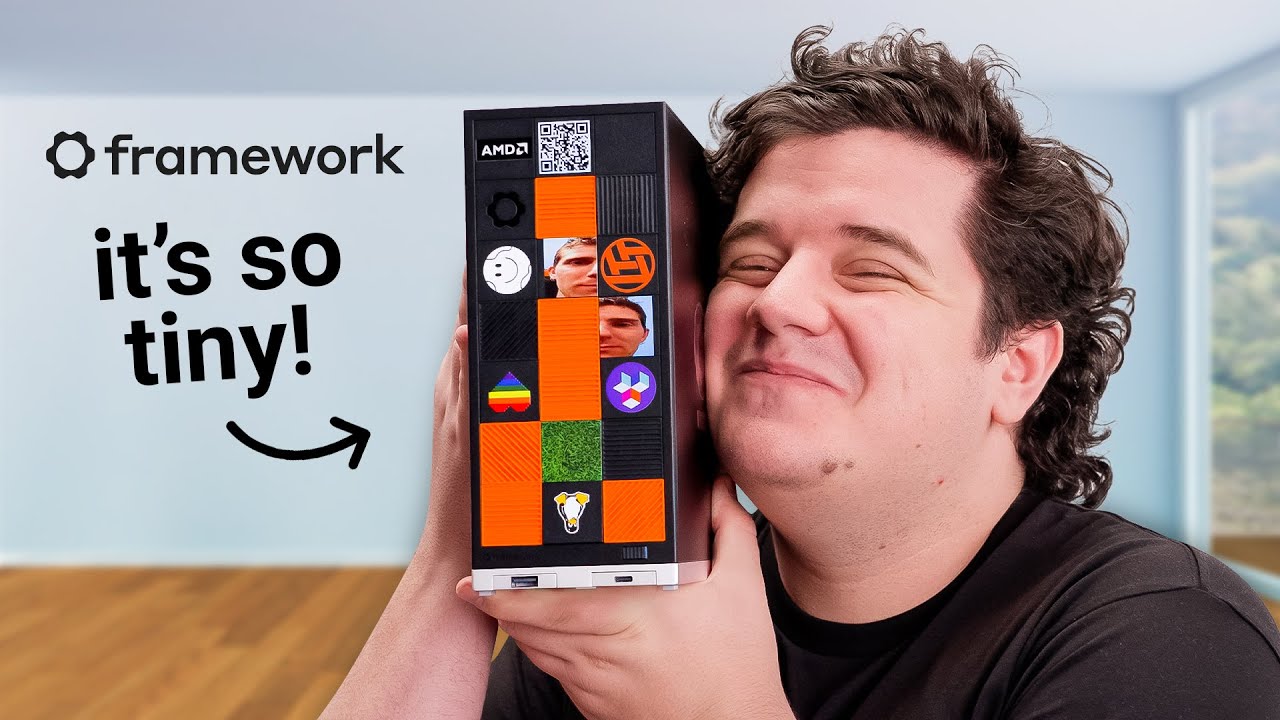
This video is a hands-on unboxing and first impressions of Framework’s tiny desktop, the Framework Desktop. The host Evan (Elijah) is immediately drawn to the device’s portability and modular tile system, which promises customization and a compact footprint for a portable gaming and AI workstation. He starts with the unboxing, showing the left translucent panel, the tiny form factor, and a collection of front tiles that can be swapped to personalize the look. The video then digs into the accessories, noting the surprisingly large number of tile packs and the optional fan kit, while also expressing frustration that a required power cord is not included by default. This leads into a teardown sequence where he installs a fan and explores the device’s expansion options, including two MVME slots and a back 5 Gbit IO port, highlighting the card slots and potential for future upgrades. The host explains the hardware spec at length, focusing on the Ryzen AI Max Plus 395, soldered LPDDR5X memory, and the tradeoffs between performance and repairability. He points out that soldered RAM was a deliberate design choice to maximize performance, while acknowledging it limits future upgrades and raises questions about Framework’s stated repairability ethos. Overall, the first portion of the video builds a picture of a highly capable but divisive product that aims to blend portability with desktop-class performance, inviting viewers to weigh the benefits against the constraints.
Topics · hardware · gaming · ai · modular-design · price · tech-review
Questions answered
- Why does Framework solder the RAM in the Framework Desktop, and how does that affect upgradeability?
- Framework soldered the RAM to maximize performance with LPDDR5X memory and to achieve the compact, high-bandwidth design. This choice limits future RAM upgrades and shifts upgradeability toward replacing the entire board or system rather than swapping RAM modules.
- What is the performance like for gaming and AI workloads on this small desktop?
- In 1080p gaming, the device runs many titles at playable frame rates with settings adjusted, and AI benchmarks show strong local performance, sometimes outperforming larger GPUs in specific workloads. The 5 Gbit IO and unified memory architecture enable flexible AI workflows, though ray tracing can impact performance.
- Are the tile accessories and cables included by default, or do they add extra cost?
- Tiles and the fan kit are add-ons and not included by default. A power cable is also required but not provided in the base kit, increasing initial costs for a complete setup.
- Is the Framework Desktop a good buy given its price and trade-offs?
- It depends on priorities. If portability and AI performance with a modular tile system are valued, it offers compelling capability. If upgradeability and total cost of ownership are priorities, the price and soldered RAM may be drawbacks.