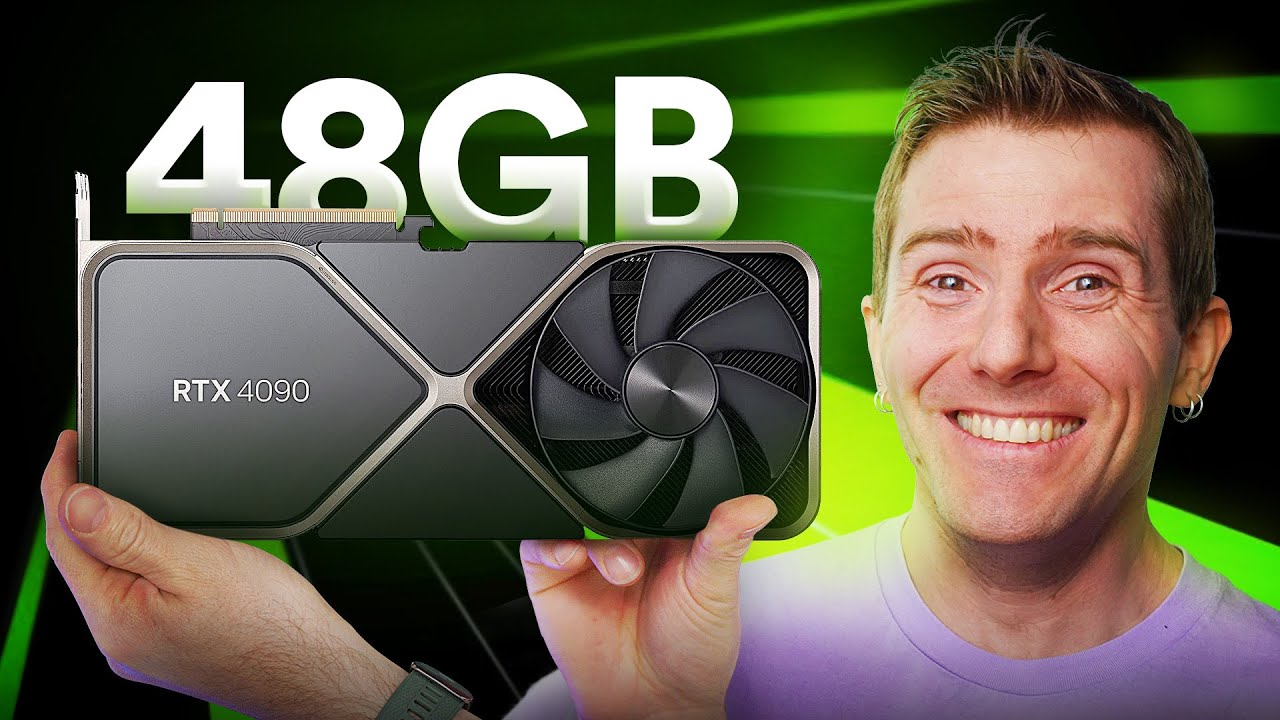
NVIDIA Never Authorized The Production Of This Card
0 up · 0 down · 0 ratings
Description
Whether you're starting from zero, organizing an inherited environment, or just looking to protect your business, ThreatLocker is here to help.
Promos
Check out their free weekly webinars using our link: lmg.gg We bought a 48GB RTX 4090 from China to see if doubling your VRAM really makes that much of a difference with AI workloads. It definitely does, but what's more interesting is how much benchmarking doesn't really show that. Discuss on the forum: linustechtips.com ► GET OUR MERCH: lttstore.com ► GET EXCLUSIVE CONTENT ON FLOATPLANE: lmg.gg ► GET A VPN: piavpn.com ► SPONSORS, AFFILIATES, AND PARTNERS: lmg.gg Purchases made through some store links may provide some compensation to Linus Media Group. Linus Sebastian is an investor in Framework Computer, Inc CHAPTERS --------------------------------------------------- 0:00 Intro 1:52 What Is It? 7:00 Text Generation gemma3:27b-it-q4_0 12:15 Text Generation gemma3:27b-it-q8_0 14:30 Image Generation 20:00 Conclusion 25:13 Outro
The video examines a modified RTX 4090 card claimed to carry 48 GB of VRAM, exploring whether doubling VRAM genuinely improves AI workloads and how such a card could be produced. The host starts by noting the high price and poor gaming performance of these 48 GB RTX 4090s, setting up the central mystery of why someone would dismantle and remanufacture a gaming card for AI use. He then dives into the hardware investigation, showing that the card seems to reuse a standard RTX 4090 PCB but with a custom blower-style cooler and a back-cut PCB design. The host catalogs the evidence from multiple sources, including a Techbot article and observed memory arrangements, to argue that the card is likely a Franken-card built without official Nvidia authorization. He emphasizes thermals, power delivery, and the economics of remanufacturing gaming GPUs into AI compute cards, noting how enterprise Nvidia cards are often priced higher and may underperform for certain workloads due to power and cooling constraints. The narrative then shifts to live benchmarking, using the local Ollama-based Gemma AI models to compare performance between the 4090 and the 48 GB variant under controlled conditions, including memory usage, GPU power limits, and model loading. The results show that while memory capacity matters for some AI tasks, the expected dramatic performance gains are not universal, and large models may still struggle to saturate 48 GB VRAM depending on the workload and batch size. Throughout, the host interleaves practical demonstrations with candid commentary about model reliability, hallucinations in AI outputs, and the challenges of benchmarking smear across different hardware configurations. The video concludes with broader takeaways for buyers: high VRAM can help certain AI tasks, but it is not a guaranteed upgrade for gaming performance or every workload, and such Franken-cards come with uncertainty around reliability and long-term support. The sponsor segment and a retrospective on Nvidia’s enterprise versus consumer product strategy frame the discussion, ending with a practical caveat about evaluating hardware extensions for AI and production workflows rather than gaming alone.
Topics · technology · hardware · ai-infrastructure · computing · consumer-electronics · science-and-technology
Questions answered
- What is the core claim about the 48 GB RTX 4090 variant in the video?
- The video investigates whether upgrading to 48 GB of VRAM by remanufacturing a gaming RTX 4090 provides meaningful AI workload benefits and why this card exists despite potential authorization and reliability concerns.
- Why does the host doubt the official Nvidia authorization status of the card?
- Because the cooler design and PCB arrangement resemble professional cards while differing from Nvidia's standard consumer designs, suggesting a non-authorized remanufacture intended to repurpose gaming GPUs for AI compute.
- What models are used for benchmarking and what is a key finding about VRAM impact?
- The Gemma models running on Ollama are used for benchmarking; a key finding is that larger VRAM can help some AI tasks but does not guarantee major performance gains across all workloads or configurations.