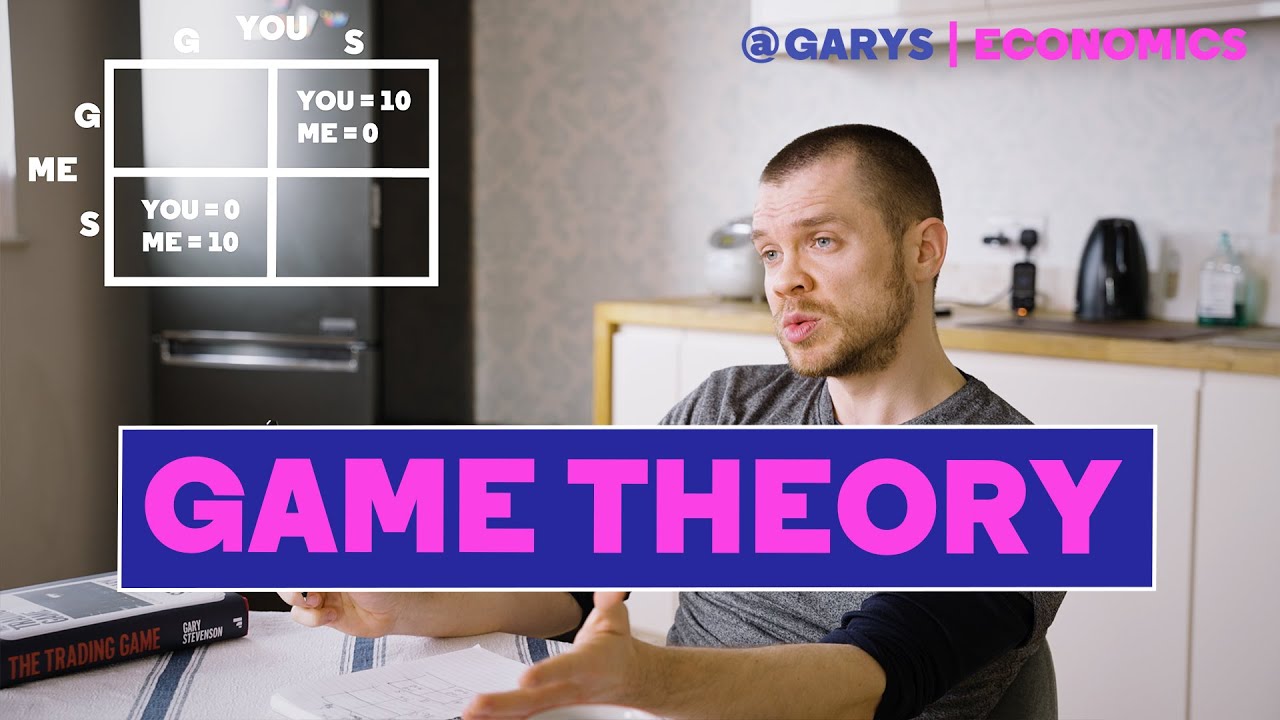
Game Theory is Broken
0 up · 0 down · 0 ratings
Channels and socials
Economists have gotten game theory wrong for seventy years. UNDERSTAND, SHARE & PUSH BACK WEBSITE - garyseconomics.org TWITTER - twitter.com FACEBOOK - @garyseconomics INSTAGRAM - @garyseconomics TIKTOK - @garyseconomics YOUTUBE - youtube.com PATREON - patreon.com DISCORD - discord.gg BLUESKY - bsky.app SUBSCRIBE, SHARE & START A CONVERSATION Performed by Gary Stevenson @garyseconomics
Gary Stevenson of Gary's Economics introduces game theory and uses the Prisoner’s Dilemma to illustrate a core teaching point: traditional game theory often models situations as if participants act purely to minimize their own prison time, which can lead to collectively worse outcomes. He begins with a straightforward explanation of how the Prisoner’s Dilemma is set up, including the two players, their choices, and the four possible outcomes. He then walks through the logic that leads to a dominant strategy: both players choosing to grass on the other side yields a worse overall result for both compared to mutual cooperation, yet the structure of the game pushes toward betrayal. This framing helps viewers see that the classical analysis can produce a Nash equilibrium where both players act selfishly, ending in five years each, even though one-year joint outcomes would be better. The speaker emphasizes that the key assumption driving the typical conclusion is that players only care about reducing their own prison time, not about trust or cooperation. He argues that this narrow view misses real-world factors like trust, social norms, and internalized ethics that can promote cooperation and better collective outcomes. The video then connects the abstract model to real-world policy; Stevenson contends that inequality and poor living standards are shaped by incentives and power dynamics, and that public support for taxation and redistribution depends on whether enough people choose to act unselfishly and organize together. He urges viewers to educate themselves, share the message, and mobilize to push politicians toward more aggressive wealth taxation, arguing that a large, cooperative movement is necessary to shift economic outcomes for ordinary people. The closing segments reiterate that reducing inequality requires collective action and a shift away from purely self-interested behavior, framing the economy as a broader social Prisoner’s Dilemma in which the fate of the country hinges on widespread willingness to sacrifice time and effort for the common good.
Topics · economics · education · political economy · inequality · social behavior
Questions answered
- What is the Prisoner’s Dilemma and why does it matter for economics?
- It is a simple two-player game used to illustrate how rational self-interest can lead to a worse outcome for both players, highlighting the importance of assumptions about information and cooperation in economic models.
- Why does the speaker say game theory misrepresents real behavior?
- Because traditional analyses often assume selfish, information-free choices; in reality people cooperate, trust, and are influenced by social norms, which can change outcomes.
- How does the video relate game theory to inequality and policy?
- It argues that without collective action and redistribution, incentives can drive the economy toward worse living standards, and that public support for tax changes depends on people organizing together.
- What can viewers do to help fix the economy according to the video?
- Educate themselves, share the content, and participate in broader movements to advocate for taxation of wealth and policies that reduce inequality.