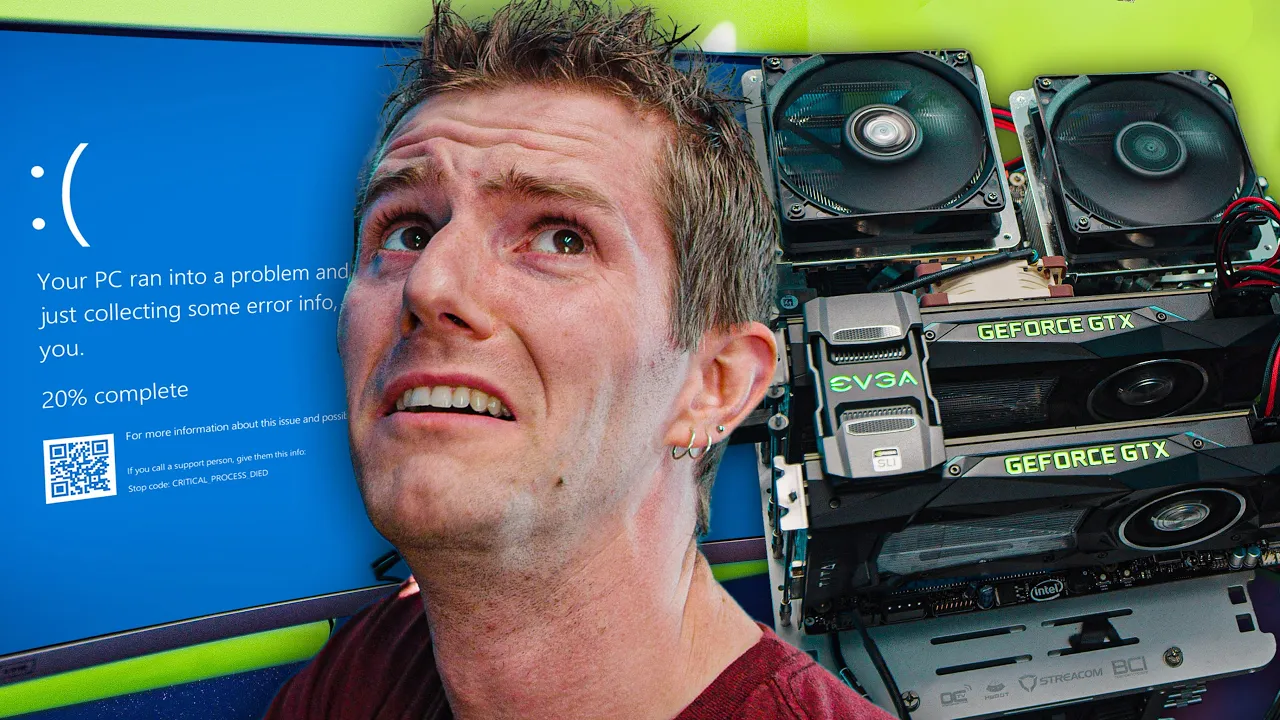
We OVERCLOCKED this $5000 PC from 10 years ago!!!
0 up · 0 down · 0 ratings
Description
Thanks to Samsung for sponsoring this video!
Promos
Check out the #Samsung #240hz C27RG5 Curved #Gaming Monitor: On Samsung: shop-links.co On Best Buy: shop-links.co Over 10 years ago Intel's Skulltrail was almost unstoppable in the consumer space with its dual CPU socket availability and even able to support SLI, but now not so much! Can we breathe some new life in it with some upgrades and overclocking? Buy Samsung C27RG5 Curved Gaming Monitor On Samsung: shop-links.co On Best Buy: shop-links.co On Amazon: geni.us On Newegg: lmg.gg Buy NVIDIA Geforce 2080 Ti Graphics Card: On Amazon: geni.us On Newegg: lmg.gg Buy NVIDIA Titan XP Graphics Card: On Amazon: geni.us On Newegg: lmg.gg Purchases made through some store links may provide some compensation to Linus Media Group. Discuss on the forum: linustechtips.com Our Affiliates, Referral Programs, and Sponsors: lmg.gg Get a VPN today with PIA at geni.us Get a Displate Metal Print at lmg.gg Get a 30-day free trial of Amazon Prime at lmg.gg Linus Tech Tips merchandise at lttstore.com Linus Tech Tips posters at crowdmade.com Our Test Benches on Amazon: amazon.com Our production gear: geni.us Twitter - twitter.com Facebook - @LinusTech Instagram - @linustech Twitch - twitch.tv Intro Screen Music Credit: Title: Laszlo - Supernova Video Link: youtube.com iTunes Download Link: itunes.apple.com Artist Link: soundcloud.com Outro Screen Music Credit: Approaching Nirvana - Sugar High youtube.com
The video starts with Linus setting up a bold experiment: reviving a Skulltrail dual‑CPU rig from over a decade ago by pushing it to new extremes. He notes the plan to overclock the CPUs, upgrade to modern RTX graphics with SLI, and expand memory from 8 GB to 32 GB, all while showcasing a modern 240 Hz curved gaming monitor sponsored by Samsung. The host introduces the Samsung C27RG5, highlighting its 240 Hz refresh rate, G‑Sync compatibility, and low input lag mode, and explains how these features should translate into smoother gameplay even on aging hardware. Immediately, the team faces early bottlenecks like driver install times and the notorious Code 43 with a Titan X, but they pivot to testing with an RTX 2080 Ti and later dual Titan X GPUs to explore SLI performance and multi‑GPU benefits. Throughout this section, the focus remains on how far the old platform can be stretched with fresh components and clever tuning, and what the resulting gaming and productivity experience looks like in 2019 standards. The narrative then shifts toward more aggressive upgrades, including 32 GB of DDR2 memory cooled actively, and a quick overclock to 4 GHz with careful voltage adjustments, aiming for a stable but high‑frequency platform that can run modern games at reasonable frame rates. In the middle portion, the video details ongoing benchmarking and tuning efforts. The team observes memory speeds and stability, tweaking MCH voltages and FSBI settings to coax the Skulltrail platform into a usable state with 16 to 32 GB of RAM, all while monitoring heat and stability. They compare the platform to a contemporary 4790K/4770K era baseline, noting the surprising proximity in multi‑threaded performance when overclocked, and they discuss the implications of SLI with 2080 Ti and Titan X GPUs on a very old motherboard. The narrative integrates real game tests, starting with Rocket League and progressing to Doom, Apex Legends, Minecraft, and Wolfenstein II, to illustrate how the machine handles both light and heavy workloads. Across games, the 240 Hz monitor is shown to deliver smoother inputs and more responsive feel, especially in fast‑paced titles like Doom and CS:GO, where high refresh rates can sharpen competitive edge. The overall conclusion from this segment is that while the Skulltrail build isn’t a modern machine, disciplined overclocking combined with the right GPUs and the Samsung display yields a surprisingly playable and occasionally impressive experience for a 10‑year‑old system. As the video closes, the host reflects on the broader implications of reviving legacy hardware with contemporary upgrades. He emphasizes that a high refresh rate display can unlock a tangible gaming advantage when frame rates are sufficient, and he notes that the 240 Hz Samsung monitor, paired with G‑Sync and multi‑GPU configurations, offers a smoother, tear‑free experience even as the CPU shows its age. The testing demonstrates that the project is less about achieving cutting‑edge performance and more about highlighting what’s possible with a well‑chosen set of components and some creative overclocking. Viewers are left with practical insights about modernizing old builds, the realities of legacy platform bottlenecks, and the fun of pushing limits to see where the line between nostalgia and current capabilities actually lies. The video ends with a nod to Samsung sponsorship and a tease of a future comparison, inviting viewers to follow along for more experiments with unusual hardware pairings and inventive performance tweaks.
Topics · technology · hardware · gaming · overclocking
Questions answered
- What was the primary goal of the Skulltrail project in this video?
- To overclock the CPUs, upgrade to RTX GPUs with SLI, increase memory to 32 GB, and test how a 10‑year‑old system performs with a modern 240 Hz monitor.
- Did the team achieve stable overclocking on the Skulltrail system?
- They achieved a high core overclock and tested stability through several benchmarks and games, but stability varied by task and required voltage and cooling adjustments.