All-screen Notebook Concept - My Thoughts...
0 up · 0 down · 0 ratings
Channels and socials
Thanks to Lastpass for sponsoring our Computex 2018 coverage! Start securing your passwords today with LastPass at bit.ly Subscribe for more Computex content: youtube.com Follow so you don't miss an upload: @linustech twitter.com
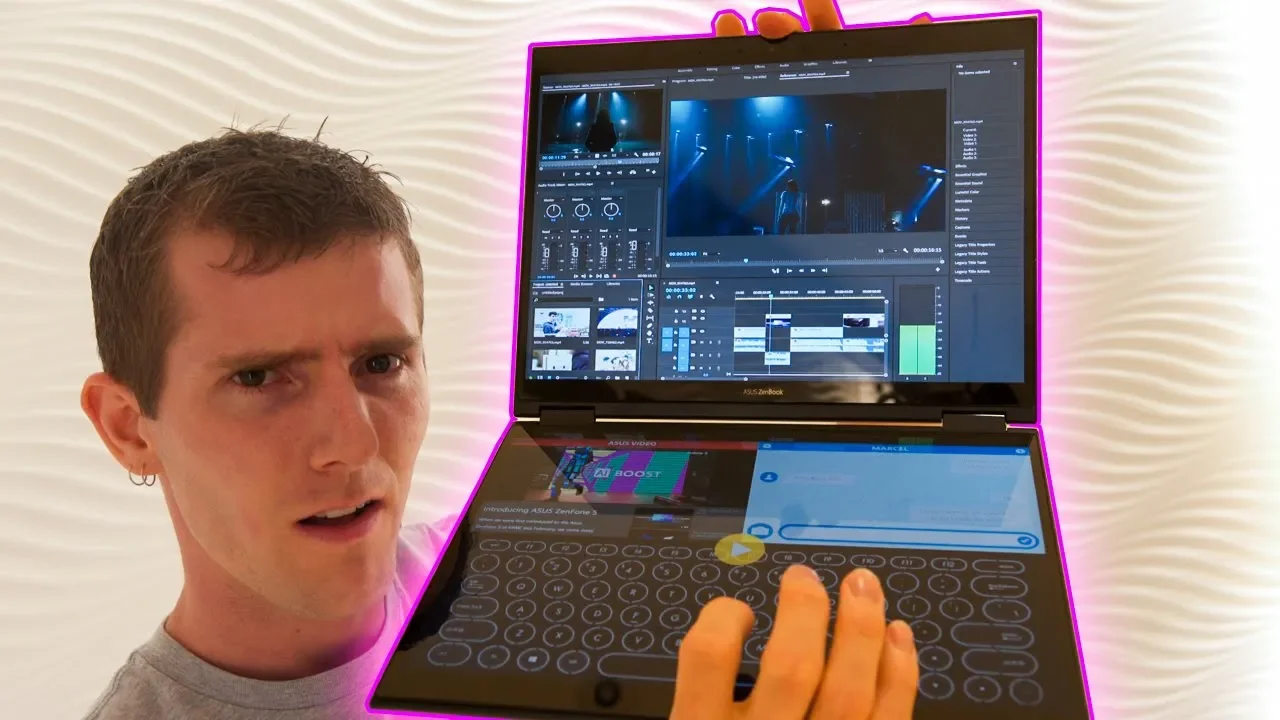
The video provides an in-depth hands-on look at Asus Project Precog, a bold design concept described as a highly flexible two-screen notebook aimed at redefining how a laptop and a tablet converge. The presenter situates Precog as a successor to ideas like the Lenovo Yoga Book, but pushes the concept further by enabling near symmetry between the top and bottom surfaces, allowing the keyboard and touch surface to potentially reside on either side. The device is demonstrated in various form factors, including desk use, lap use, and tent mode, highlighting its ability to function as a Windows tablet and as a full-fledged notebook depending on the orientation. A central theme is the challenge of delivering a usable touchscreen keyboard and responsive haptic feedback, with the presenter voicing skepticism about current solutions while acknowledging Asus’ ongoing work toward practical implementations. The discussion also covers practical constraints such as thermal management, power and component placement within a dual-screen shell, and the potential for new I/O arrangements like Thunderbolt 3 to support charging and peripherals. Overall, the video blends cautious excitement with realistic caveats, noting that a commercial product based on Precog is not expected until sometime in 2019 and that software and hardware innovations will be crucial to realizing a usable dual-screen experience.
Topics · technology · hardware · laptops · concept-design · computing
Questions answered
- What are the main advantages of the Precog concept over traditional laptops?
- The Precog concept offers near symmetry between the top and bottom surfaces, flexible keyboard placement, multiple usage modes (desk, lap, tent, tablet), and the potential for expanded screen real estate to enable new workflows.
- What are the biggest challenges mentioned for making this usable in practice?
- Key challenges include delivering instant, crisp haptic feedback for a touchscreen keyboard, reliable keyboard placement and usability on a touchscreen surface, and robust software and hardware integration to manage windows, input methods, and thermal/power constraints.