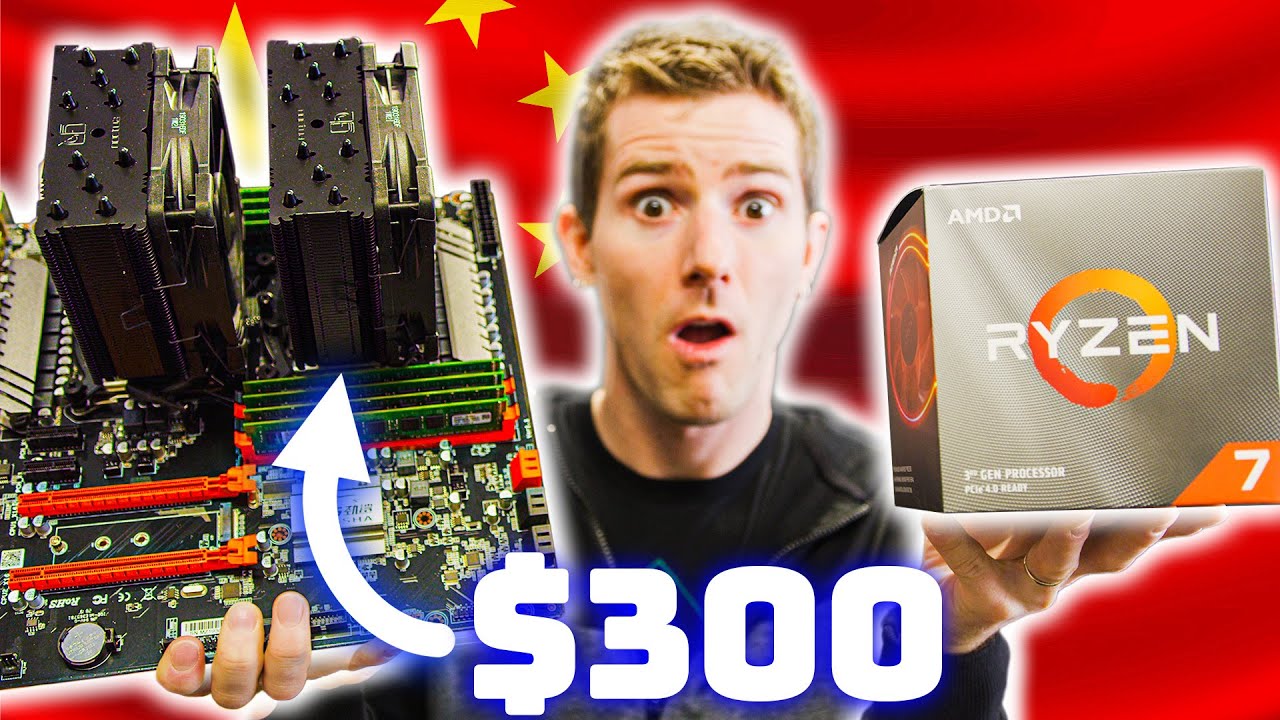
SIXTEEN Cores for the Price of EIGHT!
0 up · 0 down · 0 ratings
Promos
Get an unrestricted 30-day free trial of FreshBooks at freshbooks.com Use code LINUS and get 25% off GlassWire at lmg.gg You can get SO MANY MORE cores for your money with this one product... but should you try it? Buy Intel Xeon processors on Amazon (PAID LINK): geni.us Get this motherboard on Aliexpress: geni.us Buy Noctua NH-U12s on Amazon (PAID LINK): geni.us Purchases made through some store links may provide some compensation to Linus Media Group. Discuss on the forum: linustechtips.com Our Affiliates, Referral Programs, and Sponsors: lmg.gg Get a Displate Metal Print at lmg.gg Get a 30-day free trial of Amazon Prime at lmg.gg Linus Tech Tips merchandise at lttstore.com Our Test Benches on Amazon: amazon.com Our production gear: geni.us Twitter - twitter.com Facebook - @LinusTech Instagram - @linustech Twitch - twitch.tv Intro Screen Music Credit: Title: Laszlo - Supernova Video Link: youtube.com iTunes Download Link: itunes.apple.com Artist Link: soundcloud.com Outro Screen Music Credit: Approaching Nirvana - Sugar High youtube.com
This video investigates whether you can get sixteen cores for the price of eight by building a budget dual‑socket Xeon workstation using refurbished components sold on marketplaces like eBay and AliExpress. Linus begins with the premise that two Intel Xeon E5 2667 v2 CPUs, paired with a Jingxia X79 dual‑socket style motherboard and DDR3 ECC memory, could yield a substantial core advantage for a similar overall price to a contemporary consumer CPU build. He explains the hardware choices in detail: ivy‑bridge era Xeons with a 3.3 GHz base clock and about 4 GHz boost, paired with DDR3 ECC memory at 1600 MT/s, and a motherboard that reuses server‑class chipsets in a redesigned consumer form factor. The video emphasizes that while the core count is doubled, real‑world performance depends on workload, as not all applications can effectively utilize 16 cores due to per‑core speed limitations and multi‑socket communication overhead. The host also notes that the setup will draw more power and take more space, but could be compelling for workloads that scale with many cores or for enthusiasts who enjoy refurb hunting. Finally, he frames the comparison against a Ryzen 7 3800X system to establish a baseline for gaming and multithreaded tasks, while underscoring the value proposition of buying new hardware with warranty for predictable performance. In the benchmarking section the team runs Blender and Cinebench to establish concrete performance data. Blender renders completed in about 12 minutes and 28 seconds on the Xeon setup, with Blender showing strong multi‑core utilization despite older silicon. Cinebench reports high core usage across all cores, but the per‑core performance lag is evident, producing a noticeable gap versus the modern Ryzen system in single‑ and lightly threaded tasks. The gaming tests at 1440p high settings reveal that the Xeon build maintains a surprising level of competitiveness, generally within a small margin behind the AMD system for average FPS, while peak frame performance varies by game and how well the software can distribute load across cores. The narrator highlights how modern games and workloads increasingly exploit multiple cores, but also how certain games still rely heavily on per‑core speed, which can erode the advantage of simply doubling core counts. Throughout, the commentary keeps a practical lens on total cost of ownership, power draw, and footprint, concluding that the refurbished Xeon approach can be appealing for specific use cases while newer consumer hardware remains the safer, more predictable choice for most buyers. The closing analysis weaves together practical takeaways for audience members considering unusual, high‑core builds. The video concludes that refurbished server hardware can deliver phenomenal value for workloads that can take advantage of many cores, such as certain renderers and multi‑threaded applications, especially if affordable DDR3 ECC memory is found. However, for users needing consistent single‑threaded performance and warranty coverage, a modern CPU platform is typically the better bet. Linus also revisits the theme of form factor, thermal/power considerations, and the hidden costs of running older hardware, including cooling and space requirements. In short, sixteen cores for the price of eight is not a universal upgrade tale; it is a nuanced option that pays off in specific scenarios while aligning with a more budget‑savvy, do‑it‑yourself ethos for the right buyer.
Topics · hardware · performance · testing · budget_build · gaming · cpu
Questions answered
- What is the main claim of the video about sixteen cores for the price of eight?
- The video argues that by using refurbished Xeon processors on a dual‑socket motherboard with DDR3 ECC memory, you can achieve effectively double the core count for a similar budget as a modern eight‑core consumer PC, making it potentially compelling for workloads that scale with many cores.
- Which workloads showed the Xeon build performing well, and where did it lag behind the Ryzen 7 3800X?
- The Xeon build performed well in Blender and Cinebench with strong multi‑core utilization, but lagged behind the Ryzen 7 3800X in per‑core performance and in some games that are not highly tuned for multi‑socket, multi‑core workloads.