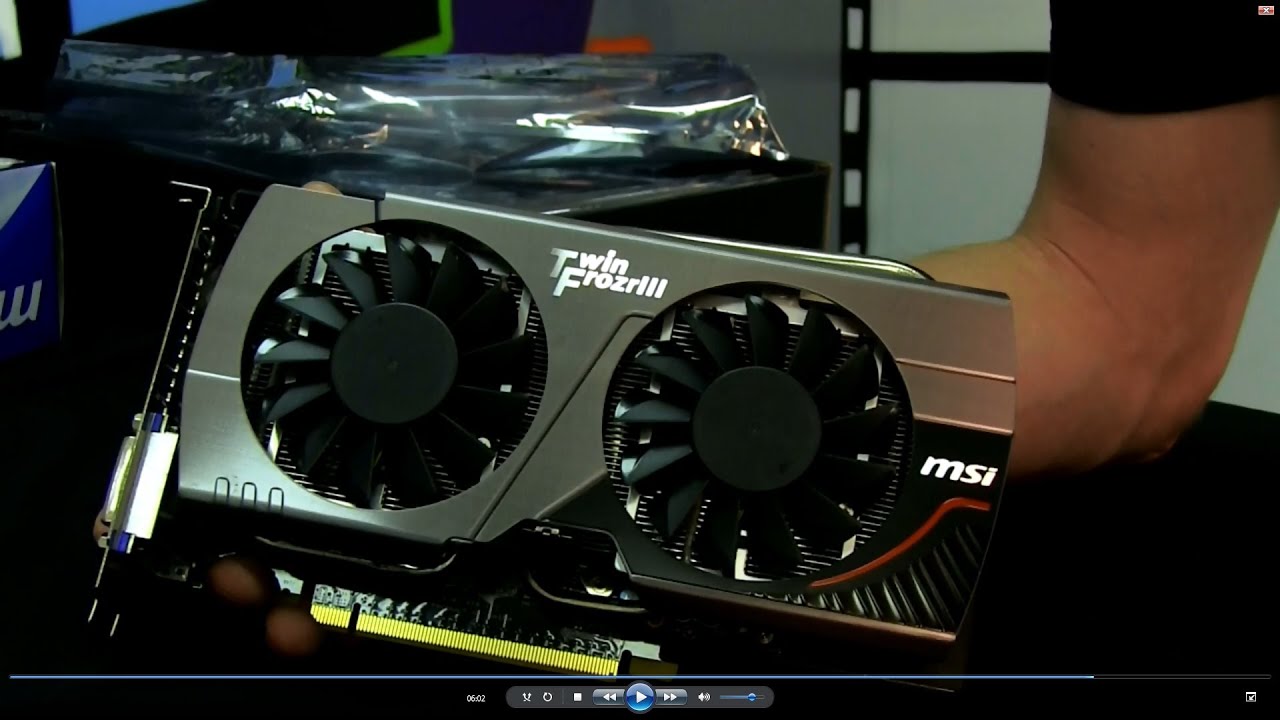
GTX 660 MSI GeForce Twin Frozr Edition Video Card Unboxing & First Look Linus Tech Tips
0 up · 0 down · 0 ratings
Description
The GTX 660 is slightly slower than a GTX 660 Ti, but also significantly less expensive. Sounds nice! CA: ncix.com US: us.ncix.com
The video provides an unboxing and first look at the Nvidia GeForce GTX 660, focusing on MSI's Twin Frozr Edition. The presenter highlights that the card uses a Kepler GPU with a 192-bit memory bus and 2 GB of memory, and notes its PCI Express 3.0 readiness along with full DirectX 11 support and a three-year warranty available in US, Canada, and Mexico. A core part of the discussion centers on MSI’s design choices, including their Twin Frozr cooler, propeller blade fans, solid capacitors, and the rigidity enhancement bracket that helps prevent slot stress. The host explains Kepler’s advantages over the previous generation, particularly improved performance with lower power consumption, and introduces Nvidia technologies such as adaptive V-Sync, FXAA, TXAA, and Cuda. He also covers practical aspects like the included user guide, installation accessories, and the card's output options (dual DVI, HDMI, and DisplayPort) for multi-monitor setups. Throughout, the reviewer contrasts the GTX 660 with the GTX 660 Ti, noting differences in core architecture and memory configuration, and concludes that the 660 is a solid choice for 1080p gaming at high details but that theTi may be a more compelling option at higher resolutions. The video wraps with a recap of key features and a call to subscribe for more unboxings and reviews from Linus Tech Tips.
Topics · technology · hardware · reviews · unboxing · graphics
Questions answered
- What GPU architecture does the GTX 660 Twin Frozr Edition use and what are its memory specifications?
- The GTX 660 Twin Frozr Edition uses Nvidia's Kepler architecture with a 192-bit memory bus and 2 GB of memory.
- What are the key cooling and design features highlighted for the Twin Frozr edition?
- Key features include the Twin Frozr cooler with propeller blade fans, three heat pipes, a high-density heat sink, solid capacitors, and a rigidity enhancing bracket to stabilize the card in the PCIe slot.