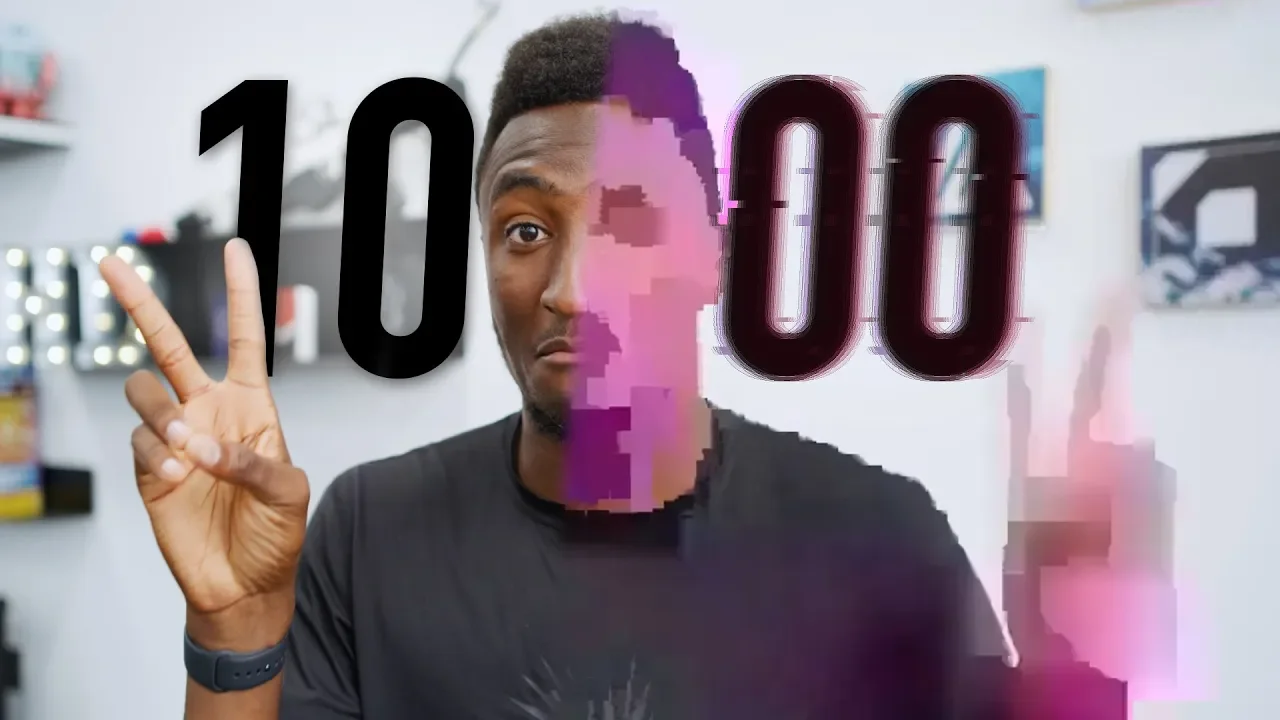
This Is What Happens When You Re-Upload a YouTube Video 1000 Times!
0 up · 0 down · 0 ratings
Promos
The 1000 re-upload project. An inside look at how YouTube ruins your video quality! Video #1: youtu.be Video #2: youtu.be Video #5: youtu.be Video #10: youtu.be Video #20: youtu.be Video #50: youtu.be Video #100: youtu.be Video #200: youtu.be Video #500: youtu.be Video #1000: youtu.be The 1000 Upload Channel: youtube.com Video Compression explained: youtu.be Original in a room audio experiment: en.wikipedia.org 10 years ago with a webcam: youtu.be MKBHD Merch: shop.mkbhd.com Video Gear I use: kit.com Tech I'm using right now: amazon.com Intro Track: My Opinion by deadmau5 Playlist of MKBHD Intro music: goo.gl ~ twitter.com @MKBHD @MKBHD
This video presents a meticulous, step by step experiment to quantify how YouTube processing alters video quality. It starts with the host explaining that the final uploaded file is often far different from what viewers see on their devices due to aggressive compression and streaming adaptations. The creator outlines the plan to upload a high quality 8K source, download the encoded version from YouTube, re-upload it, and repeat the process many times to observe progressive degradation. He emphasizes that the test is not about secret tricks but about understanding the built in compression pipeline YouTube uses to serve millions of concurrent streams efficiently. The early sections build intuition around why such drastic changes might occur, including the tradeoffs between file size, bandwidth, and perceived quality on various screens and connections. As the experiment unfolds, the host details how YouTube downscales and recompresses each iteration, illustrating concepts like block motion estimation and frame reuse. He notes how background elements may stay relatively stable while moving subjects become heavily warped as compression chunks increase in size. Visual examples accompany the narration, showing how color blocking and magenta color shifts creep in, especially during moments of motion or pauses. The discussion also covers audio, explaining that processing can shift or truncate audio slightly with each download and upload, contributing to a cumulative sense of degradation over many cycles. Midway through the video, the presenter documents noticeable stages of deterioration, including intensified blockiness, softened skin textures, and eventually the eerie transformation of a recognizable face into pink blocks. The narrative keeps a cautious scientific tone, contrasting the pristine original with progressively compressed doppelgängers and highlighting the persistence of the background details even as the foreground collapses. In the closing segments, the host reflects on what the experiment teaches about YouTube’s compression strengths and limits, acknowledges that the best looking version remains on the original device, and invites viewers to explore the linked milestone videos to witness the progression firsthand. The video ends with a lighthearted acknowledgment of the effort, a nod to the accuracy of the test, and an invitation to share the findings with others who might find the topic fascinating. Overall, the piece blends curiosity, hands-on demonstration, and accessible explanations of technical concepts, making a technical subject approachable for a broad audience. It provides concrete observations, like the relative resilience of audio versus video, and ties these observations back to larger themes about media quality on the modern internet. The result is an entertaining yet rigorous tour through the realities of online video processing, with a clear set of takeaways about what viewers can expect from compressed uploads versus native high-resolution playback on capable devices.
Topics · technology · video_production · digital_media · internet_platforms · science_and_tech
Questions answered
- What motivates the creator to perform the thousand upload experiment?
- To empirically assess how aggressively YouTube compresses and re-encodes a video across repeated uploads and downloads, revealing how much quality can be lost in the process.
- What is the main technique YouTube uses that affects the visuals in this test?
- Block motion estimation and frame reuse, where unchanged areas are kept similar across frames to save bitrate, leading to artifacts in moving regions.
- Does audio degrade as much as video during repeated processing?
- Audio does degrade more slowly, with shifts and small timing discrepancies, but video degradation is typically more dramatic and noticeable.
- What is the overall conclusion about viewing high quality content versus YouTube processing?
- While YouTube processing is effective for streaming at scale, it often yields visibly lower quality than the original high resolution files when repeatedly compressed.