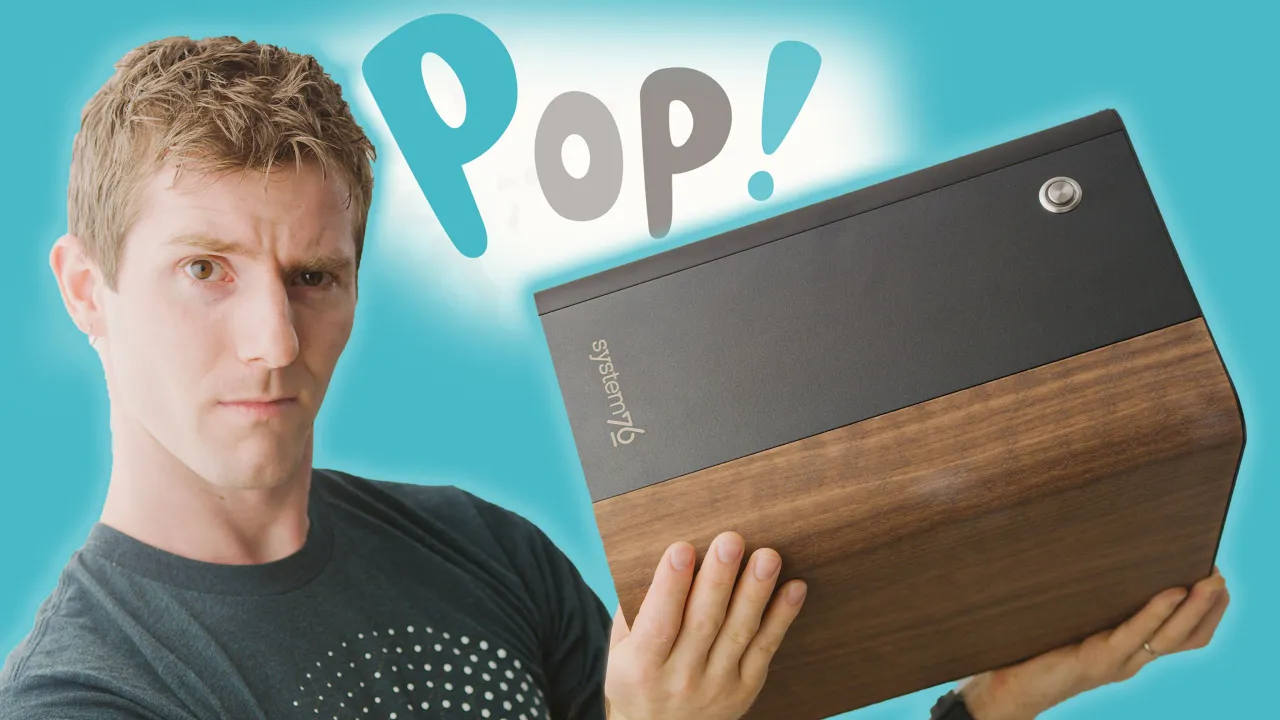
A REALLY Weird PC… - System76 Thelio Review
0 up · 0 down · 0 ratings
Promos
Join the Club for only $5 at dollarshaveclub.com Thanks to our sponsor Dollar Shave Club, new members get their 1st month of the Daily Essentials Starter Set including trial-sized versions of their Body Cleanser, One Wipe Charlies’ Butt Wipes, and Shave Butter along with their Executive Razor for ONLY $5 with FREE shipping Use offer code LINUS to get 20% off everything on lmg.gg There’s more than one company that makes its own operating system and hardware, and today, we’re taking a look at System76’s Thelio, an open source design you can build yourself. Buy Thelio from System76: lmg.gg Discuss on the forum: linustechtips.com Our Affiliates, Referral Programs, and Sponsors: linustechtips.com Get Private Internet Access today at geni.us Displate metal posters: lmg.gg Linus Tech Tips merchandise at lttstore.com Linus Tech Tips posters at crowdmade.com Our Test Benches on Amazon: amazon.com Our production gear: geni.us Twitter - twitter.com Facebook - @LinusTech Instagram - @linustech Twitch - twitch.tv Intro Screen Music Credit: Title: Laszlo - Supernova Video Link: youtube.com iTunes Download Link: itunes.apple.com Artist Link: soundcloud.com Outro Screen Music Credit: Approaching Nirvana - Sugar High youtube.com
A thorough look at System76’s Thelio PC, the video opens by reframing Linux hardware like a normal consumer product rather than a DIY niche pursuit. The host discusses the idea of making Linux more accessible to everyday users and hints at the ongoing evolution of System76’s open source ecosystem, including their Pop!_OS integration and curated software through Pop Shop. The review dives into the hardware options, highlighting the three-model sales approach (good, better, best) and noting how some configurations hide certain details like drive layouts and model numbers, which may frustrate hardware enthusiasts seeking full transparency. It then moves into the software experience, emphasizing how Pop!_OS simplifies tasks such as encryption, online account integration, and driver management, including Nvidia drivers with a single click and broader support for gaming through Proton. The core hardware discussion follows, detailing the Ryzen 7 2700X inside Thelio, the emphasis on clean cable management, and the mindful but noisy cooling solution. Finally, the host weighs the premium price against the open hardware philosophy, noting the American-made assembly, ongoing OS development, and customer support as part of the value proposition, while acknowledging potential costs relative to building a comparable machine yourself. Overall the video blends a hardware tour with a software usability study, concluding that while the Thelio is pricey, it represents a significant step toward a polished, open, Linux-first desktop experience.
Topics · hardware · open source · linux · pc hardware review · system76 · technology
Questions answered
- What makes the Thelio open source hardware approach different from typical PCs?
- The Thelio uses an open design ethos where many components and case elements are documented with CAD files on GitHub, allowing community review and modification, alongside System76 developing firmware to keep as much of the hardware open as feasible while acknowledging that core components like the motherboard, CPU, RAM, GPU, and PSU remain proprietary.
- How does Pop!_OS integrate with System76 hardware for ease of use?
- Pop!_OS offers easy encryption, integrated online account setup, direct access to cloud storage, a tailored app store (Pop Shop) with pre-curated packages like Steam and Nvidia drivers, and smooth driver management that simplifies staying up to date compared to Windows.
- Is Thelio worth the price compared to building a similar spec yourself?
- Thelio includes US-based assembly, ongoing OS development and support, and a strong emphasis on an integrated Linux desktop experience, which adds value beyond raw component costs; however, comparable self-built configurations can be substantially cheaper, so the decision depends on how much you value turnkey support, open firmware, and a cohesive open-source stack.