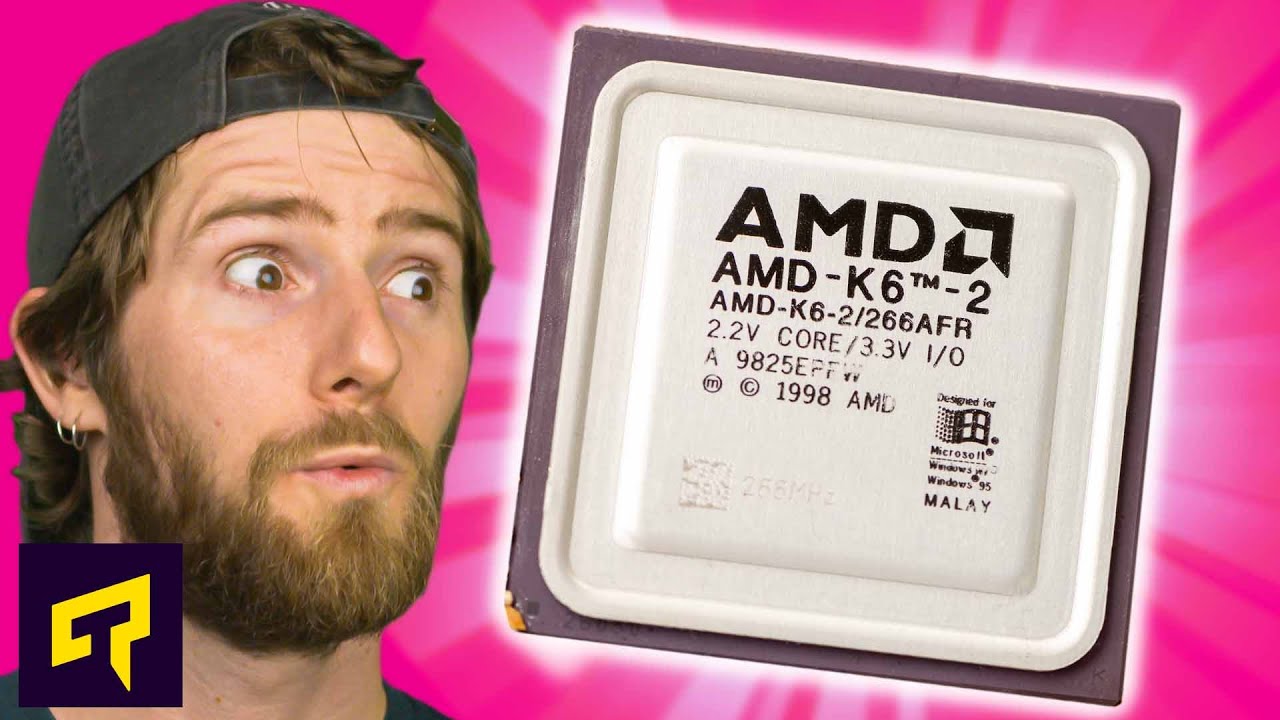
Every AMD CPU Ever!
0 up · 0 down · 0 ratings
Promos
Start your build today at buildredux.com Learn about every CPU from Team Red, from their early x86 clones to the K6 to today's Ryzen chips. Leave a reply with your requests for future episodes, or tweet them here: twitter.com ►GET MERCH: lttstore.com ►SUPPORT US ON FLOATPLANE: floatplane.com ►LTX EXPO: ltxexpo.com AFFILIATES & REFERRALS --------------------------------------------------- ►Affiliates, Sponsors & Referrals: lmg.gg ►Private Internet Access VPN: lmg.gg ►MK Keyboards: lmg.gg ►Nerd or Die Stream Overlays: lmg.gg ►Official Game Store: nexus.gg ►Amazon Prime: lmg.gg ►Audible Free Trial: lmg.gg ►Our Gear on Amazon: geni.us FOLLOW US ELSEWHERE --------------------------------------------------- Twitter: twitter.com Facebook: @LinusTech Instagram: @linustech Twitch: twitch.tv FOLLOW OUR OTHER CHANNELS --------------------------------------------------- Linus Tech Tips: lmg.gg Mac Address: lmg.gg TechLinked: lmg.gg ShortCircuit: lmg.gg LMG Clips: lmg.gg Channel Super Fun: lmg.gg Carpool Critics: lmg.gg
The video begins by establishing AMD’s origin as a secondary manufacturer for Intel, dating back to 1975 with the AM 9080, a clone of the Intel 8080. It explains how AMD operated with a modest cost to produce each chip but secured defense contracts, enabling significant profit margins. The narrative covers the 1980s agreement that allowed AMD to produce Intel-designed chips as a second source, which resulted in many early AMD CPUs being clones of Intel designs. It also highlights notable non-x86 exceptions like the AM 2900 used in the Xerox Star and early PCs that featured basic GUI, Ethernet, and mouse support. The first major PC-focused AMD releases included the AM 286 and the AM 386, with AMD reverse engineering Intel’s microcode to surpass Intel’s 386 in speed and power efficiency, even introducing sleep mode to laptops. Throughout this period, AMD’s strategy combined clone accuracy with price competitiveness, driving AMD to become a persistent competitor in the x86 space while expanding into embedded and server markets with subsequent generations. As the timeline progresses toward the late 1990s and 2000s, the video chronicles AMD’s shift from clone culture to original design leadership with the K5, its first fully self-designed x86 CPU, followed by the K6 which offered strong performance against Intel’s Pentium II. The Athlon line, especially the K7 branding, marks a high point for AMD with notable wins in performance and market share, aided by aggressive pricing and architectural innovations. The presentation highlights pivotal models like Thunderbird, MP, and 64-bit Athlon 64, as well as the introduction of dual-core Athlon 64 X2 and the server-oriented Opteron, demonstrating AMD’s expansion beyond consumer CPUs. The narrative then moves through Bulldozer and FX years, which, despite high core counts, suffered in single-threaded performance, leading to a period of competitive decline. The zenith comes with the Zen architecture and Ryzen branding in 2017, delivering a solid single-thread performance leap and rekindling AMD’s competitiveness with Intel across desktop and high-end segments, followed by Threadripper and Epic developments that underscored AMD’s return to top-tier performance. The video closes with an optimistic note about future Zen 4 developments and a plug for Redux as a sponsor, summarizing AMD’s journey from second source to industry-leading innovator across multiple market segments.
Topics · technology history · cpu architecture · amd · competition and market dynamics
Questions answered
- Wat is de belangrijkste reden waarom AMD in de jaren 2000 en daarna weer een grote speler werd in de CPU-markt?
- De belangrijkste reden was de introductie van de Zen-architectuur met Ryzen, die sterke enkelvoudige threads en concurrerende prestaties bood en AMD terugbracht naar het niveau van Intel in de desktopmarkt.
- Welke AMD-architectuur introduceerde voor het eerst 64-bit desktop-CPU's en dual-core ontwikkelingen?
- Athlon 64 introduceerde 64-bit desktop-CPU's en Athlon 64 X2 introduceerde dual-core computing.