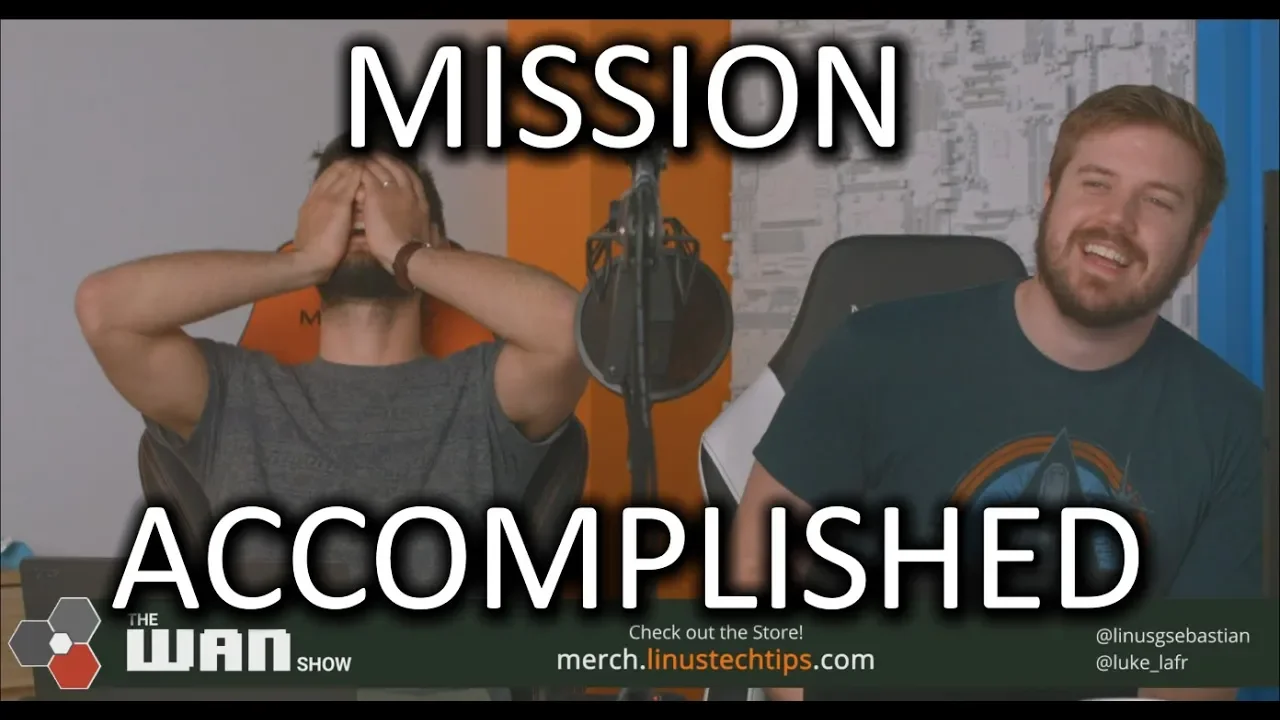
WE DID IT! NVIDIA GPP IS DEAD! - WAN Show May.4 2018
0 up · 0 down · 0 ratings
Promos
PIA: Sign up for Private Internet Access VPN at privateinternetaccess.com FreshBooks: For your unrestricted 30 days free trial, go to freshbooks.com and enter in “The WAN Show” in the how you heard about us section. Squarespace: Visit squarespace.com and use offer code LTT for 10% off LTX: Come hang out with us at LTX 2018! Get tickets at ltxexpo.com Soundcloud: soundcloud.com Forum: linustechtips.com Timestamps courtesy of JJMC89. 00:02:00 - Folding @home, Boinc 00:04:20 - GPP is over 00:18:23 - T-Mobile, Sprint merger 00:22:40 - DRAM price fixing 00:26:38 - Sponsor: PIA 00:28:59 - Sponsor: Freshbooks 00:29:52 - Sponsor: Squarespace 00:31:43 - LTX18 00:32:18 - Floatplane 00:34:51 - Warranty void stickers 00:39:41 - Facebook's new privacy tools 00:42:04 - Facebook dating app 00:47:21 - HP breaches Australian consumer laws 00:50:38 - New Bitmain ASIC miners able to mine Equihash
The WAN Show episode from May 4, 2018 covers a broad range of tech and industry topics, starting with a community shoutout about folding at home and the distributed computing effort. The hosts then dive into the main headline, announcing that Nvidia’s GPP program is effectively dead and examining the implications for branding, partner relationships, and market perception. A key portion of the show is dedicated to the branding quandary created by the GPP cancellation, including how Asus and other partners would have needed to adapt branding across product lines, and whether Nvidia will provide compensation or continue certain back-end deals. The discussion then shifts to the broader market context, with commentary on the T-Mobile and Sprint merger, the potential impact on competition in the US mobile market, and how that consolidation could affect 5G leadership and job creation. The hosts also discuss DRAM price fixing allegations, presenting a detailed timeline of the 2016-2018 drama and the price spikes observed in 2017, alongside the wider implications for consumers and manufacturers. Sponsorship segments follow, highlighting Private Internet Access (PIA) as a VPN option and FreshBooks for small business invoicing and expense tracking, with Squarespace featured as a website platform for builders and creators. They then pivot to LTX 2018, Floatplane, and the ongoing discussion of technology community initiatives, including the role of events and streaming platforms in content creation. The show covers warranty void stickers and the legalities around repairs for consumer electronics, noting recent FTC actions and the legal restrictions for third-party repairs. Facebook is analyzed in the wake of its F8 developer conference, with a focus on new privacy tools such as a clear history feature that allows users to manage data shared with apps and websites, and the ongoing debate about data aggregation and transparency. The hosts bring in Australian regulatory action against Hewlett-Packard for consumer law breaches, providing a snapshot of how major brands must align with regional consumer protections, followed by a discussion of Bitmain ASIC miners and Equihash mining, highlighting evolving crypto hardware concerns. Throughout, the conversation remains anchored in practical implications for builders, enthusiasts, and general consumers, balancing industry news with user experience insights and the ongoing evolution of hardware branding and consumer rights.
Topics · technology news · hardware and devices · industry analysis · consumer rights
Questions answered
- What happened to Nvidia GPP and why does it matter to consumers and partners?
- Nvidia announced the cancellation of GPP, which effectively ends the program that forced partner branding and product differentiation around Nvidia logos and branding. The change reduces mandated rebranding costs for partners and clarifies consumer expectations on branding and product lines, though it raises questions about compensation and ongoing back-end arrangements for partners.
- What are the potential consequences for Asus and other partners post GPP?
- Partners like Asus would have had to design new product lines and possibly rebrand to align with the Nvidia GPP framework. The cancellation leaves open whether Nvidia will compensate for sunk branding costs or if partners will revert to existing branding strategies. The long-term effect depends on how brands manage transitions and whether new branding remains viable in the market.
- Why is the T-Mobile and Sprint merger significant in this discussion?
- The merger is significant because it could reshape competition in the US mobile market, potentially moving toward a three or four-player landscape. This has implications for 5G leadership, pricing dynamics, and consumer options, which ties into the broader theme of how tech companies and regulators navigate consolidation and competition.