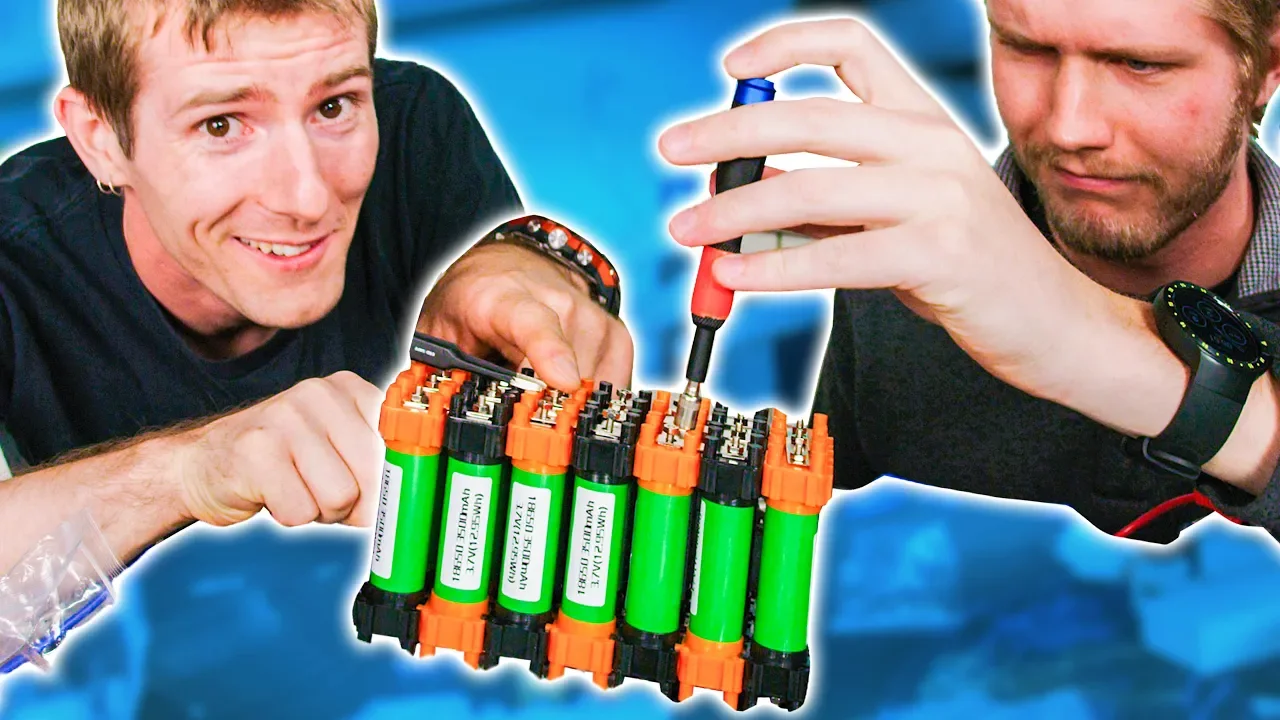
DIY Lithium Battery - What could go wrong??
0 up · 0 down · 0 ratings
Description
Canadians! Hit up Memory Express for your electronic needs: geni.us Monitor and manage your PC in real-time with Pulseway! Create your free account today at pulseway.com
Promos
Check out the VRUZEND battery kit we used: geni.us Buy lithium batteries on Amazon: geni.us Discuss on the forum: linustechtips.com Our Affiliates, Referral Programs, and Sponsors: linustechtips.com Get Private Internet Access today at geni.us Linus Tech Tips merchandise at designbyhumans.com Linus Tech Tips posters at crowdmade.com Our Test Benches on Amazon: amazon.com Our production gear: geni.us Twitter - twitter.com Facebook - @LinusTech Instagram - @linustech Twitch - twitch.tv Intro Screen Music Credit: Title: Laszlo - Supernova Video Link: youtube.com iTunes Download Link: itunes.apple.com Artist Link: soundcloud.com Outro Screen Music Credit: Approaching Nirvana - Sugar High youtube.com Sound effects provided by freesfx.co.uk
The video opens with Linus explaining the fun idea of overclocking a power wheel toy by swapping in a high current lithium battery pack. He introduces the plan to build a DIY 24 volt battery pack using 7s3p configuration with 18650 cells and a Verusend style modular kit, aiming for much higher speeds than the stock motor can handle. The presenter walks through the parts selection, noting the need for a suitable charging setup, a battery management system, and the risks involved in wiring cells in series and parallel. Early on, he emphasizes safety and the potential for short circuits or even an explosive failure if any connection is made incorrectly, framing the project as a test of what could go wrong. By the end of day one, the crew has assembled the pack base and started wiring cells, while anticipating a test drive on their modified jeep power wheels. The video then covers the practical challenges of charging a nonstandard 7s configuration, including the lack of a compatible charger, and the decision to cannibalize a charger for higher voltage input, followed by a tense moment where they test the battery in a controlled setting. The result is a dramatic ride, showing the pack delivering substantial speed increases, a warm-toasty battery, and a candid reflection on the experiment’s safety tradeoffs. The close ties the build to a broader DIY ethos while reminding viewers of the real-world consequences of improvisation with lithium cells, concluding with a plug to sponsor Memory Express and a call to subscribe for more experiments and safety-conscious projects.
Topics · Science & Technology · DIY & Engineering · Electronics · Safety & Risk
Questions answered
- What is the planned battery configuration for the DIY project, and why is it risky?
- The planned configuration is 7s3p using 18650 cells to achieve around 29V and 30A, which is risky because wiring cells in series and parallel can create short circuits, excessive current paths, or thermal runaway if connections are incorrect.
- Why was a nonstandard charger used, and what challenge did that create?
- A standard balance charger for a max 6s configuration was unsuitable, forcing the team to attempt charging with a nonmatching charger and a BMS, which complicates safe charging and requires improvisation.
- What is the immediate outcome of the test ride with the DIY pack?
- The modified power wheels shows a dramatic speed increase and generates heat in the battery, indicating the pack is delivering power but signaling a need for cooldown and safer operation.
- What safety warning is emphasized by the presenter?
- The video underscores the serious risk of short circuits, explosive battery failure, and electrical hazards when assembling lithium packs, advising careful understanding of series and parallel connections.