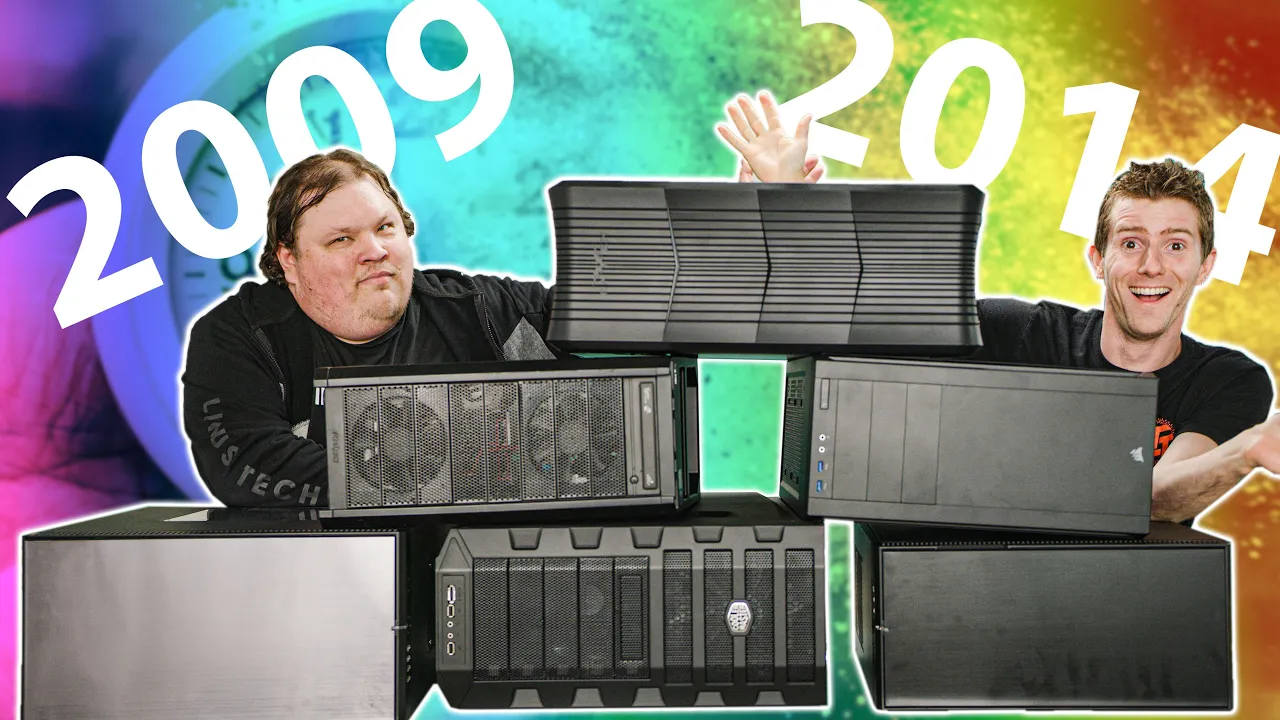
10 Years of Gaming PCs: 2009 - 2014 (Part 1)
0 up · 0 down · 0 ratings
Promos
Sponsored by LG and Seasonic! Buy the LG 34GK950G: bit.ly Buy on Amazon: geni.us Buy Seasonic PSUs on Amazon: lmg.gg Buy Seasonic PSUs on Newegg: lmg.gg Buy CORSAIR on Amazon: geni.us Enter our LG 27GL850 monitor giveaway at lmg.gg Have gaming PCs always looked the same? How did performance scale over time? Let’s take a trip down memory lane and see what gaming PCs looked like in 2009 through 2014! Discuss on the forum: linustechtips.com Our Affiliates, Referral Programs, and Sponsors: linustechtips.com Get Private Internet Access today at geni.us Displate metal posters: lmg.gg Linus Tech Tips merchandise at lttstore.com Linus Tech Tips posters at crowdmade.com Our Test Benches on Amazon: amazon.com Our production gear: geni.us Twitter - twitter.com Facebook - @LinusTech Instagram - @linustech Twitch - twitch.tv Intro Screen Music Credit: Title: Laszlo - Supernova Video Link: youtube.com iTunes Download Link: itunes.apple.com Artist Link: soundcloud.com Outro Screen Music Credit: Approaching Nirvana - Sugar High youtube.com
The video chronicles the evolution of gaming PCs from 2009 to 2014, detailing the hardware and software milestones that shaped each build. In the first segment, the 2009 build is highlighted with an Intel Core 2 Quad Q9650, 4 GB DDR2‑800, dual Radeon HD 5970s in Crossfire, and Windows 7, all under $1,800. The following years saw a transition to DDR3, dual‑GPU setups, and the introduction of SSDs, with 2010’s AMD Phenom 2 X6 1055T, 2011’s Intel Core i5 2500K with an NVIDIA GTX 590, and 2012’s Intel Core i5 3570K paired with a Radeon HD 7970. The narrative also covers the rise of Intel’s Haswell and Ivy Bridge architectures, the growing importance of SSDs, and the aesthetic improvements in game graphics such as lighting, god rays, and depth‑of‑field effects. The second part of the segment focuses on the 2014 build, featuring an Intel Core i7‑4790K, 16 GB DDR3, a GeForce GTX 780 Ti, and a faster SSD, costing just over $2,100. The video references major game releases from Borderlands to Battlefield 4, noting how each build’s performance impacted game play and visual fidelity. The presenter also previews a second part covering 2015 onward and mentions sponsors LG and Sea Sonic for monitors and power supplies, underscoring the importance of monitor choice and power delivery in a gaming PC’s overall performance.
Viewers praise the video’s clear historical narrative and appreciate the detailed hardware breakdowns. Comments highlight the importance of monitor choice, the relevance of SSDs, and the desire for more visual comparisons across the years. Some viewers suggest adding resolution details and monitor matching, while others express enthusiasm for the upcoming second part. Overall sentiment is positive, with high engagement reflected in the 4,200 likes on the first comment and a 8.7 user score.
Topics · gaming · review · pc · tech · performance
Questions answered
- What was the cost of the 2009 gaming PC build?
- Under $1,800.
- Which GPU was used in the 2011 build?
- NVIDIA GTX 590.
- What architecture powered the 2014 build?
- Intel Haswell (Core i7‑4790K).
- Which monitor brand was mentioned as a sponsor?
- LG.