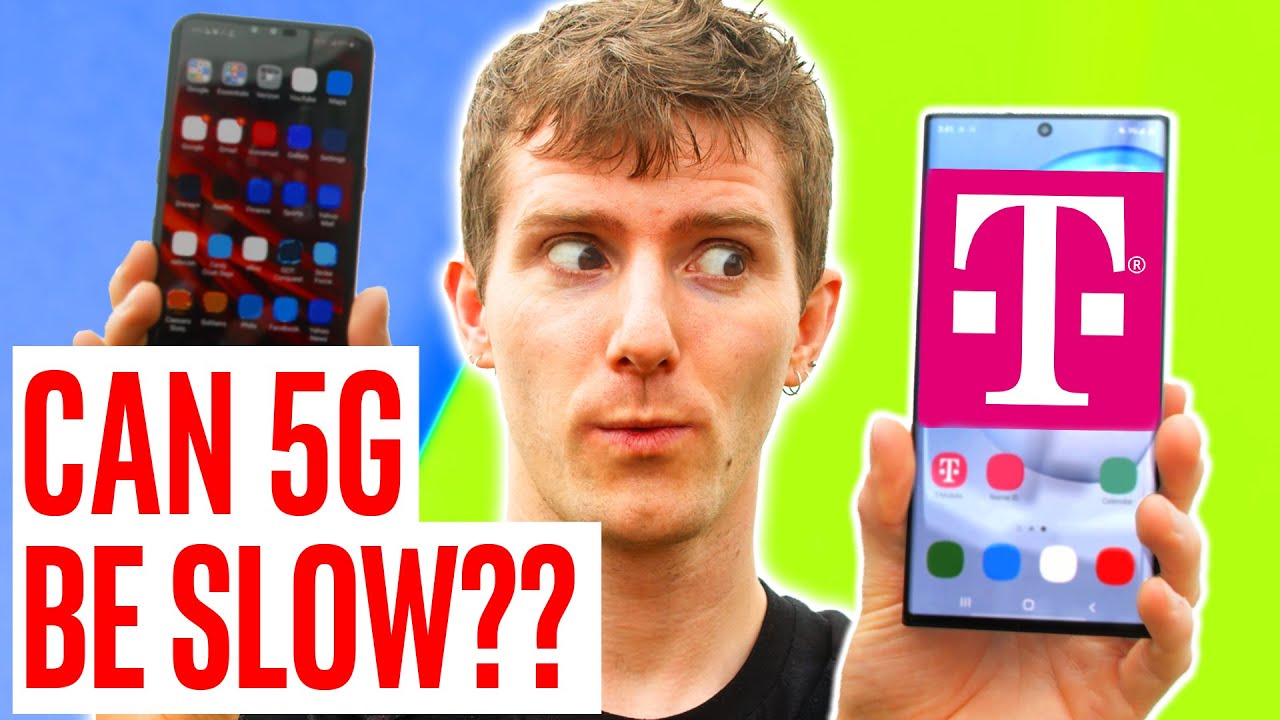
Answering your Questions about 5G...
0 up · 0 down · 0 ratings
Promos
Thanks to T-Mobile for partnering with me on this video! We’re backtesting 5G signals, this time putting T-Mobile’s new nationwide 5G coverage against the competition. Learn more about T-Mobile's 5G here: lmg.gg 5G capable device required; coverage not available in some areas. Downlink only. Some users may require certain plans or features; see T-Mobile.com. Discuss on the forum: linustechtips.com Linus Tech Tips merchandise at lttstore.com Our Test Benches on Amazon: amazon.com Our production gear: geni.us Come see us at LTX 2020: ltxexpo.com Twitter - twitter.com Facebook - @LinusTech Instagram - @linustech Twitch - twitch.tv Intro Screen Music Credit: Title: Laszlo - Supernova Video Link: youtube.com iTunes Download Link: itunes.apple.com Artist Link: soundcloud.com Outro Screen Music Credit: Approaching Nirvana - Sugar High youtube.com
In this sponsored segment, the host returns to explain what 5G really means beyond the hype, focusing on how T-Mobile’s nationwide rollout blends low-band with high-band (millimeter wave) and how competitors emphasize mmWave. The discussion clarifies that high-band 5G operates at frequencies from 20 to 100 GHz, delivering extremely high theoretical speeds but over very short distances and with direct line-of-sight requirements. The host demonstrates real-world behavior by walking around a stadium area with 5G devices, noting that signals frequently drop and switch to 4G in many environments, which illustrates the practical limits of early 5G deployments. He then explains why coverage, indoor penetration, and reliable performance require a multi-band strategy that also includes mid-band and low-band spectrum to ensure broad reach and usable speeds. The narrative emphasizes that 5G is more than just speed; lower latency and better performance in dense user pockets are critical future benefits, such as for autonomous cars and large events. The host also cautions that for everyday video downloads, upgrading to 5G isn’t mandatory, and a solid 4G device remains a sensible option while networks mature. Finally, the video advises viewers to consider 5G as a future-proofing choice when selecting a new phone, highlighting that T-Mobile’s low-band coverage already provides broad reach with faster speeds to come from additional bands. The piece closes with a nod to sponsorship and a recap that 5G will continue improving, urging viewers to explore the prior installment for more context on moving through New York and to watch for updates as the network evolves.
Topics · telecommunications · technology · education · mobile networks
Questions answered
- What are the key 5G bands and how do they affect coverage and speed?
- 5G operates across low-band, mid-band, and high-band frequencies. Low-band covers broad areas with good penetration but modest gains in speed, mid-band offers a balance of coverage and speed, and high-band (millimeter wave) delivers very high speeds but only over short distances and with direct line of sight.
- Why does millimeter wave 5G struggle indoors and in crowded areas?
- Millimeter wave signals have poor penetration through walls and objects and are highly sensitive to obstructions, so in places like stadiums or dense buildings the signal can drop frequently, requiring fallback to lower bands.
- Is 5G always faster than 4G, and should consumers rush to upgrade?
- No, not universally. In many real-world scenarios, 4G can outperform early 5G in speed and reliability, especially where mmWave coverage is limited. Upgrading should be considered as future-proofing, with attention to band support and overall network maturity.
- What should someone consider when buying a new 5G device in 2020s environments?
- Look for devices that support a broad set of 5G bands (low, mid, high) and compatibility with your carrier’s planned rollout, plus consider future network improvements and indoor penetration capabilities.
- What is the broader value of 5G beyond speed?
- Beyond speed, 5G aims to reduce latency, improve performance in dense user environments, and enable future technologies such as autonomous vehicles and enhanced mobile experiences in stadiums and cities.