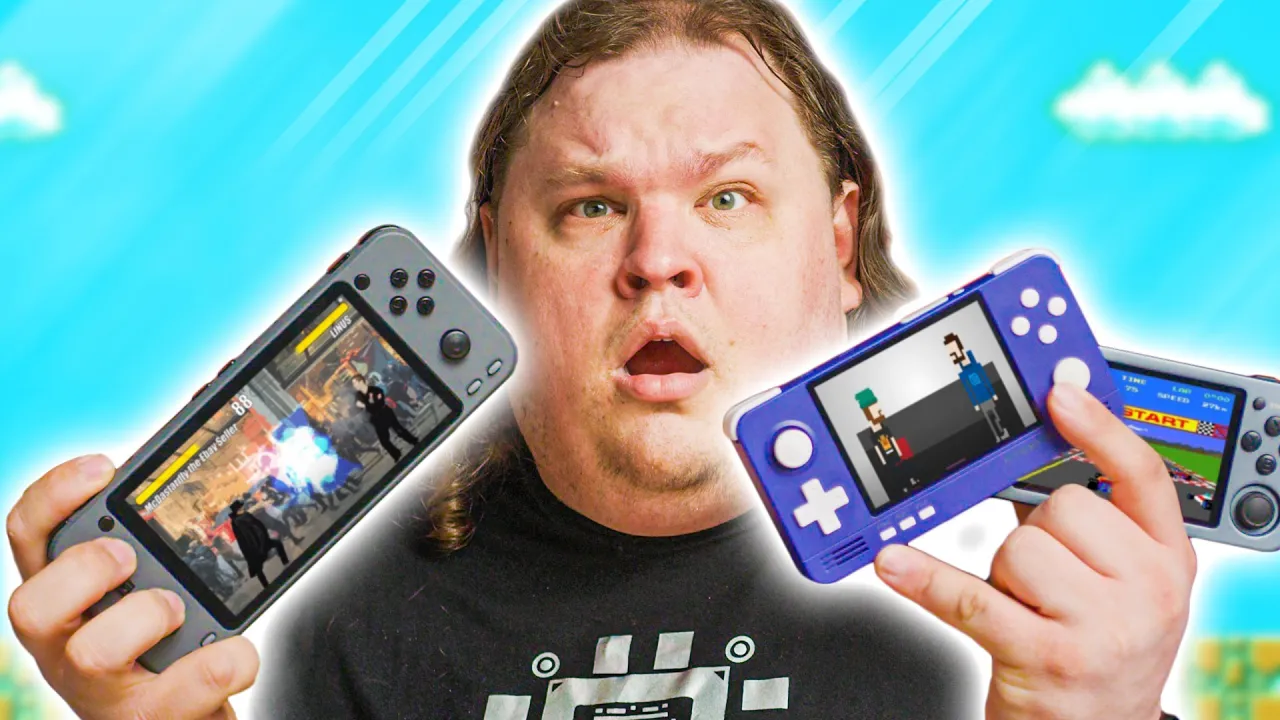
Where did these AWESOME Retro Consoles come from??? - Anbernic, Retroid, ODROID
0 up · 0 down · 0 ratings
Description
Check out the Manta toolkit at: ifixit.com Every gaming handheld I’ve ever owned has come from some big Japanese company – But these didn’t. What are they, and can they possibly be any good? Buy ANBERNIC RG351M On Amazon (PAID LINK): geni.us On Newegg (PAID LINK): geni.us Buy Retroid Pocket 2 On Amazon (PAID LINK): geni.us On Newegg (PAID LINK): geni.us
Promos
Check out the ODROID-GO Super at lmg.gg Purchases made through some store links may provide some compensation to Linus Media Group. Discuss on the forum: linustechtips.com ►GET MERCH: lttstore.com ►SUPPORT US ON FLOATPLANE: floatplane.com ►LTX EXPO: ltxexpo.com AFFILIATES & REFERRALS --------------------------------------------------- ►Affiliates, Sponsors & Referrals: lmg.gg ►Check out our podcast gear: kit.co ►Private Internet Access VPN: lmg.gg ►Our Official Charging Partner Anker: lmg.gg ►MK Keyboards: lmg.gg ►Nerd or Die Stream Overlays: lmg.gg ►Official Game Store: nexus.gg ►Amazon Prime: lmg.gg ►Audible Free Trial: lmg.gg ►Our Gear on Amazon: geni.us FOLLOW US ELSEWHERE --------------------------------------------------- Twitter: twitter.com Facebook: @LinusTech Instagram: @linustech Twitch: twitch.tv FOLLOW OUR OTHER CHANNELS --------------------------------------------------- Mac Address: lmg.gg Techquickie: lmg.gg TechLinked: lmg.gg ShortCircuit: lmg.gg LMG Clips: lmg.gg Channel Super Fun: lmg.gg Carpool Critics: lmg.gg MUSIC CREDIT --------------------------------------------------- Title: Laszlo - Supernova Video Link: youtube.com iTunes Download Link: itunes.apple.com Artist Link: soundcloud.com Outro Screen Music Credit: Approaching Nirvana - Sugar High youtube.com Monitor And Keyboard by vadimmihalkevich / CC BY 4.0 geni.us Mechanical RGB Keyboard by BigBrotherECE / CC BY 4.0 geni.us Mouse Gamer free Model By Oscar Creativo / CC BY 4.0 geni.us CHAPTERS --------------------------------------------------- 0:00 Intro 0:38 What ARE these? 1:55 Anbernic RG351M 6:22 Retroid Pocket 2 10:53 ODROID-Go Super 14:47 Some history 16:18 Piracy 17:13 Conclusion
The video begins by setting the stage for pocket gaming, noting that classic handhelds often required compromises such as screen quality and awkward control layouts. It then promises a closer look at three popular unofficial handhelds that aim to improve the experience while running retro emulation on Linux or Android. The host introduces the Anbernic RG351M as the premium option, highlighting its aluminum enclosure, dual USB-C ports, refined sticks and buttons, and a solid build feel. He then moves on to discuss software and performance, noting that the device runs a version of EmuELEC and uses a RockChip 3326 SOC, with a focus on how the user interface mirrors a Raspberry Pi style EmulationStation experience. The discussion covers screen resolution, scaling options, and how the device handles various emulation cores, emphasizing PSP and 240p scaling benefits, as well as the limitation of input lag and the need to tune emulators for best results. In short, the RG351M is framed as a highly polished yet modestly configurable pocket emulation device with strong hardware and thoughtful ergonomics, but it is not perfect for all game types or universal display output. Next, the Retroid Pocket 2 is examined for its lighter, plastic build and more ergonomic form factor, including a four-by-three display and micro HDMI output. The host notes the micro switches on the face buttons and a casual, 3DS-like slider control, while praising the staggered L and R triggers for comfort. He contrasts the Retroid with the Anbernic in terms of display output, noting the only device with a dedicated display out and its USB-C charging and peripheral support. Android-based software on the Retroid is discussed in depth, explaining the mixed experience of navigating the OS with a gamepad and the need to manually manage emulators and settings for optimal play. The video shows that Retroid can run a variety of emulators, with a key caveat that not all games or cores support features like net play, but the device still offers a unique blend of portability and versatility. Overall, the Retroid Pocket 2 is presented as a strong, more affordable option with a familiar OS and a more comfortable grip, albeit with trade-offs in build quality and display connectivity. The ODROID-Go Super is introduced as a larger, more feature-rich option with a five-inch, 16 by 9 screen and a full-size USB-A port, plus GPIO headers that hint at hacker-friendly expansion. The host critiques the more plasticky feel versus the metal-bodied rivals, and comments on the tactile but occasionally harsh feeling sticks and mushy D-pad. He explains the hardware is similar to the other devices under the hood but with a distinct emphasis on modularity and expansion potential, including RetroArch access via hardware buttons and a robust set of input options. The discussion highlights the overclock option as a potential path to better performance for demanding titles, while noting potential instability. A key downside is the need for an external wireless adapter to enable multiplayer features, a compromise that keeps the ODROID from feeling as complete out of the box as its counterparts. The segment ends with a broader reflection on how the ODROID design philosophy embodies a hacker-friendly approach, balancing power with real-world usability and polish. The history of handheld emulation is then traced back to the Game Park GP32 in 2001, recognized as the first device to popularize expandable storage and homebrew software for ARM-based handhelds. The narrative connects this era to the PSP and Nintendo DS, explaining how these catalysts propelled mainstream interest in retro emulation while hardware costs and availability shaped the market. Piracy is discussed as a persistent topic, noting that while none of these handhelds natively enable cartridge dumping, the broader ecosystem has long leaned on unofficial ROMs and related tools. The video closes by weighing practical buying advice, summarizing relative value and upgrade paths for each device, and acknowledging iFixit's Manta Kit as a helpful companion for enthusiasts who want to repair or modify hardware. The host expresses appreciation for these compact devices enabling retro gaming on the go and teases future videos exploring more unique controllers and hardware history.
Topics · technology · gaming · hardware · emulation
Questions answered
- What is the Anbernic RG351M best for compared to the other devices discussed?
- The RG351M is touted as the most premium, polished option with metal or high-quality plastic construction, a robust aluminum enclosure, and solid controls, making it strong for a wide range of emulation and a premium feel in handheld form.
- Can you play modern or demanding games on these devices?
- Yes, but with caveats. Emulation can handle PlayStation and N64 titles, and some Dreamcast games may run, but performance is often limited and may require tuning; the ODROID-Go Super and Retroid Pocket 2 offer varying levels of capability and setup complexity for more demanding titles.
- Do these devices support multiplayer or net play over WiFi?
- Net play is possible on some devices via RetroArch or built-in features, but support varies by core and device, and in some cases an external adapter or specific configuration is required for multiplayer features.