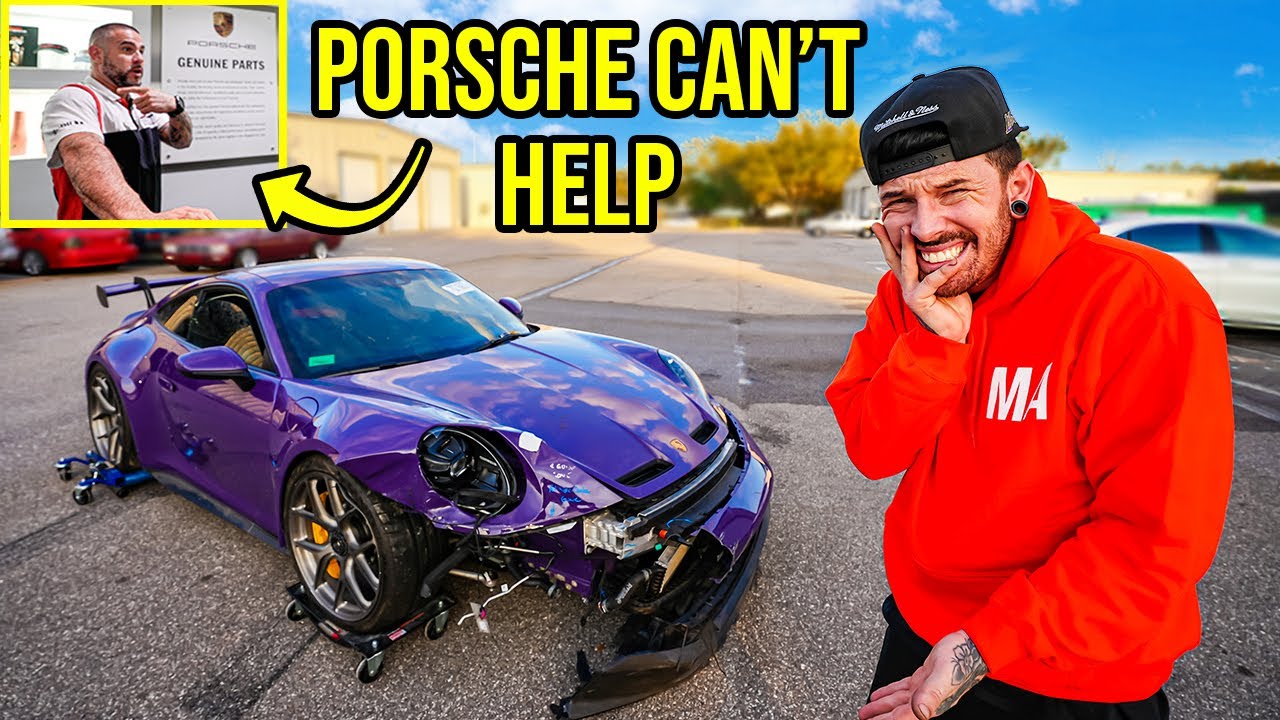
REBUILDING A WRECKED PORSCHE 911 GT3 | PART 2
0 up · 0 down · 0 ratings
Description
NEXT 100 ORDERS OF ANY T-SHIRT OR HOODIE WILL RECEIVE A SIGNED PEICE OF THE 992 GT3
Promos
Check if your car was damaged with Car Vertical - 10% off here carvertical.com I flew to Florida to buy Adam Lz's old Porsche 911 992 GT3 which was in an accident. I am rebuilding it a Tavarish's workshop whilst im over here. But as i started to work on the car in the last video i found there was structural damage and US Porsche are unable to sell structural parts unless you are a registered repairer, but i went to Champion Porsche in Miami to try my luck anyway! Thanks to @tavarish for accommodating myself and the GT3 out here in Florida
ALL MA MERCHANDISE
Channels and socials
FOR MORE CONTENT CHECK ON MY 2ND CHANNEL
Follow Me Here Aswell
Notes
The video documents a complex, high-stakes phase of rebuilding a wrecked Porsche 911 GT3, filmed largely in Florida at a Porsche dealership and in a workshop. The episode centers on confirming parts availability, navigating structural repair limitations, and keeping the project moving despite setbacks. Early on, the host visits Porsche Miami to determine whether structural or service parts can be purchased, uncovering that full structural components are not readily sold to non-repairers yet finding some stock parts that can be acquired. The narrative then shifts to repairing the dashboard pyro fuse, a critical step to get the car to the point where it can even be started, and follows the repair of the interior by upgrading the dashboard with Matt from E3 Upholstery, who delivers a rapid turnaround. The crew then assembles the interior, reconnects the heater matrix and related components, and tests the dashboard to verify that the electronics and lights function as intended, culminating in the car starting successfully for the first time in this rebuild sequence. Finally, the episode reveals the deeper structural damage to the front tub, explains why the team must seek parts from the UK, and outlines the strategic plan to source the necessary components for a complete front-end rebuild, highlighting the scale and ambition of the project and the teamwork required to push forward. The episode blends hands-on mechanical work with strategic sourcing challenges, showing how the team balances cost, availability, and the risk of further damage as they dismantle, reassemble, and test subsystems. Viewers witness concrete milestones such as overcoming the pyro fuse hurdle, reassembling the center console and dashboard, and getting the car to start, all while maintaining a positive, can-do mindset despite accumulating damage and logistical hurdles. The human element is also foregrounded through the collaboration with Tim from Inception, the involvement of Freddie, and the camaraderie and humor that keeps the crew motivated, including playful banter about the “happy shirts” and the gratification of solving stubborn problems. Throughout, the hosts share practical insights on sourcing parts (including cost-saving hacks) and the realities of dealing with high-value, carbon fiber components, emphasizing both the complexity and rewards of a high-profile rebuild. The overarching message is one of perseverance and careful planning: by documenting each step, communicating clearly with suppliers, and leveraging the strengths of the team, the rebuild is kept alive as an aspirational project that can inspire viewers who dream of restoring legendary cars. The episode also delves into the broader theme of how modern vehicle histories can complicate a rebuild. The team uses CarVertical to reveal the car’s accident history, illustrating how service records and prior damage influence both value and viability of parts, and underscoring why certain structural elements are not readily available to non-repairers. This procurement reality drives the narrative toward international sourcing, including the possibility of shipping or “part smuggling” as a tongue-in-cheek plan to assemble the necessary front-end structure. The combination of technical problem-solving, high-stakes mechanical work, and a transparent, collaborative approach with fans and collaborators creates a compelling blueprint for ambitious automotive restoration projects. The episode ends with a sense of momentum and a clear path forward, even as the team acknowledges the substantial work still required to complete the GT3 rebuild and return it to the road. In sum, this part of the rebuild is about breaking through barriers, both mechanical and logistical, while maintaining momentum and community engagement. Each milestone,dashboard restoration, pyro fuse integration, interior assembly, and the dawning realization of more structural work ahead,builds toward the ultimate goal of a fully restored, driveable Porsche 911 GT3. The combination of technical detail, practical sourcing tips, and collaborative energy makes this episode a pivotal installment in a high-profile, real-world builder series, leaving viewers eager for the next update as the front-end reconstruction takes shape and the car moves closer to completion.
Topics · automotive repair · car restoration · diy · motorsports
Questions answered
- What was the first major roadblock in sourcing parts for the GT3 rebuild?
- Initial attempts to buy structural parts from dealers showed that non repairers cannot easily purchase those components, forcing the team to seek alternatives and later plan to source from the UK.
- How did the team address the pyro fuse issue in the dashboard?
- They located the pyro fuse behind the dashboard, sourced a replacement, and involved Tim from Inception to help install it, enabling the car to be started again.
- Why was the front tub replacement necessary, according to the video?
- The front tub showed damage from the collision and structural concerns, making it necessary to inspect and plan a full front-end rebuild rather than patching.